
Love Without Stability is Poverty in Disguise: Why Financial Literacy Must Precede Dating

We live in a generation where people are rushing to love before they have learned how to love themselves, and worse, before they have learned how to balance a budget. The result is predictable: three times more toxic, three times more codependent, three times more chaos disguised as romance. It is not Cupid who’s shooting arrows, it’s debt collectors.
The youth, and even the old, must hear this hard truth—dating without stability is like building a mansion on quicksand. It may look beautiful on Instagram, but it sinks in reality. The weight of unpaid rent, school loans, and endless borrowing does not mix well with candlelight dinners. That stress mutates into fights, mistrust, and resentment until love rots from the inside out.
Love should multiply joy, not debt. But when two unstable people come together, what they multiply are insecurities and bills. It is not romance; it is survival. And survival is not love—it is codependency. When you date without stability, you don’t choose a partner; you choose a crutch. And when two crutches lean on each other, they fall.

Financial literacy is not a side hustle skill—it is the foundation of stability. If you cannot manage your money, then you cannot manage your emotions, your time, or your relationships. Money is not the root of love, but it is the soil in which love either grows or dies. A broken mindset waters nothing but disappointment.
Young people must learn that a relationship is not an escape from struggle but an amplification of it. If you are drowning financially, dragging another person into the water does not make you swim—it makes you both sink faster. Stability first, then love. Otherwise, you baptize your relationship in endless crisis.
The old, too, are guilty. How many marriages today are nothing but unions of desperation? One partner is carrying the other like an unpaid debt because both refused to learn discipline in their youth. They traded long-term financial wisdom for short-term affection, only to end up as bitter cautionary tales in their fifties.
Financial literacy is self-love in numbers. It refuses to be enslaved by instant gratification. It is saving consistently, investing wisely, and avoiding the poison of living beyond your means. Only when you know how to live within your limits can you love without limits.
Relationships cost money, not just emotions. Weddings, rent, raising children, emergencies—they are all financial battles disguised as milestones. Without literacy, each milestone becomes a funeral procession for your peace. This is why marriages crumble not from lack of love, but from lack of literacy.
Let us stop lying to the youth that love conquers all. Love does not pay rent, school fees, or hospital bills. Love does not negotiate with landlords. Love without money turns into a permanent state of begging, borrowing, and blaming. That is not a relationship; it is poverty with a ring on its finger.
The solution is not to reject love, but to reorder priorities. Forget dating until you master the basics of stability: earning, saving, investing, and planning. It is not romantic advice; it is survival advice. Stability makes love safe; instability makes it a trap.
The controversial truth is that financial illiteracy is the real home-wrecker of our age. Social media influencers will never tell you this because they sell the fantasy of romance as if emotions alone can sustain a home. But when the lights are off and the fridge is empty, love is tested—and financial literacy is either present as a shield or absent as a curse.
Youth must learn to build their houses before inviting partners to live in them. Otherwise, they will turn every relationship into a slum of frustrations. Financial independence is the first true love, because it teaches you that survival does not require another person—it requires discipline.
The old must stop glorifying suffering in relationships as a sign of loyalty. Loyalty to poverty is foolishness. Loyalty to financial illiteracy is generational slavery. Teach the young that sacrifice is not about enduring dysfunction, but about investing in stability. That is the only legacy worth passing on.
The most dangerous lie ever told is that you can fix yourself through someone else’s love. No, you fix yourself through your own literacy, your own stability, your own discipline. When you bring stability into a relationship, you bring peace. When you don’t, you bring war.
We need to normalize financial conversations as much as we normalize romantic ones. Before you ask someone their favorite color, ask them if they save. Before you talk about soulmates, talk about SACCOs, unit trusts, and emergency funds. Because love is not just chemistry, it is economics.
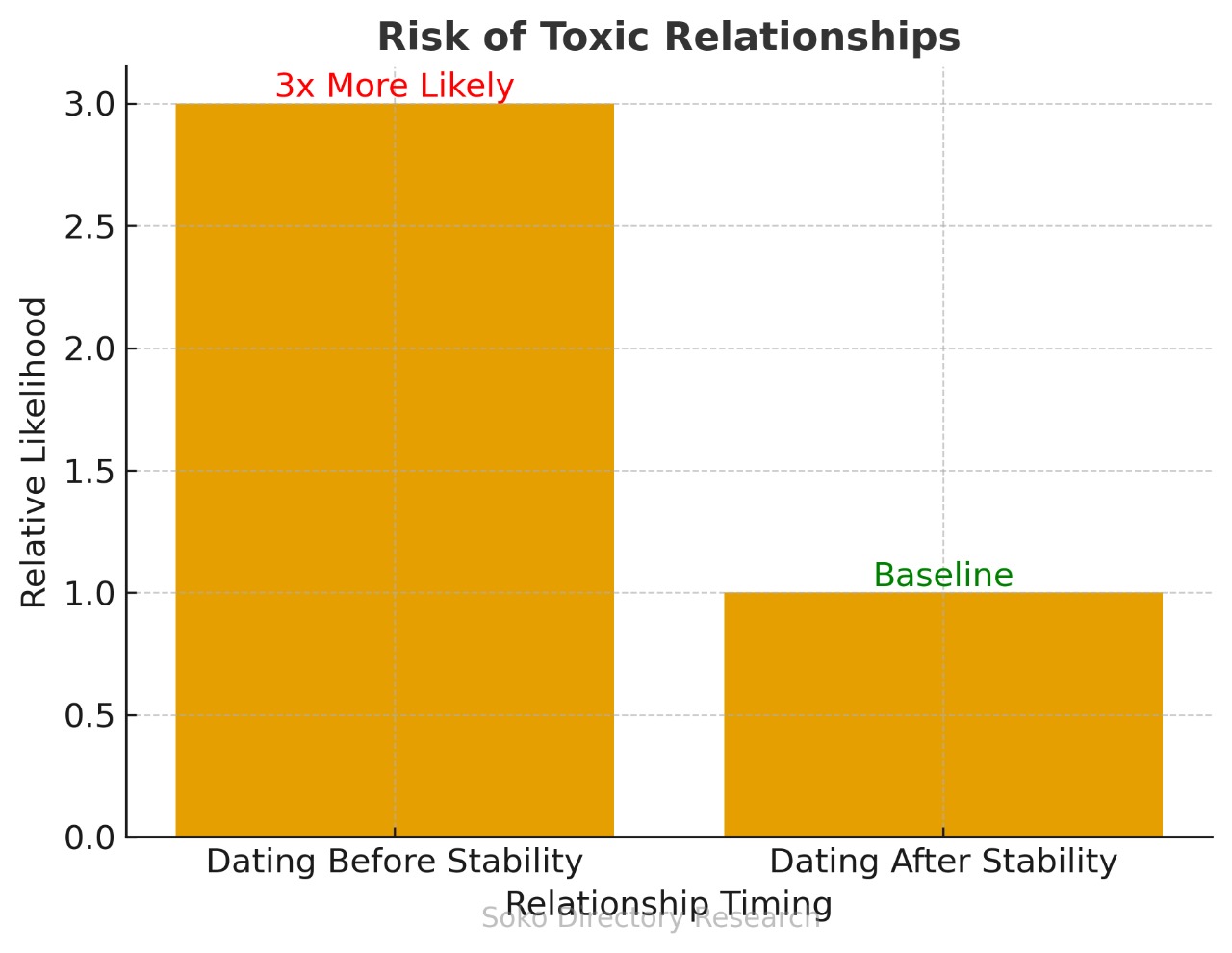
Every toxic relationship is, at its core, an illiterate financial decision. Dependency is not about love—it is about money. Arguments about cheating, control, and mistrust often hide the real monster: financial instability. Literacy kills that monster before it grows fangs.
We should raise a generation that is more afraid of debt than heartbreak. Because heartbreak heals, but debt multiplies. A financially literate youth will never beg for survival in a toxic union. They will stand tall, choose wisely, and walk away boldly if love becomes a liability.
The truth is brutal: if you are financially unstable, you are not ready to date. You are ready to learn, work, and discipline yourself. Every shilling you save is a brick of dignity. Every skill you learn is a wall of protection. Every investment you make is a roof of security. Then, and only then, does love become a home.
So, to the young and the old: love later, learn now. Invest in your literacy, because without it, every “I love you” eventually sounds like “I need you to pay my bills.” Love is a garden, but money is the water. Without financial literacy, every flower of affection withers in drought.
This is not cynicism. This is wisdom. Love thrives best in the shade of stability. If you want a love that lasts, build it on a foundation of financial sense. Otherwise, you are not loving—you are gambling. And the house always wins.
Read Also: How To Break Barriers to Financial Literacy For Persons with Disabilities

About Steve Biko Wafula
Steve Biko is the CEO OF Soko Directory and the founder of Hidalgo Group of Companies. Steve is currently developing his career in law, finance, entrepreneurship and digital consultancy; and has been implementing consultancy assignments for client organizations comprising of trainings besides capacity building in entrepreneurial matters.He can be reached on: +254 20 510 1124 or Email: info@sokodirectory.com

- January 2026 (220)
- February 2026 (243)
- March 2026 (180)
- January 2025 (119)
- February 2025 (191)
- March 2025 (212)
- April 2025 (193)
- May 2025 (161)
- June 2025 (157)
- July 2025 (227)
- August 2025 (211)
- September 2025 (270)
- October 2025 (297)
- November 2025 (230)
- December 2025 (219)
- January 2024 (238)
- February 2024 (227)
- March 2024 (190)
- April 2024 (133)
- May 2024 (157)
- June 2024 (145)
- July 2024 (136)
- August 2024 (154)
- September 2024 (212)
- October 2024 (255)
- November 2024 (196)
- December 2024 (143)
- January 2023 (182)
- February 2023 (203)
- March 2023 (322)
- April 2023 (297)
- May 2023 (267)
- June 2023 (214)
- July 2023 (212)
- August 2023 (257)
- September 2023 (237)
- October 2023 (264)
- November 2023 (286)
- December 2023 (177)
- January 2022 (293)
- February 2022 (329)
- March 2022 (358)
- April 2022 (292)
- May 2022 (271)
- June 2022 (232)
- July 2022 (278)
- August 2022 (253)
- September 2022 (246)
- October 2022 (196)
- November 2022 (232)
- December 2022 (167)
- January 2021 (182)
- February 2021 (227)
- March 2021 (325)
- April 2021 (259)
- May 2021 (285)
- June 2021 (272)
- July 2021 (277)
- August 2021 (232)
- September 2021 (271)
- October 2021 (304)
- November 2021 (364)
- December 2021 (249)
- January 2020 (272)
- February 2020 (310)
- March 2020 (390)
- April 2020 (321)
- May 2020 (335)
- June 2020 (327)
- July 2020 (333)
- August 2020 (276)
- September 2020 (214)
- October 2020 (233)
- November 2020 (242)
- December 2020 (187)
- January 2019 (251)
- February 2019 (215)
- March 2019 (283)
- April 2019 (254)
- May 2019 (269)
- June 2019 (249)
- July 2019 (335)
- August 2019 (293)
- September 2019 (306)
- October 2019 (313)
- November 2019 (362)
- December 2019 (318)
- January 2018 (291)
- February 2018 (213)
- March 2018 (275)
- April 2018 (223)
- May 2018 (235)
- June 2018 (176)
- July 2018 (256)
- August 2018 (247)
- September 2018 (255)
- October 2018 (282)
- November 2018 (282)
- December 2018 (184)
- January 2017 (183)
- February 2017 (194)
- March 2017 (207)
- April 2017 (104)
- May 2017 (169)
- June 2017 (205)
- July 2017 (189)
- August 2017 (195)
- September 2017 (186)
- October 2017 (235)
- November 2017 (253)
- December 2017 (266)
- January 2016 (164)
- February 2016 (165)
- March 2016 (189)
- April 2016 (143)
- May 2016 (245)
- June 2016 (182)
- July 2016 (271)
- August 2016 (247)
- September 2016 (233)
- October 2016 (191)
- November 2016 (243)
- December 2016 (153)
- January 2015 (1)
- February 2015 (4)
- March 2015 (164)
- April 2015 (107)
- May 2015 (116)
- June 2015 (119)
- July 2015 (145)
- August 2015 (157)
- September 2015 (186)
- October 2015 (169)
- November 2015 (173)
- December 2015 (205)
- March 2014 (2)
- March 2013 (10)
- June 2013 (1)
- March 2012 (7)
- April 2012 (15)
- May 2012 (1)
- July 2012 (1)
- August 2012 (4)
- October 2012 (2)
- November 2012 (2)
- December 2012 (1)