
Tony Elumelu in Zambia: Financing Africa’s Future from the Ground Up
By Dingindaba Jonah Buyoya
I was genuinely surprised to learn that more than 350 young Zambians have each received US$5,000 in seed capital through the Tony Elumelu Foundation. For anyone who has ever tried to start a business in Zambia, that number is remarkable. Accessing capital is extremely difficult. Banks demand collateral that most young people do not have, and investors often dismiss local ideas as too risky.
When someone manages to secure even US$5,000 to test an idea, it is not a small contribution. It is a lifeline.

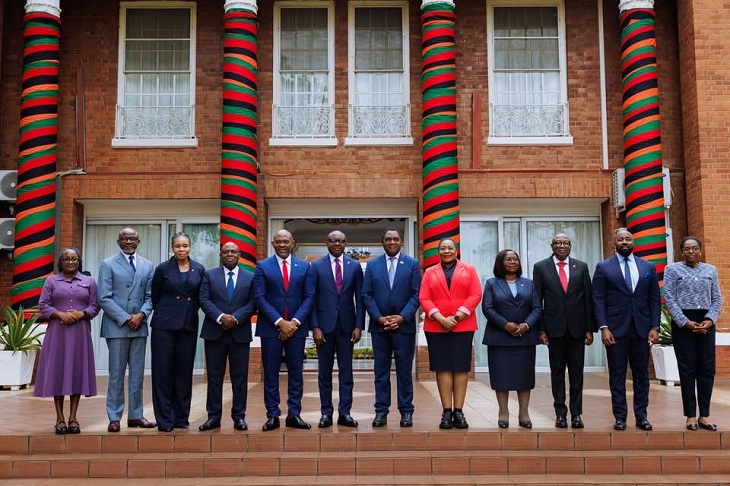
This is what makes Tony Elumelu’s visit to Zambia stand out. It is not simply because a prominent banker visited the State House, but because he represents a type of investor that African economies urgently need, one who provides local capital with a long-term vision.
For years, Zambia has promoted entrepreneurship as a solution to unemployment. Yet there are very few mechanisms that genuinely make this possible. The education system produces job seekers rather than founders. Banks play it safe, and government funding rarely reaches those who need it most.
Elumelu’s foundation, through its Zambian beneficiaries, has quietly filled part of that gap. The model is practical rather than perfect. It offers a modest amount of funding, paired with training, and challenges recipients to build from the ground up. Collectively, those small businesses have created more than 16,000 jobs. This demonstrates that even modest injections of capital can have a significant impact.
Elumelu’s trip to Lusaka was not about handing out grants. His discussion with President Hakainde Hichilema focused on investment rather than charity. He intends for UBA to deepen its presence in Zambia, particularly in energy and food security, two sectors that will determine whether the country achieves genuine transformation.
Elumelu represents a growing school of thought that believes Africans should finance Africa’s own development. His approach is not about short-term profit, but about building institutions that shape economies from within.
Few sectors reveal Zambia’s challenges as clearly as energy. Years of power shortages have slowed industrial production, discouraged investors, and hindered overall growth. UBA’s experience in financing power projects in Nigeria through Heirs Holdings and Transcorp Power, which supply roughly 40 percent of that country’s electricity, makes it a potentially important player in Zambia’s energy sector.
However, the Zambian context is complex. Financing power generation projects here requires navigating regulation, currency instability, and bureaucratic delays. Whether UBA can replicate its Nigerian success will depend on its willingness to assume local risk and on how effectively the government creates a predictable environment for investment.
For Zambia, the key lesson is that investment confidence must be earned. The government’s willingness to engage with private investors is encouraging, yet it must be supported by consistent policy, efficient approvals, and a credible commitment to making the business environment reliable.
For investors such as Elumelu, the challenge lies in moving beyond photo opportunities to create tangible outcomes that Zambians can experience directly, through access to finance, reliable electricity, and the growth of local enterprises.
This moment is significant because it highlights a simple truth. Africa will not be developed through aid conferences or slogans. It will progress when Africans with capital, competence, and conviction choose to invest in one another.
Tony Elumelu’s visit to Zambia matters, not because of the high-profile meetings or the speeches, but because it exposes a reality we all recognise. Africa’s greatest challenge is not a shortage of ideas. It is a shortage of belief, capital, and execution.
The real measure of success will be whether this visit leads to sustained investment and whether more young people are allowed to turn their ideas into jobs. Ultimately, I think that is what true development should look like: growth driven from the ground up, not imposed from above.

About Soko Directory Team
Soko Directory is a Financial and Markets digital portal that tracks brands, listed firms on the NSE, SMEs and trend setters in the markets eco-system.Find us on Facebook: facebook.com/SokoDirectory and on Twitter: twitter.com/SokoDirectory

- January 2026 (220)
- February 2026 (243)
- March 2026 (136)
- January 2025 (119)
- February 2025 (191)
- March 2025 (212)
- April 2025 (193)
- May 2025 (161)
- June 2025 (157)
- July 2025 (227)
- August 2025 (211)
- September 2025 (270)
- October 2025 (297)
- November 2025 (230)
- December 2025 (219)
- January 2024 (238)
- February 2024 (227)
- March 2024 (190)
- April 2024 (133)
- May 2024 (157)
- June 2024 (145)
- July 2024 (136)
- August 2024 (154)
- September 2024 (212)
- October 2024 (255)
- November 2024 (196)
- December 2024 (143)
- January 2023 (182)
- February 2023 (203)
- March 2023 (322)
- April 2023 (297)
- May 2023 (267)
- June 2023 (214)
- July 2023 (212)
- August 2023 (257)
- September 2023 (237)
- October 2023 (264)
- November 2023 (286)
- December 2023 (177)
- January 2022 (293)
- February 2022 (329)
- March 2022 (358)
- April 2022 (292)
- May 2022 (271)
- June 2022 (232)
- July 2022 (278)
- August 2022 (253)
- September 2022 (246)
- October 2022 (196)
- November 2022 (232)
- December 2022 (167)
- January 2021 (182)
- February 2021 (227)
- March 2021 (325)
- April 2021 (259)
- May 2021 (285)
- June 2021 (272)
- July 2021 (277)
- August 2021 (232)
- September 2021 (271)
- October 2021 (304)
- November 2021 (364)
- December 2021 (249)
- January 2020 (272)
- February 2020 (310)
- March 2020 (390)
- April 2020 (321)
- May 2020 (335)
- June 2020 (327)
- July 2020 (333)
- August 2020 (276)
- September 2020 (214)
- October 2020 (233)
- November 2020 (242)
- December 2020 (187)
- January 2019 (251)
- February 2019 (215)
- March 2019 (283)
- April 2019 (254)
- May 2019 (269)
- June 2019 (249)
- July 2019 (335)
- August 2019 (293)
- September 2019 (306)
- October 2019 (313)
- November 2019 (362)
- December 2019 (318)
- January 2018 (291)
- February 2018 (213)
- March 2018 (275)
- April 2018 (223)
- May 2018 (235)
- June 2018 (176)
- July 2018 (256)
- August 2018 (247)
- September 2018 (255)
- October 2018 (282)
- November 2018 (282)
- December 2018 (184)
- January 2017 (183)
- February 2017 (194)
- March 2017 (207)
- April 2017 (104)
- May 2017 (169)
- June 2017 (205)
- July 2017 (189)
- August 2017 (195)
- September 2017 (186)
- October 2017 (235)
- November 2017 (253)
- December 2017 (266)
- January 2016 (164)
- February 2016 (165)
- March 2016 (189)
- April 2016 (143)
- May 2016 (245)
- June 2016 (182)
- July 2016 (271)
- August 2016 (247)
- September 2016 (233)
- October 2016 (191)
- November 2016 (243)
- December 2016 (153)
- January 2015 (1)
- February 2015 (4)
- March 2015 (164)
- April 2015 (107)
- May 2015 (116)
- June 2015 (119)
- July 2015 (145)
- August 2015 (157)
- September 2015 (186)
- October 2015 (169)
- November 2015 (173)
- December 2015 (205)
- March 2014 (2)
- March 2013 (10)
- June 2013 (1)
- March 2012 (7)
- April 2012 (15)
- May 2012 (1)
- July 2012 (1)
- August 2012 (4)
- October 2012 (2)
- November 2012 (2)
- December 2012 (1)