
Unlocking The Power Of Solar In East Africa
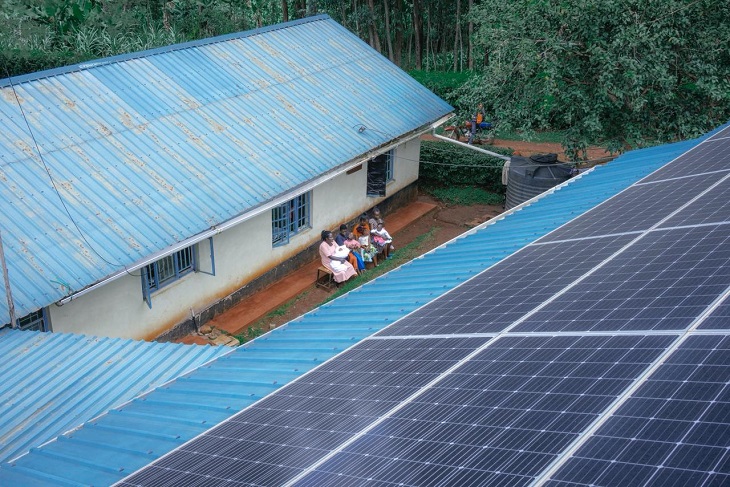
East Africa holds vast untapped solar potential, particularly in regions where electricity access remains limited. In Kenya, for example, a significant portion of the estimated 13 million unserved population resides in areas with high solar irradiation, which makes them the perfect candidates for off-grid energy solutions—, therefore systems that don’t rely on the national power grid.
In Tanzania, clean energy initiatives, including large-scale solar projects, are poised to benefit millions, with at least a quarter of underserved regions, according to the National Renewable Energy Strategy (2024–2034) identified as viable for renewable deployment.
Furthermore, Uganda has made notable strides, expanding electricity access to over eight million people since 2016, with renewables playing a central role in reaching remote communities.

There is no doubt that harnessing the above potential is key to improving lives, driving economic growth, and building sustainable communities.
The feasibility of solar
Taking one step back, across Kenya, Uganda and Tanzania, renewable energy sources such as hydropower and geothermal already play a significant role in the countries’ respective national grids. In fact, Kenya’s Olkaria geothermal complex, located in the Kenyan Rift Valley, is one of the largest on the continent.
However, in many remote and rural areas, extending traditional infrastructure is expensive and logistically challenging. Thus, within this context, solar power [KR1.1]offers a truly, practical, scalable, and cost-effective solution.
Solar installations can be deployed quickly, require minimal maintenance, plus, when combined with modern battery or hybrid systems, delivers reliable and continuous power. These attributes make solar the go-to option for communities that are entirely off-grid or reliant on unreliable supply.
Beyond household electrification
For Schneider Electric, offgrid solar solutions [KR2.1]is not just about lighting homes. Through our global Access to Energy programme, we collaborate with our valued partners to deliver reliable, clean power to health centres, schools, agricultural operations, and small businesses in rural East African communities.
For example, establishing a reliable electricity infrastructure, based on renewables, for health facilities ensures medical care can be provided after dark and enables equipment to operate consistently. This is critical in provision of services such as vaccinations, refrigeration, and emergency treatment.
Similarly, electrified schools, empower students to access modern learning tools and extend study hours.
In farming communities, solar can power irrigation systems, agro-processing equipment, and cold storage, helping farmers boost productivity and reduce post-harvest losses. Even small village shops benefit from better lighting and refrigeration, increasing their economic viability.
Mapping the ecosystem for impact
Schneider Electric’s approach in East Africa begins with mapping the entire project ecosystem. This involves identifying funding sources, be it from sector investors, philanthropic foundations, or grant program, and aligning it with social organisations and local energy developers.
NGOs and community-based groups bring deep expertise in local engagement, cultural insight, and community trust—essential ingredients for successful energy access initiatives. Schneider Electric complements this strength by providing advanced technology, robust system design, and integration know-how to deliver solar solutions that are reliable, scalable, and built to last.
Together with our trained partners – who understand local conditions and can manage installations on the ground – we ensure that technology is deployed appropriately, maintained effectively, and aligned with the community’s aspiration.
Leveraging technology for sustainability
Designing a solar solution is only part of the challenge, ensuring it works reliably for years is equally important. To this end, Schneider Electric integrates remote monitoring capabilities into its installations. These systems can track performance, flag faults, and alert maintenance teams, reducing downtime and increasing trust among funders and community members.
Remote monitoring not only improves operational sustainability but also builds transparency. It provides a real-time understanding of impact to funders which can experience how their see their investment is delivering ongoing results, while communities benefit from faster maintenance response times.”
Learning from global best practice
While each country has unique challenges, Schneider Electric draws on lessons from other regions to enhance East African projects. In India, we’ve delivered a range of impactful projects—from powering healthcare centres to supporting local livelihoods.
Our expertise spans architectural system design and high-quality field installations, resulting in lower capital and operational costs, faster maintenance turnaround, and improved sustainability. Just as importantly, we invest in training and capacity building to ensure communities can confidently operate and benefit from these technologies.
These outcomes are made possible through close collaboration with our NGO partners, whose deep community engagement and implementation support are vital to long-term success.
Though East Africa’s context differs, elements of these models, such as centralised power systems supporting multiple community services, are undoubtedly relevant. The ability to replicate and adapt proven concepts accelerates deployment and increases impact.
The future
Looking ahead, Schneider Electric plans to deepen its work East Africa in four key areas:
- Community infrastructure electrification – prioritising schools and health centres, ensuring they can operate effectively regardless of grid availability.
- Livelihood enhancement – expanding support for agricultural and small business applications, building resilience and income for rural communities.
- Sustainable, monitored operations – embedding remote monitoring and maintenance strategies to extend system life and safeguard investments.
- Collaborating with a diverse network of partners such as NGOs, funders and impact investors to drive greater impact, ensuring that all stakeholders work collectively toward the shared goal of reaching more people and supporting the aspirations of local communities.
East Africa’s solar journey is not just about technology—it’s about transformation and community-led energy solutions. Indeed, by aligning innovation with communities aspiration, and pairing global expertise with grassroots partnerships, we can unlock energy solutions that are resilient, Sustainable , and future-ready.
Read Also: Global Solar Panels Aren’t Enough: Why Supply Chains Hold The Key To Sustainability
By Ayush Gupta, Director – Global Strategy & Business Anglophone Africa, Access to Energy at-Schneider Electric

About Soko Directory Team
Soko Directory is a Financial and Markets digital portal that tracks brands, listed firms on the NSE, SMEs and trend setters in the markets eco-system.Find us on Facebook: facebook.com/SokoDirectory and on Twitter: twitter.com/SokoDirectory

- January 2026 (220)
- February 2026 (248)
- March 2026 (287)
- April 2026 (207)
- May 2026 (192)
- June 2026 (238)
- July 2026 (279)
- August 2026 (224)
- September 2026 (34)
- January 2025 (119)
- February 2025 (191)
- March 2025 (212)
- April 2025 (193)
- May 2025 (161)
- June 2025 (157)
- July 2025 (227)
- August 2025 (211)
- September 2025 (267)
- October 2025 (297)
- November 2025 (230)
- December 2025 (220)
- January 2024 (238)
- February 2024 (227)
- March 2024 (190)
- April 2024 (133)
- May 2024 (157)
- June 2024 (145)
- July 2024 (136)
- August 2024 (154)
- September 2024 (212)
- October 2024 (255)
- November 2024 (196)
- December 2024 (143)
- January 2023 (182)
- February 2023 (203)
- March 2023 (322)
- April 2023 (297)
- May 2023 (267)
- June 2023 (214)
- July 2023 (212)
- August 2023 (257)
- September 2023 (237)
- October 2023 (264)
- November 2023 (286)
- December 2023 (177)
- January 2022 (293)
- February 2022 (329)
- March 2022 (358)
- April 2022 (292)
- May 2022 (271)
- June 2022 (232)
- July 2022 (278)
- August 2022 (253)
- September 2022 (246)
- October 2022 (196)
- November 2022 (232)
- December 2022 (167)
- January 2021 (182)
- February 2021 (227)
- March 2021 (325)
- April 2021 (259)
- May 2021 (285)
- June 2021 (272)
- July 2021 (277)
- August 2021 (232)
- September 2021 (271)
- October 2021 (303)
- November 2021 (364)
- December 2021 (249)
- January 2020 (272)
- February 2020 (310)
- March 2020 (390)
- April 2020 (321)
- May 2020 (335)
- June 2020 (327)
- July 2020 (333)
- August 2020 (276)
- September 2020 (214)
- October 2020 (233)
- November 2020 (242)
- December 2020 (187)
- January 2019 (251)
- February 2019 (215)
- March 2019 (283)
- April 2019 (254)
- May 2019 (269)
- June 2019 (249)
- July 2019 (335)
- August 2019 (292)
- September 2019 (306)
- October 2019 (313)
- November 2019 (362)
- December 2019 (318)
- January 2018 (291)
- February 2018 (213)
- March 2018 (275)
- April 2018 (223)
- May 2018 (235)
- June 2018 (176)
- July 2018 (256)
- August 2018 (247)
- September 2018 (255)
- October 2018 (282)
- November 2018 (282)
- December 2018 (184)
- January 2017 (183)
- February 2017 (194)
- March 2017 (207)
- April 2017 (104)
- May 2017 (169)
- June 2017 (205)
- July 2017 (189)
- August 2017 (195)
- September 2017 (186)
- October 2017 (235)
- November 2017 (253)
- December 2017 (266)
- January 2016 (164)
- February 2016 (165)
- March 2016 (189)
- April 2016 (143)
- May 2016 (245)
- June 2016 (182)
- July 2016 (271)
- August 2016 (247)
- September 2016 (233)
- October 2016 (191)
- November 2016 (243)
- December 2016 (153)
- January 2015 (1)
- February 2015 (4)
- March 2015 (164)
- April 2015 (107)
- May 2015 (116)
- June 2015 (119)
- July 2015 (145)
- August 2015 (157)
- September 2015 (186)
- October 2015 (169)
- November 2015 (173)
- December 2015 (205)
- March 2014 (2)
- March 2013 (10)
- June 2013 (1)
- March 2012 (7)
- April 2012 (15)
- May 2012 (1)
- July 2012 (1)
- August 2012 (4)
- October 2012 (2)
- November 2012 (2)
- December 2012 (1)