
RTP, Volatility and Lucky Runs: How Smart Slot Choices Can Turn Small Stakes Into Serious Wins

Open the casino tab and the screen fills with tiles: fruits, ancient temples, neon grids, crash games, mini-games you’ve never seen before. It looks like pure entertainment, but under all that colour sits math that quietly decides how fast your balance moves – and how your lucky streaks show up.
On https://1xbet.et/en you get a large slot and instant-game library from dozens of providers: classic three-reel titles, video slots with bonus rounds, jackpots, and crash/arcade games all sitting in the same lobby. Each one has its own RTP (return to player) and volatility profile, even if the graphics look similar at first glance.
If you’re thinking about earning money online through these games, those two ideas – RTP and volatility – shape your experience much more than any banner shouting about “hot” titles.

RTP: What That Percentage Actually Means
RTP is a long-run average. A game listed at 96% RTP is designed so that, over a huge number of spins across all players, about 96% of the money staked flows back as wins and 4% stays as house edge.
RTP trackers typically show:
- Many mainstream video slots sitting roughly in the 94–97% band.
- Some jackpot or branded games dropping a little lower.
- A few high-RTP titles (often video poker or specialist games) pushing closer to 99% in ideal configurations.
Important detail: RTP can vary for the same title between casinos, and sometimes between regions, because providers ship multiple RTP versions and operators choose which one to run. That’s why it’s worth opening the info panel inside the actual lobby instead of trusting a random blog screenshot.
High RTP simply means the game gives back more of what you stake over time; it gives you a better chance of having sessions where you finish nicely ahead when your timing and luck are good.
Volatility: Why Two 96% Games Feel Completely Different
Two games can share the same RTP and still behave nothing alike. The missing piece is volatility – how the wins are distributed.
Most slot analysts talk about three broad bands:
- Low volatility – lots of small wins, rare big jumps; sessions last longer on the same bankroll.
- Medium volatility – a mix of dead spins, small hits and occasional chunky bonuses; balance line wiggles but stays manageable.
- High volatility – plenty of opportunity, then big payouts occasionally; bankroll can move sharply before you see the upside.
On gambling platforms, you can see these differences clearly if you pay attention to game descriptions and demo mode:
- Simple fruit or “classic” slots often sit on the calmer side.
- Megaways, jackpot titles and bonus-hunt games usually lean towards high volatility.
If your main goal is relaxed, longer sessions with small stakes, high-volatility games can feel demanding, but have a lot of chances. If you’re chasing rare, big moments with money you’re comfortable risking, those high-volatility titles are exactly where “one big hit” stories often come from. A single bonus round on a good day can turn a modest stake into a very satisfying win.
Crash Mechanics in the Same Wallet
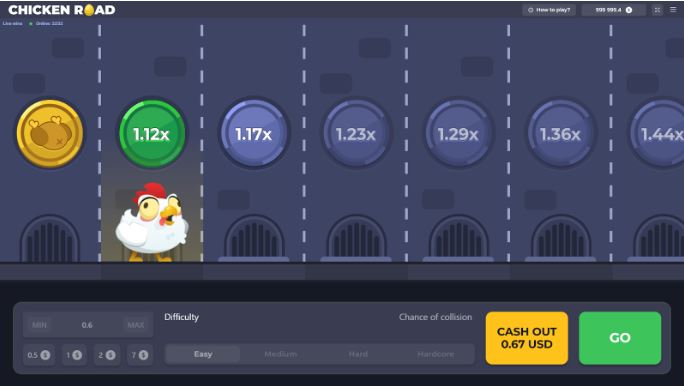
Then there are crash and arcade games, which don’t behave like reel slots at all. Chicken Road Ethiopia is one of those: you guide a chicken forward across tiles, each step raises the multiplier, and hidden traps end the round instantly.
Chicken Road has RTP around 97–98% which is very high, four difficulty levels, and provably fair mechanics that let players verify results. On paper that RTP looks excellent — higher than many standard slots.
But look at how it plays:
- One decision per step: move or cash out.
- A single trap wipes the whole stake for that round.
- Rounds are over in seconds, so you can play a lot of “spins” very quickly.
That sharp movement cuts both ways: a fast streak of unlucky tiles can eat through a session budget, but a few well-timed cash-outs on a good run can also leave you with impressively strong short-term profit.
How Different Game Types Actually Behave
Here’s a simplified comparison of three styles you’ll meet in the lobby and how they typically treat a bankroll:
| Game Style | Typical RTP Range* | Volatility Feel | Pace of Play | Balance Trend Over Time |
| Classic / low-volatility slot | ~94–97% | Frequent small wins, few big spikes | Medium (spin by spin) | Slow drift with gentle bumps; good for stretching small stakes |
| High-volatility video / jackpot | ~92–97% | Long dry spells, rare big hits | Medium | Flat lines, then sudden jumps; can create big winning sessions with patience |
| Chicken Road-style crash game | ~97–98% in public reviews | Very swingy, all-or-nothing rounds | Very fast (seconds) | Sharp drops and steep recoveries; capable of small losses and rapid big wins |
*Actual RTP for a specific title and configuration is shown inside the game info screen.
“Hot Games” vs RNG Reality
Spend time in local betting chats and you’ll see the same phrases again and again: “this one is hot”, “that slot is cold”, “Chicken Road owes a big win”.
RNG-based games don’t work like that.
Technical breakdowns of slots and crash titles make the same points:
- Each spin or round is independent; yesterday’s results don’t stack up a “debt” that must be repaid.
- RTP describes behaviour over massive samples, not your next evening session.
- A long losing streak doesn’t make a jackpot more likely in the short term; it just means you met the rough edge of variance.
On some days, you really do play out beautifully and leave with good money in your account. Just keep the roles straight:
- Use RTP, volatility and your own limits as serious tools.
- Keep the “hot game” talk for fun, so you don’t suddenly double stakes just because of a feeling.
That way, when variance certainly swings in your favour — whether on a calm low-volatility slot or a wild Chicken Road run — you’re betting in a way that lets you actually enjoy the win instead of chasing it in a panic.

About Soko Directory Team
Soko Directory is a Financial and Markets digital portal that tracks brands, listed firms on the NSE, SMEs and trend setters in the markets eco-system.Find us on Facebook: facebook.com/SokoDirectory and on Twitter: twitter.com/SokoDirectory

- January 2026 (220)
- February 2026 (246)
- March 2026 (285)
- April 2026 (12)
- January 2025 (119)
- February 2025 (191)
- March 2025 (212)
- April 2025 (193)
- May 2025 (161)
- June 2025 (157)
- July 2025 (227)
- August 2025 (211)
- September 2025 (270)
- October 2025 (297)
- November 2025 (230)
- December 2025 (219)
- January 2024 (238)
- February 2024 (227)
- March 2024 (190)
- April 2024 (133)
- May 2024 (157)
- June 2024 (145)
- July 2024 (136)
- August 2024 (154)
- September 2024 (212)
- October 2024 (255)
- November 2024 (196)
- December 2024 (143)
- January 2023 (182)
- February 2023 (203)
- March 2023 (322)
- April 2023 (297)
- May 2023 (267)
- June 2023 (214)
- July 2023 (212)
- August 2023 (257)
- September 2023 (237)
- October 2023 (264)
- November 2023 (286)
- December 2023 (177)
- January 2022 (293)
- February 2022 (329)
- March 2022 (358)
- April 2022 (292)
- May 2022 (271)
- June 2022 (232)
- July 2022 (278)
- August 2022 (253)
- September 2022 (246)
- October 2022 (196)
- November 2022 (232)
- December 2022 (167)
- January 2021 (182)
- February 2021 (227)
- March 2021 (325)
- April 2021 (259)
- May 2021 (285)
- June 2021 (272)
- July 2021 (277)
- August 2021 (232)
- September 2021 (271)
- October 2021 (304)
- November 2021 (364)
- December 2021 (249)
- January 2020 (272)
- February 2020 (310)
- March 2020 (390)
- April 2020 (321)
- May 2020 (335)
- June 2020 (327)
- July 2020 (333)
- August 2020 (276)
- September 2020 (214)
- October 2020 (233)
- November 2020 (242)
- December 2020 (187)
- January 2019 (251)
- February 2019 (215)
- March 2019 (283)
- April 2019 (254)
- May 2019 (269)
- June 2019 (249)
- July 2019 (335)
- August 2019 (293)
- September 2019 (306)
- October 2019 (313)
- November 2019 (362)
- December 2019 (318)
- January 2018 (291)
- February 2018 (213)
- March 2018 (275)
- April 2018 (223)
- May 2018 (235)
- June 2018 (176)
- July 2018 (256)
- August 2018 (247)
- September 2018 (255)
- October 2018 (282)
- November 2018 (282)
- December 2018 (184)
- January 2017 (183)
- February 2017 (194)
- March 2017 (207)
- April 2017 (104)
- May 2017 (169)
- June 2017 (205)
- July 2017 (189)
- August 2017 (195)
- September 2017 (186)
- October 2017 (235)
- November 2017 (253)
- December 2017 (266)
- January 2016 (164)
- February 2016 (165)
- March 2016 (189)
- April 2016 (143)
- May 2016 (245)
- June 2016 (182)
- July 2016 (271)
- August 2016 (247)
- September 2016 (233)
- October 2016 (191)
- November 2016 (243)
- December 2016 (153)
- January 2015 (1)
- February 2015 (4)
- March 2015 (164)
- April 2015 (107)
- May 2015 (116)
- June 2015 (119)
- July 2015 (145)
- August 2015 (157)
- September 2015 (186)
- October 2015 (169)
- November 2015 (173)
- December 2015 (205)
- March 2014 (2)
- March 2013 (10)
- June 2013 (1)
- March 2012 (7)
- April 2012 (15)
- May 2012 (1)
- July 2012 (1)
- August 2012 (4)
- October 2012 (2)
- November 2012 (2)
- December 2012 (1)