
A Masterstroke in African Banking: Why the NCBA–Nedbank Deal Could Become the Deal of the Century
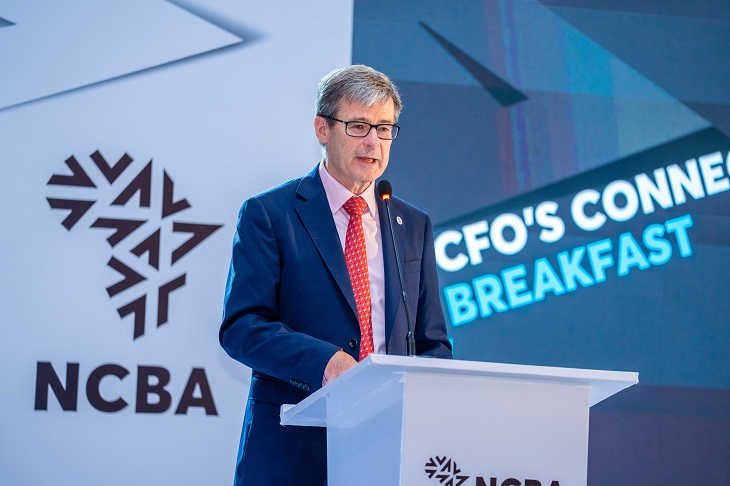
NCBA’s leadership deserves recognition for demonstrating, over time, what disciplined governance and long-term thinking look like in African banking. This is not a moment of sudden brilliance; it is the logical outcome of years spent aligning strategy with shareholder value.
For a long time, NCBA has quietly built trust with its investor base by paying strong and consistently rising dividends. In a market where many companies struggle to reward patience, NCBA chose predictability, discipline, and respect for capital. That culture matters, because it sets the tone for every major decision that follows.
With more than 26,000 shareholders, the group has never behaved like a club for insiders. Its dividend policy has treated small and large investors alike, reinforcing the idea that ownership carries real economic meaning, not just paper value.

Now comes a transaction that elevates this philosophy to an entirely new level. The proposed deal delivers one of the most attractive outcomes small investors have seen in the Kenyan market in decades, sending a clear message that minority shareholders are not an afterthought.
Offering a higher price to small investors is not just good optics; it is sound corporate ethics. It signals confidence, fairness, and a deep understanding of how markets build credibility over time. That approach is rare, and it is powerful.
Beyond the immediate payout, the structure of the transaction reveals exceptional financial intelligence. This is not a simple exit or a defensive sale. It is a carefully engineered partnership that transforms local shareholders into participants in a much larger, more diversified banking ecosystem.
By aligning with Nedbank, NCBA shareholders gain exposure to a stronger regional and global footprint. This significantly reduces the concentration risk that often comes with being tied to a single domestic market.
Kenya’s political and regulatory cycles have historically introduced volatility into capital markets. This deal directly mitigates that risk by shifting part of shareholder value into a broader, more stable geographic and economic base.
What emerges is diversification in its truest form. Shareholders are no longer betting solely on one economy, one currency, or one political environment. They are stepping into a continental and global growth story.
This is precisely how sophisticated capital thinks. It seeks optionality, resilience, and scale, not comfort zones. NCBA’s management has shown it understands this language fluently.
Crucially, the deal does not erase NCBA’s identity. The brand, management, and operational autonomy remain intact, preserving local expertise while unlocking international reach.
That balance between continuity and expansion is difficult to achieve, yet it is what separates transformative deals from destructive ones. Here, growth is additive, not disruptive.
If approved by regulators, this transaction will stand as a textbook case of how African banks can globalize without losing their roots. It shows that scale and sovereignty do not have to be enemies.
For shareholders, the implications are profound. They gain liquidity, upside, and diversification, all while retaining exposure to the growth potential of East Africa through NCBA’s ongoing operations.
This is also a signal to the broader market that Kenyan institutions can negotiate from a position of strength. NCBA was not rescued, cornered, or forced. It chose its moment and its partner.
Such confidence is earned through balance-sheet discipline, governance credibility, and a management team that understands value beyond headlines.
In an era where many deals dilute minorities or quietly transfer wealth upward, this one does the opposite. It lifts small investors and treats them as partners in success.
That alone sets a new benchmark for corporate conduct on the Nairobi Securities Exchange and beyond.
More importantly, it reframes what ambition looks like for African banks. The league is no longer regional or continental. The league is global, and NCBA has clearly decided to play there.
If regulators give their approval, history may well remember this as the deal of the century—not because of its size alone, but because of how intelligently, ethically, and strategically it was executed.
Read Also: Nedbank Eyes Control of NCBA in Landmark Deal, Proposes 66% Acquisition via Tender Offer

About Steve Biko Wafula
Steve Biko is the CEO OF Soko Directory and the founder of Hidalgo Group of Companies. Steve is currently developing his career in law, finance, entrepreneurship and digital consultancy; and has been implementing consultancy assignments for client organizations comprising of trainings besides capacity building in entrepreneurial matters.He can be reached on: +254 20 510 1124 or Email: info@sokodirectory.com

- January 2026 (220)
- February 2026 (248)
- March 2026 (287)
- April 2026 (207)
- May 2026 (192)
- June 2026 (238)
- July 2026 (279)
- August 2026 (223)
- September 2026 (106)
- January 2025 (119)
- February 2025 (191)
- March 2025 (212)
- April 2025 (193)
- May 2025 (161)
- June 2025 (157)
- July 2025 (227)
- August 2025 (211)
- September 2025 (267)
- October 2025 (297)
- November 2025 (230)
- December 2025 (220)
- January 2024 (238)
- February 2024 (227)
- March 2024 (190)
- April 2024 (133)
- May 2024 (157)
- June 2024 (145)
- July 2024 (136)
- August 2024 (154)
- September 2024 (212)
- October 2024 (255)
- November 2024 (196)
- December 2024 (143)
- January 2023 (182)
- February 2023 (203)
- March 2023 (322)
- April 2023 (297)
- May 2023 (267)
- June 2023 (214)
- July 2023 (212)
- August 2023 (257)
- September 2023 (237)
- October 2023 (264)
- November 2023 (286)
- December 2023 (177)
- January 2022 (293)
- February 2022 (329)
- March 2022 (358)
- April 2022 (292)
- May 2022 (271)
- June 2022 (232)
- July 2022 (278)
- August 2022 (253)
- September 2022 (246)
- October 2022 (196)
- November 2022 (232)
- December 2022 (167)
- January 2021 (182)
- February 2021 (227)
- March 2021 (325)
- April 2021 (259)
- May 2021 (285)
- June 2021 (272)
- July 2021 (277)
- August 2021 (232)
- September 2021 (271)
- October 2021 (303)
- November 2021 (364)
- December 2021 (249)
- January 2020 (272)
- February 2020 (310)
- March 2020 (390)
- April 2020 (321)
- May 2020 (335)
- June 2020 (327)
- July 2020 (333)
- August 2020 (276)
- September 2020 (214)
- October 2020 (233)
- November 2020 (242)
- December 2020 (187)
- January 2019 (251)
- February 2019 (215)
- March 2019 (283)
- April 2019 (254)
- May 2019 (269)
- June 2019 (249)
- July 2019 (335)
- August 2019 (292)
- September 2019 (306)
- October 2019 (313)
- November 2019 (362)
- December 2019 (318)
- January 2018 (291)
- February 2018 (213)
- March 2018 (275)
- April 2018 (223)
- May 2018 (235)
- June 2018 (176)
- July 2018 (256)
- August 2018 (247)
- September 2018 (255)
- October 2018 (282)
- November 2018 (282)
- December 2018 (184)
- January 2017 (183)
- February 2017 (194)
- March 2017 (207)
- April 2017 (104)
- May 2017 (169)
- June 2017 (205)
- July 2017 (189)
- August 2017 (195)
- September 2017 (186)
- October 2017 (235)
- November 2017 (253)
- December 2017 (266)
- January 2016 (164)
- February 2016 (165)
- March 2016 (189)
- April 2016 (143)
- May 2016 (245)
- June 2016 (182)
- July 2016 (271)
- August 2016 (247)
- September 2016 (233)
- October 2016 (191)
- November 2016 (243)
- December 2016 (153)
- January 2015 (1)
- February 2015 (4)
- March 2015 (164)
- April 2015 (107)
- May 2015 (116)
- June 2015 (119)
- July 2015 (145)
- August 2015 (157)
- September 2015 (186)
- October 2015 (169)
- November 2015 (173)
- December 2015 (205)
- March 2014 (2)
- March 2013 (10)
- June 2013 (1)
- March 2012 (7)
- April 2012 (15)
- May 2012 (1)
- July 2012 (1)
- August 2012 (4)
- October 2012 (2)
- November 2012 (2)
- December 2012 (1)