
Quiet Excellence: How NCBA’s Management Turned Asset Finance into a National Growth Engine
When it comes to asset finance, NCBA has not stumbled into leadership by chance. Its position at the top of the market is the outcome of deliberate strategy, disciplined execution, and a management team that understands that finance works best when it is embedded in real economic ecosystems.
Asset finance, by its nature, is not just about money. It is about trust, timing, partnerships, and a deep understanding of how businesses and individuals actually acquire productive tools. NCBA has mastered this intersection with rare consistency.
What distinguishes NCBA is not merely competitive pricing or product variety. It is the quiet architecture behind the brand, an ecosystem carefully built around dealers, brokers, agents, and end users, all moving in alignment rather than competition.

The bank’s leadership understood early that asset finance does not scale from head office alone. It scales through people on the ground, relationships at dealerships, and credibility earned transaction by transaction across the country.
This is why NCBA’s dealer partnerships feel less transactional and more collaborative. Dealers are not treated as distribution channels to be squeezed, but as partners whose growth directly feeds the bank’s long-term relevance.
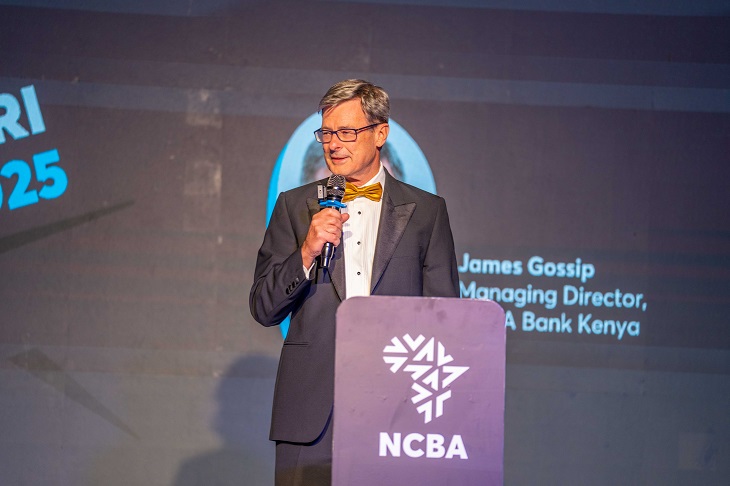
The Johari Awards exemplify this philosophy beautifully. In an industry where partners are often invisible, NCBA chose recognition. It chose gratitude. It chose to celebrate the ecosystem rather than claim all the credit.
Recognizing 154 partners nationwide in 2025 was not a publicity stunt. It was a signal. A signal that the bank understands where value is created and is confident enough to share the spotlight.
This approach reflects a mature management culture. Insecure institutions hoard recognition. Secure ones distribute it. NCBA’s leadership has shown, consistently, that it values shared success over loud self-praise.
Market leadership in vehicle financing did not happen by accident either. It required patient relationship-building with dealers, structured credit processes, and a deep appreciation of Kenya’s mobility-driven economy.
Vehicles are not luxuries in Kenya. They are livelihoods. They move goods, connect markets, enable services, and sustain families. NCBA’s asset finance strategy recognizes this reality and responds to it pragmatically.
Flexible repayment terms are not framed as favors, but as tools aligned to cash flow realities. This reflects management that listens rather than dictates, adapting products to life rather than forcing life to adapt to products.
For businesses, especially SMEs, this flexibility is often the difference between growth and stagnation. NCBA has positioned itself as a partner in momentum, not an obstacle to it.
The bank’s nationwide presence matters more than marketing slogans ever could. Asset finance only works when access is real, local, and reliable. NCBA’s footprint ensures that opportunity is not confined to a few urban pockets.
Behind this reach is operational discipline. Processes that work consistently across regions do not happen by luck. They are the result of leadership that values systems, training, and accountability.
What stands out in NCBA’s journey is the restraint of its management. There is no unnecessary noise. No aggressive chest-thumping. Just steady execution, quarter after quarter, partner after partner.
Brand trust is built quietly. Every approved loan that matches reality, every repayment plan that respects cash flow, every dealer relationship that endures builds confidence in the institution.
NCBA’s asset finance success also reflects a clear understanding of Kenya’s development path. Growth here is asset-led. Equipment, vehicles, and machinery drive productivity before anything else.
By making asset ownership possible, NCBA is not just financing purchases. It is financing livelihoods, scaling enterprises, and enabling ambition across sectors.
The Johari Awards also reveal something deeper about management philosophy. Recognition creates loyalty. Loyalty creates advocacy.
Advocacy strengthens the brand in ways advertising never can.
Partners who feel seen defend the brand in difficult times. They recommend it when alternatives exist. That kind of goodwill is earned, not bought.
The current management team deserves credit for sustaining this culture. In many institutions, leadership changes disrupt momentum. At NCBA, continuity has strengthened execution.
This speaks to governance maturity. Strategies are institutional, not personality-driven. Systems outlive individuals, which is the mark of strong management.
The brand has been run with balance. Innovation without recklessness. Growth without arrogance. Expansion without dilution of values.
NCBA’s leadership has resisted the temptation to chase headlines at the expense of fundamentals. Asset finance is complex, capital-intensive, and risk-sensitive. Discipline here is non-negotiable.
The result is a brand that feels reliable rather than flashy. In finance, reliability is the ultimate luxury.
Even the language around NCBA’s asset finance story is telling. It is about partnership, accessibility, and growth, not domination or conquest. That tone reflects internal confidence.
For businesses and individuals, this translates into predictability. They know what to expect, and that consistency builds long-term relationships.
From vehicles to equipment, NCBA’s asset finance portfolio mirrors the diversity of Kenya’s economy. It serves transporters, farmers, contractors, professionals, and entrepreneurs without losing focus.
This breadth requires management that understands sectoral nuances.
One-size-fits-all finance fails quickly. NCBA’s tailored approach suggests leadership that respects complexity.
The bank’s ability to coordinate dealers, credit teams, risk managers, and customers speaks to internal alignment. Silos kill ecosystems. NCBA has clearly worked to break them.
Credit must be available, but it must also be sustainable. The balance NCBA has struck here reflects thoughtful stewardship rather than aggressive expansion.
In a market where trust is fragile, NCBA has chosen consistency over spectacle. That choice is paying dividends.
The current management has allowed the brand to breathe, grow, and mature without forcing it into artificial shapes. This is understated leadership at its best.
NCBA’s asset finance leadership is therefore not just a product story. It is a governance story. A story of how well-run institutions quietly outperform louder competitors.
As Kenya’s economy continues to evolve, asset ownership will remain central to growth. NCBA is well-positioned not because it says so, but because its ecosystem proves it daily.
By empowering partners, respecting customers, and executing with discipline, NCBA continues to power Kenya’s growth story in a way that feels sustainable and human.
That is what real leadership in finance looks like. Not noise. Not hype. Just steady, thoughtful management building value year after year.
Read Also: A Masterstroke in African Banking: Why the NCBA–Nedbank Deal Could Become the Deal of the Century

About Steve Biko Wafula
Steve Biko is the CEO OF Soko Directory and the founder of Hidalgo Group of Companies. Steve is currently developing his career in law, finance, entrepreneurship and digital consultancy; and has been implementing consultancy assignments for client organizations comprising of trainings besides capacity building in entrepreneurial matters.He can be reached on: +254 20 510 1124 or Email: info@sokodirectory.com

- January 2026 (220)
- February 2026 (243)
- March 2026 (180)
- January 2025 (119)
- February 2025 (191)
- March 2025 (212)
- April 2025 (193)
- May 2025 (161)
- June 2025 (157)
- July 2025 (227)
- August 2025 (211)
- September 2025 (270)
- October 2025 (297)
- November 2025 (230)
- December 2025 (219)
- January 2024 (238)
- February 2024 (227)
- March 2024 (190)
- April 2024 (133)
- May 2024 (157)
- June 2024 (145)
- July 2024 (136)
- August 2024 (154)
- September 2024 (212)
- October 2024 (255)
- November 2024 (196)
- December 2024 (143)
- January 2023 (182)
- February 2023 (203)
- March 2023 (322)
- April 2023 (297)
- May 2023 (267)
- June 2023 (214)
- July 2023 (212)
- August 2023 (257)
- September 2023 (237)
- October 2023 (264)
- November 2023 (286)
- December 2023 (177)
- January 2022 (293)
- February 2022 (329)
- March 2022 (358)
- April 2022 (292)
- May 2022 (271)
- June 2022 (232)
- July 2022 (278)
- August 2022 (253)
- September 2022 (246)
- October 2022 (196)
- November 2022 (232)
- December 2022 (167)
- January 2021 (182)
- February 2021 (227)
- March 2021 (325)
- April 2021 (259)
- May 2021 (285)
- June 2021 (272)
- July 2021 (277)
- August 2021 (232)
- September 2021 (271)
- October 2021 (304)
- November 2021 (364)
- December 2021 (249)
- January 2020 (272)
- February 2020 (310)
- March 2020 (390)
- April 2020 (321)
- May 2020 (335)
- June 2020 (327)
- July 2020 (333)
- August 2020 (276)
- September 2020 (214)
- October 2020 (233)
- November 2020 (242)
- December 2020 (187)
- January 2019 (251)
- February 2019 (215)
- March 2019 (283)
- April 2019 (254)
- May 2019 (269)
- June 2019 (249)
- July 2019 (335)
- August 2019 (293)
- September 2019 (306)
- October 2019 (313)
- November 2019 (362)
- December 2019 (318)
- January 2018 (291)
- February 2018 (213)
- March 2018 (275)
- April 2018 (223)
- May 2018 (235)
- June 2018 (176)
- July 2018 (256)
- August 2018 (247)
- September 2018 (255)
- October 2018 (282)
- November 2018 (282)
- December 2018 (184)
- January 2017 (183)
- February 2017 (194)
- March 2017 (207)
- April 2017 (104)
- May 2017 (169)
- June 2017 (205)
- July 2017 (189)
- August 2017 (195)
- September 2017 (186)
- October 2017 (235)
- November 2017 (253)
- December 2017 (266)
- January 2016 (164)
- February 2016 (165)
- March 2016 (189)
- April 2016 (143)
- May 2016 (245)
- June 2016 (182)
- July 2016 (271)
- August 2016 (247)
- September 2016 (233)
- October 2016 (191)
- November 2016 (243)
- December 2016 (153)
- January 2015 (1)
- February 2015 (4)
- March 2015 (164)
- April 2015 (107)
- May 2015 (116)
- June 2015 (119)
- July 2015 (145)
- August 2015 (157)
- September 2015 (186)
- October 2015 (169)
- November 2015 (173)
- December 2015 (205)
- March 2014 (2)
- March 2013 (10)
- June 2013 (1)
- March 2012 (7)
- April 2012 (15)
- May 2012 (1)
- July 2012 (1)
- August 2012 (4)
- October 2012 (2)
- November 2012 (2)
- December 2012 (1)