
A Treasury Built on Lies: Why John Mbadi Must Resign and Face Prosecution
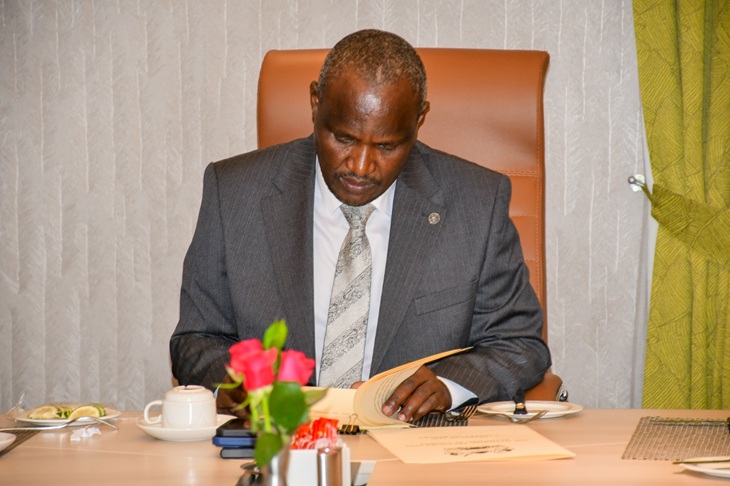
When the Cabinet Secretary in charge of a nation’s finances admits in an affidavit that he misled the public, the matter ceases to be politics and becomes a national scandal that strikes at the heart of public trust. The admission by John Mbadi that he lied to Kenyans about the controversial Sh5 trillion infrastructure fund is not a small misstatement, nor is it a trivial political slip. It is an extraordinary confession by the very individual entrusted with managing the country’s economic lifeblood. A Treasury Cabinet Secretary does not merely hold an office; he holds the financial destiny of a nation. When such an official admits to deceiving the public about a fund of this magnitude, the implications are grave, far-reaching, and impossible to ignore.
The National Treasury sits at the center of Kenya’s economic governance. It determines how public money is raised, how debt is structured, and how development priorities are financed. Every citizen, every investor, and every international partner relies on the credibility of the institution and the honesty of the person who leads it. For the Treasury Cabinet Secretary to concede, under oath, that he knowingly misled Kenyans about a Sh5 trillion initiative undermines not only his own credibility but also the institutional integrity of the Treasury itself. Such a revelation shakes confidence in the entire architecture of economic governance.
This is not merely about political messaging or communication errors. The admission came through a sworn affidavit—a legal instrument that carries the weight of truth under oath. That detail alone elevates the seriousness of the matter. A sworn statement acknowledging that the public was misled raises profound questions about accountability, legality, and the ethical standards expected from those entrusted with the highest offices of the state. If a Cabinet Secretary can mislead the public on matters involving trillions of shillings and continue in office without consequence, then the concept of public accountability becomes meaningless.

Kenya cannot afford to normalize dishonesty in the management of public finances. At a time when citizens are burdened with taxes, struggling businesses are fighting to survive, and the country faces intense fiscal pressure, transparency from the Treasury is not optional—it is essential. Every statement issued by the Treasury shapes investor confidence, guides public policy, and influences the credibility of the Kenyan state in global financial markets. When the head of that institution admits to lying, the damage extends far beyond a single controversy; it erodes the foundation upon which public financial management rests.
The inevitable conclusion is unavoidable. John Mbadi can no longer continue serving as Cabinet Secretary for the National Treasury. His admission has stripped him of the credibility required to occupy that office. Leadership at the Treasury demands absolute integrity, unwavering honesty, and a commitment to the truth even when the truth is inconvenient. A Cabinet Secretary who acknowledges misleading the public about trillions of shillings has forfeited the moral authority to remain in charge of the nation’s finances.
Resignation alone, however, is not sufficient. The gravity of this admission requires a full legal examination of whether laws governing public accountability and financial management have been violated. The Kenyan Constitution and the legal framework governing public office demand honesty, transparency, and fidelity to the truth from state officials. When those principles are breached, consequences must follow—not merely political consequences but legal ones as well.
This is why the Law Society of Kenya must now step forward and demand accountability. The LSK has historically positioned itself as a guardian of constitutionalism and the rule of law. This moment calls for that mandate to be exercised with clarity and courage. The society must move to pursue legal accountability and ensure that the courts examine the circumstances under which Kenyans were misled about the Sh5 trillion infrastructure fund. Silence in the face of such an admission would send a dangerous signal that dishonesty at the highest levels of government carries no consequences.
The Kenyan people deserve leadership that respects the truth, particularly in matters involving public finances. The Treasury is not a political theater where narratives can be shaped to suit momentary convenience. It is a critical institution whose credibility underpins the economic stability of the republic. When that credibility is compromised, the nation pays the price—in lost investor confidence, weakened institutions, and a deepening erosion of trust between citizens and the state.
This moment therefore demands clarity and courage. John Mbadi must resign immediately. Beyond resignation, the relevant legal institutions—supported by the Law Society of Kenya—must pursue the matter to its logical conclusion and determine whether prosecution is warranted. Public office cannot be a shield behind which falsehoods are admitted and then forgotten.
Kenya’s democracy cannot survive if honesty becomes optional for those who manage the nation’s wealth. The rule of law must prevail, and the standards of public service must remain uncompromising. The admission has been made. The truth is now on record. What remains is accountability.
Read Also: John Mbadi Calls Technological Innovation To Boost Revenue Collection By KRA

About Steve Biko Wafula
Steve Biko is the CEO OF Soko Directory and the founder of Hidalgo Group of Companies. Steve is currently developing his career in law, finance, entrepreneurship and digital consultancy; and has been implementing consultancy assignments for client organizations comprising of trainings besides capacity building in entrepreneurial matters.He can be reached on: +254 20 510 1124 or Email: info@sokodirectory.com

- January 2026 (220)
- February 2026 (246)
- March 2026 (286)
- April 2026 (46)
- January 2025 (119)
- February 2025 (191)
- March 2025 (212)
- April 2025 (193)
- May 2025 (161)
- June 2025 (157)
- July 2025 (227)
- August 2025 (211)
- September 2025 (270)
- October 2025 (297)
- November 2025 (230)
- December 2025 (219)
- January 2024 (238)
- February 2024 (227)
- March 2024 (190)
- April 2024 (133)
- May 2024 (157)
- June 2024 (145)
- July 2024 (136)
- August 2024 (154)
- September 2024 (212)
- October 2024 (255)
- November 2024 (196)
- December 2024 (143)
- January 2023 (182)
- February 2023 (203)
- March 2023 (322)
- April 2023 (297)
- May 2023 (267)
- June 2023 (214)
- July 2023 (212)
- August 2023 (257)
- September 2023 (237)
- October 2023 (264)
- November 2023 (286)
- December 2023 (177)
- January 2022 (293)
- February 2022 (329)
- March 2022 (358)
- April 2022 (292)
- May 2022 (271)
- June 2022 (232)
- July 2022 (278)
- August 2022 (253)
- September 2022 (246)
- October 2022 (196)
- November 2022 (232)
- December 2022 (167)
- January 2021 (182)
- February 2021 (227)
- March 2021 (325)
- April 2021 (259)
- May 2021 (285)
- June 2021 (272)
- July 2021 (277)
- August 2021 (232)
- September 2021 (271)
- October 2021 (304)
- November 2021 (364)
- December 2021 (249)
- January 2020 (272)
- February 2020 (310)
- March 2020 (390)
- April 2020 (321)
- May 2020 (335)
- June 2020 (327)
- July 2020 (333)
- August 2020 (276)
- September 2020 (214)
- October 2020 (233)
- November 2020 (242)
- December 2020 (187)
- January 2019 (251)
- February 2019 (215)
- March 2019 (283)
- April 2019 (254)
- May 2019 (269)
- June 2019 (249)
- July 2019 (335)
- August 2019 (293)
- September 2019 (306)
- October 2019 (313)
- November 2019 (362)
- December 2019 (318)
- January 2018 (291)
- February 2018 (213)
- March 2018 (275)
- April 2018 (223)
- May 2018 (235)
- June 2018 (176)
- July 2018 (256)
- August 2018 (247)
- September 2018 (255)
- October 2018 (282)
- November 2018 (282)
- December 2018 (184)
- January 2017 (183)
- February 2017 (194)
- March 2017 (207)
- April 2017 (104)
- May 2017 (169)
- June 2017 (205)
- July 2017 (189)
- August 2017 (195)
- September 2017 (186)
- October 2017 (235)
- November 2017 (253)
- December 2017 (266)
- January 2016 (164)
- February 2016 (165)
- March 2016 (189)
- April 2016 (143)
- May 2016 (245)
- June 2016 (182)
- July 2016 (271)
- August 2016 (247)
- September 2016 (233)
- October 2016 (191)
- November 2016 (243)
- December 2016 (153)
- January 2015 (1)
- February 2015 (4)
- March 2015 (164)
- April 2015 (107)
- May 2015 (116)
- June 2015 (119)
- July 2015 (145)
- August 2015 (157)
- September 2015 (186)
- October 2015 (169)
- November 2015 (173)
- December 2015 (205)
- March 2014 (2)
- March 2013 (10)
- June 2013 (1)
- March 2012 (7)
- April 2012 (15)
- May 2012 (1)
- July 2012 (1)
- August 2012 (4)
- October 2012 (2)
- November 2012 (2)
- December 2012 (1)