
All KRA Customs Officers At JKIA And Other Entry Points To Wear Body Cams
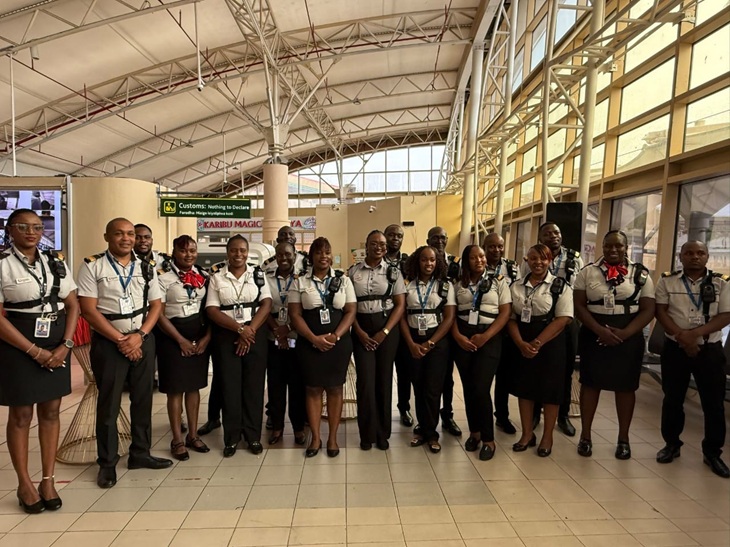
Kenya Revenue Authority (KRA) has commissioned 350 Body Worn Cameras countrywide, becoming one of the few tax administrations globally, and the first in the region, to deploy the cameras. This marks a major milestone in the modernization of border management in Kenya.
The Body Worn Cameras will be deployed at all border points across the country to support evidence collection and enhance professionalism and integrity within customs operations.
Speaking during the launch, KRA Commissioner General Mr. Humphrey Wattanga said that by accurately documenting officer-public interactions, the system protects officers from unfounded allegations while safeguarding traders and members of the public from any staff misconduct.

“The presence of real-time recording is expected to deter corruption, reduce confrontation, and foster mutual trust,” said Mr. Wattanga.
The Commissioner General emphasized that the adoption of Body Worn Cameras is not merely a technological upgrade but a deliberate step toward cultural change, reinforcing integrity, professionalism, and public confidence in the Authority.
“The deployment underscores Kenya’s commitment to safeguarding its borders while facilitating legitimate trade in an increasingly interconnected world. As the first tax administration in the region to operationalize Body Worn Cameras at this scale, KRA has set a new benchmark for innovation and accountability in customs enforcement,” he added.
The cameras will be supported by four data storage servers, integrated docking stations, and complementary docking systems. The Authority has also established a Central Command Centre to manage and monitor footage, ensuring structured oversight, secure storage, and proper review mechanisms.
In addition, the cameras are equipped with real-time GPS positioning for location tracking, LTE connectivity to enable live streaming and remote monitoring, and secure recording capabilities. These features enhance situational awareness, strengthen supervision of field operations, and promote accountability at all levels of enforcement.
Speaking at the event, Commissioner for Customs and Border Control Dr. Lilian Nyawanda said the deployment of Body Worn Cameras comes against the backdrop of increasingly complex enforcement environments.
“In recent years, customs and border control officers have encountered organized smuggling networks and hostile situations during enforcement operations, with some cases proving difficult to conclude due to a lack of real-time photographic or video evidence. The new system addresses these gaps by enabling real-time recording, live streaming, and secure preservation of audio-visual evidence to support investigations and prosecutions,” said Dr. Nyawanda.
She added that customs officers will be required to wear the cameras during passenger clearance at international airports, verification of goods at seaports and inland container depots, operations at One Stop Border Posts, as well as during surveillance, border patrols, and the rummaging of vessels, vehicles, and aircraft. The system will also support multi-agency enforcement operations and monitoring of customs-controlled areas such as bonded facilities and export processing zones.
The Body Worn Camera system was officially commissioned today at Jomo Kenyatta International Airport (JKIA). The initiative signals a new era of enhanced transparency, accountability, and operational efficiency in customs enforcement.
Beyond revenue collection, KRA is mandated to facilitate legitimate trade while securing Kenya’s land borders, territorial waters, and air entry points. As global trade and cross-border movements continue to expand, customs administrations play a critical role as the first line of defence against illicit trade, smuggling, counterfeit goods, narcotics, weapons, and other harmful products that threaten public health, national security, and economic stability.
The project has been implemented with support from development partners, including the World Bank, as part of broader initiatives to strengthen coordinated border management.
The launch at JKIA sends a clear message that Kenya’s borders are becoming more secure, its systems more transparent, and its enforcement mechanisms more responsive to the demands of modern trade and security.
Read Also: 7 Million Taxpayers Carry The Tax Burden For 22 Million Kenyans: Why KRA Is Expanding The Tax Net

About Soko Directory Team
Soko Directory is a Financial and Markets digital portal that tracks brands, listed firms on the NSE, SMEs and trend setters in the markets eco-system.Find us on Facebook: facebook.com/SokoDirectory and on Twitter: twitter.com/SokoDirectory

- January 2026 (220)
- February 2026 (246)
- March 2026 (286)
- April 2026 (22)
- January 2025 (119)
- February 2025 (191)
- March 2025 (212)
- April 2025 (193)
- May 2025 (161)
- June 2025 (157)
- July 2025 (227)
- August 2025 (211)
- September 2025 (270)
- October 2025 (297)
- November 2025 (230)
- December 2025 (219)
- January 2024 (238)
- February 2024 (227)
- March 2024 (190)
- April 2024 (133)
- May 2024 (157)
- June 2024 (145)
- July 2024 (136)
- August 2024 (154)
- September 2024 (212)
- October 2024 (255)
- November 2024 (196)
- December 2024 (143)
- January 2023 (182)
- February 2023 (203)
- March 2023 (322)
- April 2023 (297)
- May 2023 (267)
- June 2023 (214)
- July 2023 (212)
- August 2023 (257)
- September 2023 (237)
- October 2023 (264)
- November 2023 (286)
- December 2023 (177)
- January 2022 (293)
- February 2022 (329)
- March 2022 (358)
- April 2022 (292)
- May 2022 (271)
- June 2022 (232)
- July 2022 (278)
- August 2022 (253)
- September 2022 (246)
- October 2022 (196)
- November 2022 (232)
- December 2022 (167)
- January 2021 (182)
- February 2021 (227)
- March 2021 (325)
- April 2021 (259)
- May 2021 (285)
- June 2021 (272)
- July 2021 (277)
- August 2021 (232)
- September 2021 (271)
- October 2021 (304)
- November 2021 (364)
- December 2021 (249)
- January 2020 (272)
- February 2020 (310)
- March 2020 (390)
- April 2020 (321)
- May 2020 (335)
- June 2020 (327)
- July 2020 (333)
- August 2020 (276)
- September 2020 (214)
- October 2020 (233)
- November 2020 (242)
- December 2020 (187)
- January 2019 (251)
- February 2019 (215)
- March 2019 (283)
- April 2019 (254)
- May 2019 (269)
- June 2019 (249)
- July 2019 (335)
- August 2019 (293)
- September 2019 (306)
- October 2019 (313)
- November 2019 (362)
- December 2019 (318)
- January 2018 (291)
- February 2018 (213)
- March 2018 (275)
- April 2018 (223)
- May 2018 (235)
- June 2018 (176)
- July 2018 (256)
- August 2018 (247)
- September 2018 (255)
- October 2018 (282)
- November 2018 (282)
- December 2018 (184)
- January 2017 (183)
- February 2017 (194)
- March 2017 (207)
- April 2017 (104)
- May 2017 (169)
- June 2017 (205)
- July 2017 (189)
- August 2017 (195)
- September 2017 (186)
- October 2017 (235)
- November 2017 (253)
- December 2017 (266)
- January 2016 (164)
- February 2016 (165)
- March 2016 (189)
- April 2016 (143)
- May 2016 (245)
- June 2016 (182)
- July 2016 (271)
- August 2016 (247)
- September 2016 (233)
- October 2016 (191)
- November 2016 (243)
- December 2016 (153)
- January 2015 (1)
- February 2015 (4)
- March 2015 (164)
- April 2015 (107)
- May 2015 (116)
- June 2015 (119)
- July 2015 (145)
- August 2015 (157)
- September 2015 (186)
- October 2015 (169)
- November 2015 (173)
- December 2015 (205)
- March 2014 (2)
- March 2013 (10)
- June 2013 (1)
- March 2012 (7)
- April 2012 (15)
- May 2012 (1)
- July 2012 (1)
- August 2012 (4)
- October 2012 (2)
- November 2012 (2)
- December 2012 (1)