
Courtroom or Court of Public Opinion? The High-Stakes Battle Around the KBL–JILK Dispute
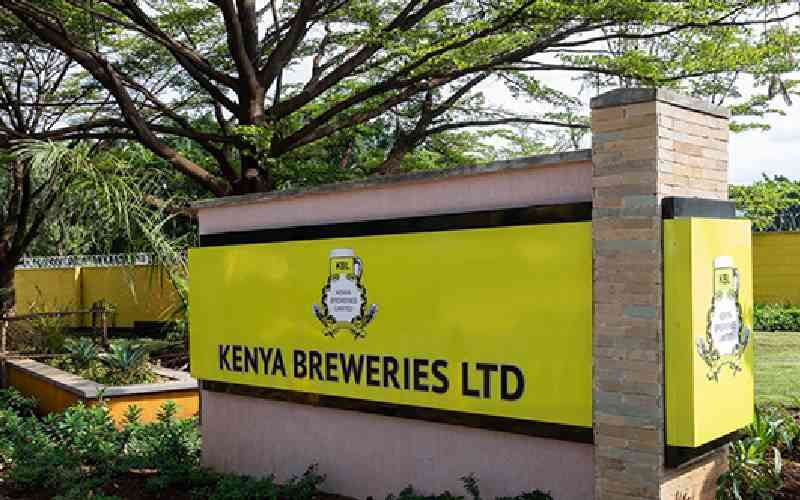
What began as a commercial dispute over a construction contract has slowly evolved into something much larger—and potentially more troubling. The ongoing battle involving Kenya Breweries Limited (KBL) and JILK is no longer just about a contested arbitral award. It has grown into a test of how commercial disputes in Kenya are resolved: through the structured discipline of the courts, or through a complex mix of litigation, regulatory pressure, public campaigns, and social-media activism.
A recent report by The Standard Group pointed to the broader significance of the dispute, suggesting that the case is now casting a spotlight on the integrity and credibility of Kenya’s arbitration system itself. In other words, the matter is no longer simply about who owes whom money. It is about how justice is pursued—and where the lines are drawn.
Where the Dispute Began
According to material filed by JILK, the disagreement initially revolved around a claim of about KSh163 million arising from a construction contract. When the matter could not be resolved amicably, the company invoked the arbitration clause embedded in the agreement.

Because the parties could not agree on an arbitrator, JILK says it turned to the Architectural Association of Kenya (AAK). In a letter dated 15 February 2020, the firm requested the professional body to appoint an arbitrator. Four days later, the AAK appointed quantity surveyor Mutinda Mutuku to preside over the process.
But as the arbitration unfolded, the scale of the claim changed dramatically. What began as a KSh163 million dispute reportedly ballooned to roughly KSh2.45 billion before the arbitrator. That escalation, combined with subsequent allegations raised through whistleblower material, became a central part of KBL’s argument that serious questions existed regarding the integrity of the arbitration process.
Allegations and Counter-Allegations
The dispute also includes a separate set of allegations involving workplace misconduct claims. In an undated complaint addressed to East African Breweries Limited (EABL), JILK accused an individual linked to the project of misconduct and said it was prepared to provide a signed complaint from one of the affected parties.
KBL responded by requesting supporting documentation to enable proper investigation of the allegations. Letters dated 18 December 2019 and 10 January 2020 asked JILK to provide the relevant evidence.
Shortly afterward, Kenya’s criminal investigators entered the picture. On 5 February 2020, the Directorate of Criminal Investigations (DCI) wrote, indicating that investigations had begun and requesting that the individual be made available for questioning. KBL replied on 12 February 2020, stating that the individual in question was not its employee but worked for JAE Engineering Limited. The company also indicated that no complaint had been raised during the project itself.
Whether one agrees with that position or not, the correspondence suggests that the issue was not ignored; rather, it became part of the formal investigative record.
The Whistleblower Twist
Another layer was added in July 2022 when KBL says it received a whistleblower report through its internal SpeakUp system. According to the company, the report alleged bias, conflicts of interest and corruption linked to the arbitration proceedings.
KBL states that it forwarded the allegations to the DCI for investigation.
JILK, however, strongly disputes this narrative. In subsequent filings related to a proposed private prosecution, the company claims that the alleged whistleblower does not exist and that the report itself was fabricated.
These competing claims represent two dramatically different versions of events. Yet, as legal observers often point out, such disputes are precisely why courts exist: to weigh evidence, test testimony under cross-examination, and determine credibility through formal procedure.
When Litigation Leaves the Courtroom
What has raised eyebrows among legal watchers is not only the allegations themselves but also the strategy that followed.
On 10 March 2026, lawyers from Kinoti & Kibe wrote directly to Martha Koome, the Chief Justice of Kenya, asking that a magistrate handling JILK’s private-prosecution application be replaced. The letter accused the magistrate of “gross incompetence” and judicial bias.
Yet the court record attached to the same letter indicated that the magistrate had simply declined to certify the application as urgent, directed that it be served on the Office of the Director of Public Prosecutions, and scheduled a mention date.
Such procedural decisions are routine in litigation. Normally, disagreements with them are addressed through appeals, review applications or formal recusal requests within the court system—not through direct complaints to the Chief Justice.
A Broader Pattern of Escalation
The pattern of escalation appears in related litigation as well. In a separate case tied to the global beverage industry transaction involving Diageo and Asahi Group Holdings, litigants accused a High Court judge of effectively suspending constitutional rights after declining to proceed with a hearing before his transfer.
In later filings, the claims expanded further, alleging that the Chief Justice had facilitated an unconstitutional outcome and even suggesting foreign influence over Kenya’s judicial authority.
Such language is unusual in normal appellate arguments. Instead, it signals a broader strategy of public escalation.
Social Media Enters the Arena
The dispute has not remained confined to legal filings. Commentaries on platforms such as X (formerly Twitter) have also amplified the matter.
Public posts attributed to lawyer and commentator Wahome Thuku have repeatedly discussed the dispute, while former Law Society president Nelson Havi has also weighed in publicly on aspects of the case.
While public debate about court matters is not unusual, the volume and intensity of commentary highlight how modern litigation increasingly unfolds simultaneously in courtrooms and online platforms.
A Test for Kenya’s Legal System
None of this means that any party is automatically right or wrong. Arbitrators can make mistakes. Corporations can misuse power. Whistleblower claims can be genuine—or fabricated.
But the rule of law depends on how such disputes are resolved.
In a constitutional system, serious allegations are tested through evidence, investigative procedure, and judicial reasoning. When litigation begins to spill into public pressure campaigns, leaked letters, and social-media mobilization, the stakes shift from the merits of the case to the resilience of the justice system itself.
Seen through that lens, the dispute now extends far beyond one construction project linked to a brewery development in Kisumu. It has become a broader question about whether Kenya’s ambition to be a trusted hub for arbitration and commercial dispute resolution can withstand the pressures of modern, highly public litigation.
Ultimately, the principle should remain simple: whether a dispute involves a small contractor or a multinational company, the standard must be the same.
Prove it in court—or risk turning justice into a contest fought not in the courtroom, but in the court of public opinion.
Read Also: The Jilk Construction Magic: Court To Hear How Ksh163 Million Became Ksh 2.4 Billion

About Soko Directory Team
Soko Directory is a Financial and Markets digital portal that tracks brands, listed firms on the NSE, SMEs and trend setters in the markets eco-system.Find us on Facebook: facebook.com/SokoDirectory and on Twitter: twitter.com/SokoDirectory

- January 2026 (220)
- February 2026 (243)
- March 2026 (143)
- January 2025 (119)
- February 2025 (191)
- March 2025 (212)
- April 2025 (193)
- May 2025 (161)
- June 2025 (157)
- July 2025 (227)
- August 2025 (211)
- September 2025 (270)
- October 2025 (297)
- November 2025 (230)
- December 2025 (219)
- January 2024 (238)
- February 2024 (227)
- March 2024 (190)
- April 2024 (133)
- May 2024 (157)
- June 2024 (145)
- July 2024 (136)
- August 2024 (154)
- September 2024 (212)
- October 2024 (255)
- November 2024 (196)
- December 2024 (143)
- January 2023 (182)
- February 2023 (203)
- March 2023 (322)
- April 2023 (297)
- May 2023 (267)
- June 2023 (214)
- July 2023 (212)
- August 2023 (257)
- September 2023 (237)
- October 2023 (264)
- November 2023 (286)
- December 2023 (177)
- January 2022 (293)
- February 2022 (329)
- March 2022 (358)
- April 2022 (292)
- May 2022 (271)
- June 2022 (232)
- July 2022 (278)
- August 2022 (253)
- September 2022 (246)
- October 2022 (196)
- November 2022 (232)
- December 2022 (167)
- January 2021 (182)
- February 2021 (227)
- March 2021 (325)
- April 2021 (259)
- May 2021 (285)
- June 2021 (272)
- July 2021 (277)
- August 2021 (232)
- September 2021 (271)
- October 2021 (304)
- November 2021 (364)
- December 2021 (249)
- January 2020 (272)
- February 2020 (310)
- March 2020 (390)
- April 2020 (321)
- May 2020 (335)
- June 2020 (327)
- July 2020 (333)
- August 2020 (276)
- September 2020 (214)
- October 2020 (233)
- November 2020 (242)
- December 2020 (187)
- January 2019 (251)
- February 2019 (215)
- March 2019 (283)
- April 2019 (254)
- May 2019 (269)
- June 2019 (249)
- July 2019 (335)
- August 2019 (293)
- September 2019 (306)
- October 2019 (313)
- November 2019 (362)
- December 2019 (318)
- January 2018 (291)
- February 2018 (213)
- March 2018 (275)
- April 2018 (223)
- May 2018 (235)
- June 2018 (176)
- July 2018 (256)
- August 2018 (247)
- September 2018 (255)
- October 2018 (282)
- November 2018 (282)
- December 2018 (184)
- January 2017 (183)
- February 2017 (194)
- March 2017 (207)
- April 2017 (104)
- May 2017 (169)
- June 2017 (205)
- July 2017 (189)
- August 2017 (195)
- September 2017 (186)
- October 2017 (235)
- November 2017 (253)
- December 2017 (266)
- January 2016 (164)
- February 2016 (165)
- March 2016 (189)
- April 2016 (143)
- May 2016 (245)
- June 2016 (182)
- July 2016 (271)
- August 2016 (247)
- September 2016 (233)
- October 2016 (191)
- November 2016 (243)
- December 2016 (153)
- January 2015 (1)
- February 2015 (4)
- March 2015 (164)
- April 2015 (107)
- May 2015 (116)
- June 2015 (119)
- July 2015 (145)
- August 2015 (157)
- September 2015 (186)
- October 2015 (169)
- November 2015 (173)
- December 2015 (205)
- March 2014 (2)
- March 2013 (10)
- June 2013 (1)
- March 2012 (7)
- April 2012 (15)
- May 2012 (1)
- July 2012 (1)
- August 2012 (4)
- October 2012 (2)
- November 2012 (2)
- December 2012 (1)