
How NCBA’s Five-Year Execution Blueprint Redefined Banking Leadership in Africa
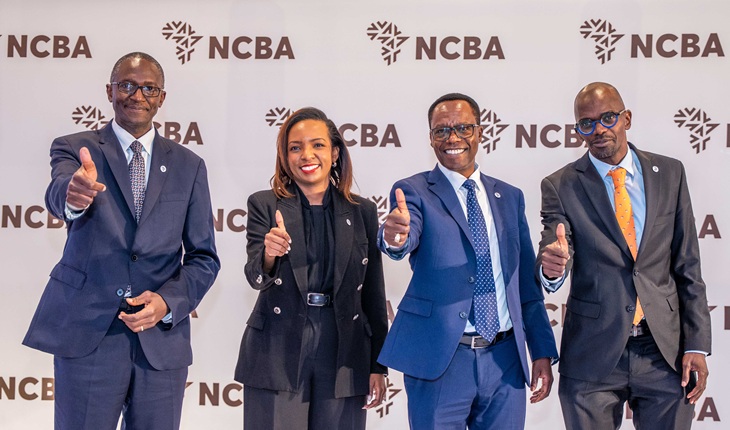
As John Gachora, the Managing Director of NCBA Group, stood to discuss the group’s performance for the 2025 financial year, it was clear he was a man proud of what his team had achieved over the past 5 years. Known for his humor, delivered in a manner that sometimes requires a third eye to sieve through, Gachora outlined what the brand had achieved since its inception 5 years ago.
The group’s performance over the 2020–2025 period stood out as a masterclass in disciplined execution that told a tale of clarity, consistency, and courage. The result is a transformation that positions the Group not just as a strong regional player, but as a benchmark for modern African banking.
Customer experience was the top focus. Achieving a Net Promoter Score of 72 percent in 2025 is no small feat in a sector often criticized for friction-filled interactions. This signals a shift from transactional banking to relationship-driven engagement—where trust, convenience, and responsiveness define brand equity. Recognition across customer service, sustainability, governance, and business solutions further reinforces that this is not a cosmetic transformation, but a deeply embedded institutional culture.

Equally compelling is the Group’s aggressive push to scale retail banking. Doubling the customer base while expanding from 89 to 123 branches reflects a dual strategy—leveraging both physical presence and digital channels. In a market like Kenya, where financial inclusion and accessibility remain critical, this hybrid model ensures that growth is not only rapid but also inclusive. It demonstrates an understanding that while digital banking is the future, physical touchpoints still play a crucial role in trust-building and customer acquisition.
NCBA’s dominance in corporate banking and asset finance reveals another layer of strategic maturity. Maintaining over 30 percent market share in asset finance since 2020 is not accidental—it is the result of targeted sector focus, disciplined pricing, and strong partnerships. Innovations such as NCBA ConnectPlus and AI-powered Carduka highlight how the bank is not just participating in the corporate banking space but actively redefining it. Bringing over 20,000 customers onto a cloud-based transactional platform and onboarding 6 million users through digital solutions signals scale, but more importantly, it signals relevance in a rapidly evolving financial ecosystem.
However, the most transformative pillar is arguably digital transformation. Disbursing KES 1.4 trillion in digital loans across Sub-Saharan Africa is a staggering achievement that underscores NCBA’s leadership in digital financial services. This is not just about volume—it is about accessibility, speed, and the democratization of credit. By ensuring that digital contributes 32 percent of Group profitability, NCBA has effectively future-proofed its business model. It has moved from viewing digital as a support function to positioning it as a core revenue driver.
Behind all these achievements is a deliberate investment in people and culture. Growing the workforce from 2,512 to over 4,000 employees while earning Top Employer certification in 2026 reflects a recognition that strategy execution is ultimately a human endeavor. High-performance cultures are not built overnight—they are cultivated through leadership development, continuous learning, and a shared sense of purpose. NCBA’s ability to scale its workforce while maintaining performance standards is a testament to strong internal alignment.
Taken together, these five pillars tell a story of a bank that understands the interplay between scale, innovation, and culture. NCBA’s journey over the past five years is a powerful reminder that sustainable success in banking is no longer about size alone—it is about agility, customer obsession, and the intelligent use of technology.
As the African financial landscape becomes increasingly competitive, NCBA’s model offers valuable lessons. Strategy must be clear, execution must be relentless, and innovation must be continuous. In that regard, NCBA has not just executed a plan—it has redefined what success looks like in modern African banking.
Related Content: How NCBA Group Subsidiaries Contributed To The Bank’s Overall Profits In 2025

About Soko Directory Team
Soko Directory is a Financial and Markets digital portal that tracks brands, listed firms on the NSE, SMEs and trend setters in the markets eco-system.Find us on Facebook: facebook.com/SokoDirectory and on Twitter: twitter.com/SokoDirectory

- January 2026 (220)
- February 2026 (243)
- March 2026 (253)
- January 2025 (119)
- February 2025 (191)
- March 2025 (212)
- April 2025 (193)
- May 2025 (161)
- June 2025 (157)
- July 2025 (227)
- August 2025 (211)
- September 2025 (270)
- October 2025 (297)
- November 2025 (230)
- December 2025 (219)
- January 2024 (238)
- February 2024 (227)
- March 2024 (190)
- April 2024 (133)
- May 2024 (157)
- June 2024 (145)
- July 2024 (136)
- August 2024 (154)
- September 2024 (212)
- October 2024 (255)
- November 2024 (196)
- December 2024 (143)
- January 2023 (182)
- February 2023 (203)
- March 2023 (322)
- April 2023 (297)
- May 2023 (267)
- June 2023 (214)
- July 2023 (212)
- August 2023 (257)
- September 2023 (237)
- October 2023 (264)
- November 2023 (286)
- December 2023 (177)
- January 2022 (293)
- February 2022 (329)
- March 2022 (358)
- April 2022 (292)
- May 2022 (271)
- June 2022 (232)
- July 2022 (278)
- August 2022 (253)
- September 2022 (246)
- October 2022 (196)
- November 2022 (232)
- December 2022 (167)
- January 2021 (182)
- February 2021 (227)
- March 2021 (325)
- April 2021 (259)
- May 2021 (285)
- June 2021 (272)
- July 2021 (277)
- August 2021 (232)
- September 2021 (271)
- October 2021 (304)
- November 2021 (364)
- December 2021 (249)
- January 2020 (272)
- February 2020 (310)
- March 2020 (390)
- April 2020 (321)
- May 2020 (335)
- June 2020 (327)
- July 2020 (333)
- August 2020 (276)
- September 2020 (214)
- October 2020 (233)
- November 2020 (242)
- December 2020 (187)
- January 2019 (251)
- February 2019 (215)
- March 2019 (283)
- April 2019 (254)
- May 2019 (269)
- June 2019 (249)
- July 2019 (335)
- August 2019 (293)
- September 2019 (306)
- October 2019 (313)
- November 2019 (362)
- December 2019 (318)
- January 2018 (291)
- February 2018 (213)
- March 2018 (275)
- April 2018 (223)
- May 2018 (235)
- June 2018 (176)
- July 2018 (256)
- August 2018 (247)
- September 2018 (255)
- October 2018 (282)
- November 2018 (282)
- December 2018 (184)
- January 2017 (183)
- February 2017 (194)
- March 2017 (207)
- April 2017 (104)
- May 2017 (169)
- June 2017 (205)
- July 2017 (189)
- August 2017 (195)
- September 2017 (186)
- October 2017 (235)
- November 2017 (253)
- December 2017 (266)
- January 2016 (164)
- February 2016 (165)
- March 2016 (189)
- April 2016 (143)
- May 2016 (245)
- June 2016 (182)
- July 2016 (271)
- August 2016 (247)
- September 2016 (233)
- October 2016 (191)
- November 2016 (243)
- December 2016 (153)
- January 2015 (1)
- February 2015 (4)
- March 2015 (164)
- April 2015 (107)
- May 2015 (116)
- June 2015 (119)
- July 2015 (145)
- August 2015 (157)
- September 2015 (186)
- October 2015 (169)
- November 2015 (173)
- December 2015 (205)
- March 2014 (2)
- March 2013 (10)
- June 2013 (1)
- March 2012 (7)
- April 2012 (15)
- May 2012 (1)
- July 2012 (1)
- August 2012 (4)
- October 2012 (2)
- November 2012 (2)
- December 2012 (1)