
KCB Bank Kenya Receives Approval for a $96.9M (KShs. 12.5B) Financing Facility from Green Climate Fund
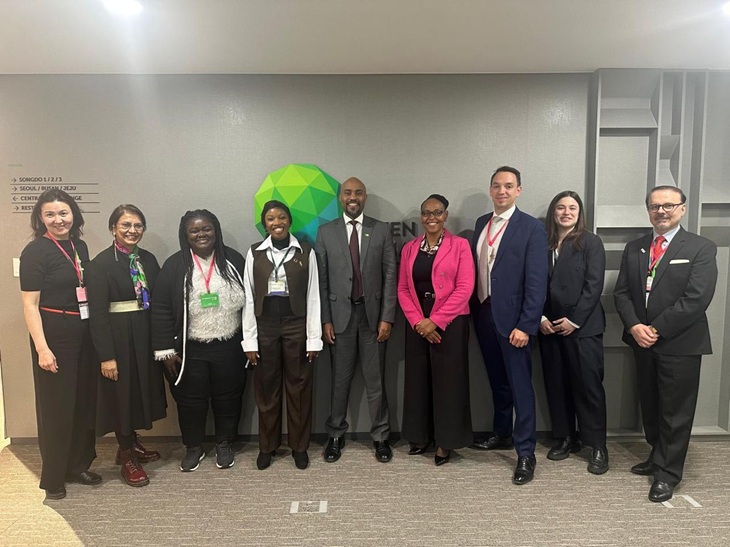
KCB Bank Kenya has received approval for a $96.9M (KShs. 12.5B) financing from the Green Climate Fund (GCF) to accelerate green projects for Micro, Small and Medium Enterprises (MSMEs) and farmers in Kenya.
The blended finance initiative—a mix of concessional lending, a guarantee, and a grant— under the Climate Smart Technology (CST) programme, is meant to support Kenya’s most vulnerable communities.
This facility will be deployed towards supporting value-chain and gender-inclusive interventions through the adoption of solar-powered and clean cooking technologies, climate-smart agriculture, waste management and circular economy as well as energy efficiency improvements. The initiative will enable them to build resilience, improve productivity, and transition to low-carbon practices.

Approximately 60% of investments will focus on adaptation, particularly climate-resilient agriculture and water management technologies, while 40% will target mitigation technologies such as renewable energy and energy efficiency.
Through this facility, KCB Bank Kenya will deploy financing solutions, including flexible credit products, mixed finance structures, and digital lending platforms, to reach underserved populations at scale.
KCB Group CEO, Paul Russo said; “This is a bold step to scale climate finance climate finance. By targeting MSMEs and smallholder farmers we are ensuring that no one is left behind in the transition to a climate-resilient future. Our goal is to empower these communities with the tools, technologies, and financing they need to thrive in the face of climate change threats,”
The program aligns seamlessly with Kenya’s National Climate Change Action Plan (NCCAP) III 2023 and the updated Nationally Determined Contribution (NDC).
Catherine Koffman, Director of the Green Climate Fund’s Department of the Africa Region said: “The climate-smart technologies for micro, small and medium-sized enterprises and farmers project addresses one of the toughest barriers to climate action: access to finance for small businesses and farmers. By crowding in private capital and derisking climate- smart investments, GCF finance will empower Kenya’s MSMEs and farmers to adopt solutions that strengthen resilience, productivity and long-term economic stability. The investment reflects GCF’s ability to unlock private investment to deliver capital at scale and the Fund’s commitment to be Kenya’s climate partner of choice.”
The approval comes at a time when Kenya continues to face acute vulnerability to climate change, with over 80% of its landmass categorized as arid and semi-arid lands (ASALs). These regions experience frequent climate hazards, including prolonged droughts and extreme flooding, leading to significant economic losses – estimated at 3% of the country’s GDP annually.
With approximately 46% of Kenyans living below the poverty line, and agriculture contributing 26% to GDP while employing 70% of the rural workforce, climate disruptions severely impact livelihoods, food security, and economic stability. On the other hand, reliance on rain-fed agriculture exacerbates exposure to erratic weather patterns. MSMEs, farmers, and rural communities struggle to access climate-smart technologies for food production, financing mechanisms, and adaptation strategies.
KCB Group continues to make significant strides in climate action, financial inclusion, and community development in line with its ambition to create long-term value for stakeholders while supporting East Africa’s transition to a green and inclusive economy.
Last year, KCB Group assessed loans valued at KShs. 578.3 billion for environmental and social risks last year, further deepening the Bank’s play in green financing. This brings the cumulative total assessed since 2020 to over KShs. 1 trillion under the Group’s Environmental and Social Due Diligence (ESDD) process. KCB also disbursed KShs. 50 billion in green loans, growing its green portfolio to 25.84% from 15% in 2023. The support was extended to green products designed to foster energy transition, including initiatives in the blue economy, e-mobility, and climate change adaptation.
Read Also: Owning the Checkout: Why KCB’s Pesapal Play Signals a New Banking Battleground

About Soko Directory Team
Soko Directory is a Financial and Markets digital portal that tracks brands, listed firms on the NSE, SMEs and trend setters in the markets eco-system.Find us on Facebook: facebook.com/SokoDirectory and on Twitter: twitter.com/SokoDirectory

- January 2026 (220)
- February 2026 (243)
- March 2026 (252)
- January 2025 (119)
- February 2025 (191)
- March 2025 (212)
- April 2025 (193)
- May 2025 (161)
- June 2025 (157)
- July 2025 (227)
- August 2025 (211)
- September 2025 (270)
- October 2025 (297)
- November 2025 (230)
- December 2025 (219)
- January 2024 (238)
- February 2024 (227)
- March 2024 (190)
- April 2024 (133)
- May 2024 (157)
- June 2024 (145)
- July 2024 (136)
- August 2024 (154)
- September 2024 (212)
- October 2024 (255)
- November 2024 (196)
- December 2024 (143)
- January 2023 (182)
- February 2023 (203)
- March 2023 (322)
- April 2023 (297)
- May 2023 (267)
- June 2023 (214)
- July 2023 (212)
- August 2023 (257)
- September 2023 (237)
- October 2023 (264)
- November 2023 (286)
- December 2023 (177)
- January 2022 (293)
- February 2022 (329)
- March 2022 (358)
- April 2022 (292)
- May 2022 (271)
- June 2022 (232)
- July 2022 (278)
- August 2022 (253)
- September 2022 (246)
- October 2022 (196)
- November 2022 (232)
- December 2022 (167)
- January 2021 (182)
- February 2021 (227)
- March 2021 (325)
- April 2021 (259)
- May 2021 (285)
- June 2021 (272)
- July 2021 (277)
- August 2021 (232)
- September 2021 (271)
- October 2021 (304)
- November 2021 (364)
- December 2021 (249)
- January 2020 (272)
- February 2020 (310)
- March 2020 (390)
- April 2020 (321)
- May 2020 (335)
- June 2020 (327)
- July 2020 (333)
- August 2020 (276)
- September 2020 (214)
- October 2020 (233)
- November 2020 (242)
- December 2020 (187)
- January 2019 (251)
- February 2019 (215)
- March 2019 (283)
- April 2019 (254)
- May 2019 (269)
- June 2019 (249)
- July 2019 (335)
- August 2019 (293)
- September 2019 (306)
- October 2019 (313)
- November 2019 (362)
- December 2019 (318)
- January 2018 (291)
- February 2018 (213)
- March 2018 (275)
- April 2018 (223)
- May 2018 (235)
- June 2018 (176)
- July 2018 (256)
- August 2018 (247)
- September 2018 (255)
- October 2018 (282)
- November 2018 (282)
- December 2018 (184)
- January 2017 (183)
- February 2017 (194)
- March 2017 (207)
- April 2017 (104)
- May 2017 (169)
- June 2017 (205)
- July 2017 (189)
- August 2017 (195)
- September 2017 (186)
- October 2017 (235)
- November 2017 (253)
- December 2017 (266)
- January 2016 (164)
- February 2016 (165)
- March 2016 (189)
- April 2016 (143)
- May 2016 (245)
- June 2016 (182)
- July 2016 (271)
- August 2016 (247)
- September 2016 (233)
- October 2016 (191)
- November 2016 (243)
- December 2016 (153)
- January 2015 (1)
- February 2015 (4)
- March 2015 (164)
- April 2015 (107)
- May 2015 (116)
- June 2015 (119)
- July 2015 (145)
- August 2015 (157)
- September 2015 (186)
- October 2015 (169)
- November 2015 (173)
- December 2015 (205)
- March 2014 (2)
- March 2013 (10)
- June 2013 (1)
- March 2012 (7)
- April 2012 (15)
- May 2012 (1)
- July 2012 (1)
- August 2012 (4)
- October 2012 (2)
- November 2012 (2)
- December 2012 (1)