
Mental Health Is Now The Top Health Priority For Kenyans As Stress Remains High
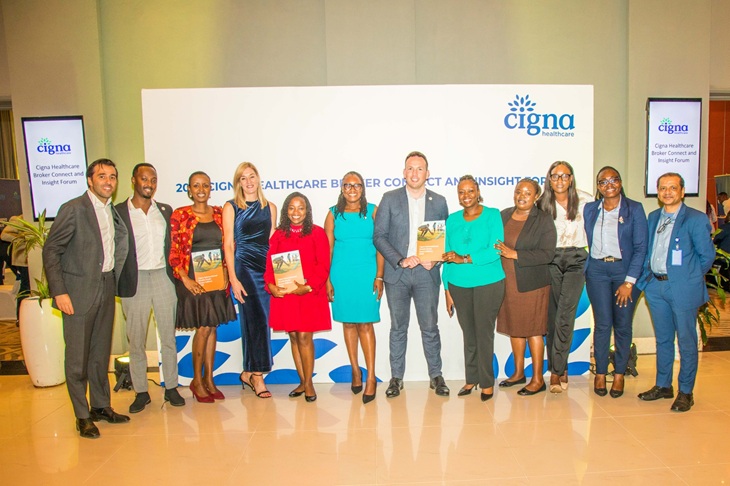
Cigna Healthcare Middle East and Africa, a global health service company, has released the Kenya findings from the Cigna International Health Study 2025, showing that Kenyans continue to demonstrate strong underlying vitality, even as rising stress, financial pressure, and barriers to accessing care place increasing strain on everyday wellbeing.
The study, which surveyed 13,000 respondents across 13 global markets, examines how vitality and well-being are evolving worldwide and how local experiences compare with broader global trends. Vitality is defined as the ability to pursue life with health, strength, and energy.
Commenting on the findings, Leah Cotterill, Chief Executive Officer, Cigna Healthcare Middle East and Africa (excl KSA), said: “Kenya continues to demonstrate strong underlying vitality, even as pressure around financial wellbeing, stress, and access to care becomes more pronounced. The level of optimism around innovation signals a strong demand for healthcare that is more accessible, timely, and responsive to people’s needs. For us at Cigna, this reinforces the importance of taking practical action that makes care easier to access and navigate, better supporting people as day-to-day pressures intensify.”

Key findings of the Cigna International Health Study 2025: Kenya
- Vitality score: 79.3 in 2025, third globally and well above the global average of 63.2
- Overall wellbeing: 63%, ranking Kenya third globally.
- Stress: 87% of employees report experiencing stress, driven largely by personal finances and cost of living; with stress reported to be highest in 18-24 age group
- Mental health: ranked the top health priority by 38%of Kenyans, significantly higher than global average of 25%
- AI in healthcare: Kenya is the most optimistic market globally, with 78 percent reporting positive or highly positive attitudes
- Financial wellbeing: 15%, the lowest-rated wellbeing pillar and well below the global average
- Access to care: 39% needed care but did not receive it, while 40 percent were unable to access required medication due to cost.
Strong vitality, but pressure is rising
In Kenya, vitality remains a clear strength. The country recorded a vitality score of 79.3 in 2025, stable compared with the previous year and ranking third across all surveyed markets. Overall well-being stands at 63%, placing Kenya among the top-performing markets globally, supported by strong family, physical, and spiritual well-being.
However, the findings also highlight rising strain beneath the surface. Mental health has emerged as the number one health priority for Kenyans, cited by 38%of respondents, compared with 25%globally. Stress levels are high, with 87% reporting stress, driven primarily by financial pressure, cost-of-living concerns, and uncertainty about the future.
Financial well-being remains the weakest pillar in Kenya, rated at just 15% and well below the global average. The impact is uneven. Younger adults aged 18 to 24 report the highest stress levels and notable declines across mental, physical, and family wellbeing, pointing to growing vulnerability among younger groups alongside broader financial strain across the population.
Access challenges persist, but optimism around innovation is high
Access to healthcare remains a significant challenge. 39% of Kenyans said there was a time in the past year when they needed care but did not receive it, while 40%were unable to access required medication. Delays to care were linked to negative impacts on both health and work-life balance, reinforcing access as a practical wellbeing and productivity issue. Reflecting this, nearly half (48%) of employees rank healthcare as the most important workplace benefit.
Despite these challenges, the findings point to strong optimism about the role of innovation in addressing access gaps. Kenya emerges as the most optimistic market globally when it comes to artificial intelligence in healthcare, with respondents expecting AI to reduce waiting times, improve diagnostic accuracy, and expand access to care, particularly for underserved and remote communities.
Workplace wellbeing shows resilience under pressure
Other findings from the study point to a workforce that remains highly engaged despite demanding expectations. Most working respondents report long working hours, yet enthusiasm and commitment remain high, and job satisfaction is broadly in line with global levels. Improvements in manager support are also evident, particularly around understanding time off and personal commitments, although retention risks persist as many workers continue to consider new opportunities.
Collectively, the findings show Kenya maintaining a strong vitality score, while pressure around mental health, financial well-being, and access to care continues to build. To read the full Cigna Health International Health Study, please click here.

About Soko Directory Team
Soko Directory is a Financial and Markets digital portal that tracks brands, listed firms on the NSE, SMEs and trend setters in the markets eco-system.Find us on Facebook: facebook.com/SokoDirectory and on Twitter: twitter.com/SokoDirectory

- January 2026 (220)
- February 2026 (243)
- March 2026 (230)
- January 2025 (119)
- February 2025 (191)
- March 2025 (212)
- April 2025 (193)
- May 2025 (161)
- June 2025 (157)
- July 2025 (227)
- August 2025 (211)
- September 2025 (270)
- October 2025 (297)
- November 2025 (230)
- December 2025 (219)
- January 2024 (238)
- February 2024 (227)
- March 2024 (190)
- April 2024 (133)
- May 2024 (157)
- June 2024 (145)
- July 2024 (136)
- August 2024 (154)
- September 2024 (212)
- October 2024 (255)
- November 2024 (196)
- December 2024 (143)
- January 2023 (182)
- February 2023 (203)
- March 2023 (322)
- April 2023 (297)
- May 2023 (267)
- June 2023 (214)
- July 2023 (212)
- August 2023 (257)
- September 2023 (237)
- October 2023 (264)
- November 2023 (286)
- December 2023 (177)
- January 2022 (293)
- February 2022 (329)
- March 2022 (358)
- April 2022 (292)
- May 2022 (271)
- June 2022 (232)
- July 2022 (278)
- August 2022 (253)
- September 2022 (246)
- October 2022 (196)
- November 2022 (232)
- December 2022 (167)
- January 2021 (182)
- February 2021 (227)
- March 2021 (325)
- April 2021 (259)
- May 2021 (285)
- June 2021 (272)
- July 2021 (277)
- August 2021 (232)
- September 2021 (271)
- October 2021 (304)
- November 2021 (364)
- December 2021 (249)
- January 2020 (272)
- February 2020 (310)
- March 2020 (390)
- April 2020 (321)
- May 2020 (335)
- June 2020 (327)
- July 2020 (333)
- August 2020 (276)
- September 2020 (214)
- October 2020 (233)
- November 2020 (242)
- December 2020 (187)
- January 2019 (251)
- February 2019 (215)
- March 2019 (283)
- April 2019 (254)
- May 2019 (269)
- June 2019 (249)
- July 2019 (335)
- August 2019 (293)
- September 2019 (306)
- October 2019 (313)
- November 2019 (362)
- December 2019 (318)
- January 2018 (291)
- February 2018 (213)
- March 2018 (275)
- April 2018 (223)
- May 2018 (235)
- June 2018 (176)
- July 2018 (256)
- August 2018 (247)
- September 2018 (255)
- October 2018 (282)
- November 2018 (282)
- December 2018 (184)
- January 2017 (183)
- February 2017 (194)
- March 2017 (207)
- April 2017 (104)
- May 2017 (169)
- June 2017 (205)
- July 2017 (189)
- August 2017 (195)
- September 2017 (186)
- October 2017 (235)
- November 2017 (253)
- December 2017 (266)
- January 2016 (164)
- February 2016 (165)
- March 2016 (189)
- April 2016 (143)
- May 2016 (245)
- June 2016 (182)
- July 2016 (271)
- August 2016 (247)
- September 2016 (233)
- October 2016 (191)
- November 2016 (243)
- December 2016 (153)
- January 2015 (1)
- February 2015 (4)
- March 2015 (164)
- April 2015 (107)
- May 2015 (116)
- June 2015 (119)
- July 2015 (145)
- August 2015 (157)
- September 2015 (186)
- October 2015 (169)
- November 2015 (173)
- December 2015 (205)
- March 2014 (2)
- March 2013 (10)
- June 2013 (1)
- March 2012 (7)
- April 2012 (15)
- May 2012 (1)
- July 2012 (1)
- August 2012 (4)
- October 2012 (2)
- November 2012 (2)
- December 2012 (1)