
NCBA’s AFAWA Partnership Unlocks Growth for Women Enterprises
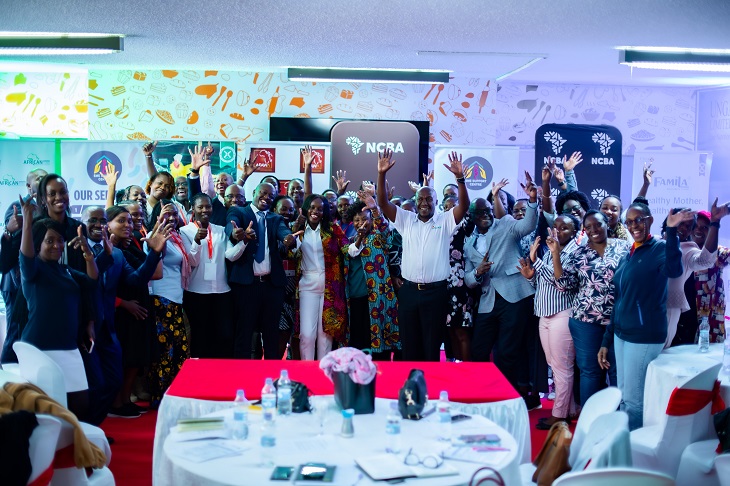
As the pre-season showers signal the onset of the long rains across Kenya, a familiar rhythm returns to the countryside. Fields soften, seedlings are prepared, and anticipation fills the air. Across Kenya’s farms, aggregation centers and processing facilities, women are positioning themselves to take full advantage of the planting season.
These women form the backbone of a sector that feeds the nation. They sustain rural households, power local economies, and safeguard food security not only in Kenya, but across Africa. Yet their participation in the higher-value segments of the agri-food ecosystem is often constrained.
For many, the challenge is not ambition, innovation, or market demand. It is access to affordable finance, structured markets, formalization pathways, and the technical support required to scale sustainably. As a result, businesses with robust growth potential stall before they reach scale.

The outcome is not merely individual stagnation; it is losing productivity within one of the country’s most strategic sectors.
Understanding this gross economic impact, last year NCBA sharpened its focus on women operating across the agri-food value chain by partnering with the African Guarantee Fund under the Affirmative Finance Action for Women in Africa (AFAWA) initiative led by the African Development Bank Group.
The NCBA–AFAWA WSMEs Acceleration Program was designed with a simple but strategic objective: to move beyond conventional lending and build an ecosystem where women-owned agri-food enterprises can access finance, strengthen capacity and unlock markets in a structured way.
This renewed partnership builds on the impact of the initial collaboration with the African Guarantee Fund in 2025, which unlocked over KES 17 billion in lending through a risk-sharing facility and reached more than 700 SMEs, while supporting over 7,000 jobs — including 2,200 opportunities for women.
Building on that foundation, the renewed programme, delivered under AFAWA, doubles lending capacity for women and youth entrepreneurs from KES 1.5 billion to KES 3 billion, targeting more than 80 women entrepreneurs across two cohorts. The initiative also aims to unlock USD 5 million in financing and create at least 300 new jobs, reinforcing the role of tailored finance in inclusive growth.
Since its launch in October last year , NCBA has facilitated over KES 747 million in loans to women-led enterprises, with a broader ambition to unlock USD 5 million in financing and support the creation of more than three hundred jobs.
Rather than viewing women-owned enterprises as high-risk segments, this partnership demonstrates that with the right support structures these businesses represent high potential growth opportunities.
Yet the significance of the programme lies not only in the capital deployed, but in how that capital is delivered.
Too often, promising businesses remain informal, unable to meet traditional lending requirements and locked out of the capital that could help them scale. The NCBA–AFAWA programme changes that narrative by de-risking women-owned enterprises through blended credit and partial guarantees, paired with mentorship and tailored business advisory support.
It further creates a space for deeper engagement through conversations that stretch across agribusiness value chains, financial management, climate and market risk, special economic zone opportunities, and long-term strategic planning. The intention is not merely to extend credit, but to cultivate resilience and vision.
In doing so, the programme confronts both the financial and structural barriers that have long constrained growth. It is not merely about unlocking capital; it is about shaping women entrepreneurs who are future-ready, equipped to compete, adapt, and lead within an evolving economic landscape.
At its heart, the acceleration programme reflects a long-held conviction within NCBA: that meaningful transformation in the SME sector begins by empowering the very entrepreneurs who sustain it.
Through targeted mentorship and practical skills development, the bank is translating that belief into action. By channeling at least 30 per cent of its procurement spend to women and youth, the Group is deliberately widening access to opportunity and embedding inclusion into everyday economic activity.
For NCBA investing in women in the agri-food sector is not charity. It is disciplined capital allocation informed by evidence, risk-sharing, and ecosystem support. Because when women, who form a substantial share of the agri-food sector’s workforce gain access to finance, training and markets, the multiplier effects extend across households, communities, and supply chains.
For Kenya, the implications are particularly significant. Agriculture remains a key contributor to GDP, employment, and export earnings. Improving productivity and resilience within the agri-food sector has direct consequences for food security, inflation stability, and rural income growth.
As restricted land ownership, collateral limitations and informality continue to lock viable enterprises out of traditional lending systems; the need for intentional design becomes more urgent. Supporting women in agri-food requires an understanding of these lived realities from the outset, not as an afterthought, and not through products retrofitted at scale. Without solutions tailored to seasonal cash flow cycles, climate exposure, and value-chain dynamics, capital alone can fail to translate into sustained growth.
Banking on her belief, therefore, involves recognising that Kenya’s agri-food future will be shaped not only by rainfall patterns and commodity prices, but by how effectively institutions enable the women who power the value chain to scale, formalize, and compete.
As we celebrate progress in financial inclusion and confront the barriers that remain, one lesson remains clear: transformation happens when investment meets belief and when institutions invest intentionally in women’s potential.

About Soko Directory Team
Soko Directory is a Financial and Markets digital portal that tracks brands, listed firms on the NSE, SMEs and trend setters in the markets eco-system.Find us on Facebook: facebook.com/SokoDirectory and on Twitter: twitter.com/SokoDirectory

- January 2026 (220)
- February 2026 (246)
- March 2026 (286)
- April 2026 (132)
- January 2025 (119)
- February 2025 (191)
- March 2025 (212)
- April 2025 (193)
- May 2025 (161)
- June 2025 (157)
- July 2025 (227)
- August 2025 (211)
- September 2025 (270)
- October 2025 (297)
- November 2025 (230)
- December 2025 (219)
- January 2024 (238)
- February 2024 (227)
- March 2024 (190)
- April 2024 (133)
- May 2024 (157)
- June 2024 (145)
- July 2024 (136)
- August 2024 (154)
- September 2024 (212)
- October 2024 (255)
- November 2024 (196)
- December 2024 (143)
- January 2023 (182)
- February 2023 (203)
- March 2023 (322)
- April 2023 (297)
- May 2023 (267)
- June 2023 (214)
- July 2023 (212)
- August 2023 (257)
- September 2023 (237)
- October 2023 (264)
- November 2023 (286)
- December 2023 (177)
- January 2022 (293)
- February 2022 (329)
- March 2022 (358)
- April 2022 (292)
- May 2022 (271)
- June 2022 (232)
- July 2022 (278)
- August 2022 (253)
- September 2022 (246)
- October 2022 (196)
- November 2022 (232)
- December 2022 (167)
- January 2021 (182)
- February 2021 (227)
- March 2021 (325)
- April 2021 (259)
- May 2021 (285)
- June 2021 (272)
- July 2021 (277)
- August 2021 (232)
- September 2021 (271)
- October 2021 (304)
- November 2021 (364)
- December 2021 (249)
- January 2020 (272)
- February 2020 (310)
- March 2020 (390)
- April 2020 (321)
- May 2020 (335)
- June 2020 (327)
- July 2020 (333)
- August 2020 (276)
- September 2020 (214)
- October 2020 (233)
- November 2020 (242)
- December 2020 (187)
- January 2019 (251)
- February 2019 (215)
- March 2019 (283)
- April 2019 (254)
- May 2019 (269)
- June 2019 (249)
- July 2019 (335)
- August 2019 (293)
- September 2019 (306)
- October 2019 (313)
- November 2019 (362)
- December 2019 (318)
- January 2018 (291)
- February 2018 (213)
- March 2018 (275)
- April 2018 (223)
- May 2018 (235)
- June 2018 (176)
- July 2018 (256)
- August 2018 (247)
- September 2018 (255)
- October 2018 (282)
- November 2018 (282)
- December 2018 (184)
- January 2017 (183)
- February 2017 (194)
- March 2017 (207)
- April 2017 (104)
- May 2017 (169)
- June 2017 (205)
- July 2017 (189)
- August 2017 (195)
- September 2017 (186)
- October 2017 (235)
- November 2017 (253)
- December 2017 (266)
- January 2016 (164)
- February 2016 (165)
- March 2016 (189)
- April 2016 (143)
- May 2016 (245)
- June 2016 (182)
- July 2016 (271)
- August 2016 (247)
- September 2016 (233)
- October 2016 (191)
- November 2016 (243)
- December 2016 (153)
- January 2015 (1)
- February 2015 (4)
- March 2015 (164)
- April 2015 (107)
- May 2015 (116)
- June 2015 (119)
- July 2015 (145)
- August 2015 (157)
- September 2015 (186)
- October 2015 (169)
- November 2015 (173)
- December 2015 (205)
- March 2014 (2)
- March 2013 (10)
- June 2013 (1)
- March 2012 (7)
- April 2012 (15)
- May 2012 (1)
- July 2012 (1)
- August 2012 (4)
- October 2012 (2)
- November 2012 (2)
- December 2012 (1)