
Before your cargo sails: KRA’s new ACD rule changes the game for every Kenyan importer
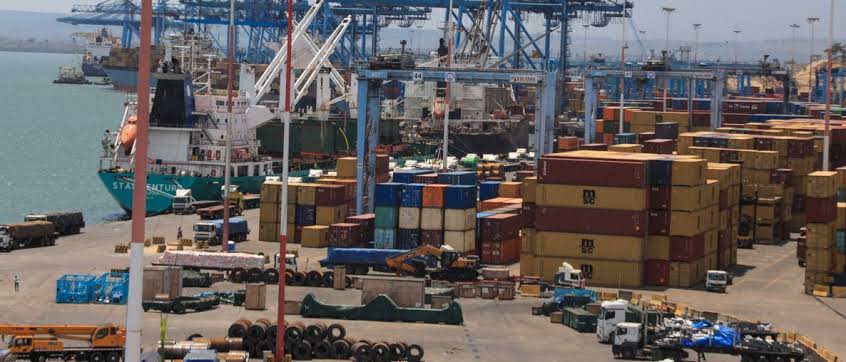
A new pre-shipment customs requirement is now in force, and importers who wait until cargo reaches Mombasa could learn the rules the expensive way.
For thousands of Kenyan entrepreneurs, manufacturers, wholesalers and retailers who depend on imported goods, the rules of importing through Kenya’s ports have changed. From Monday, 3rd August 2026, the Kenya Revenue Authority’s Advance Cargo Declaration system comes into operation for containerised cargo destined for Kenyan ports, introducing a critical compliance step that must be dealt with before cargo is loaded at the port of origin.

This is not the kind of requirement an importer can afford to discover when a vessel is already approaching Mombasa. It moves an important part of customs compliance away from the point of arrival and back to the beginning of the shipping journey. In simple terms, KRA wants advance information about the cargo coming into the country before that cargo starts its voyage to Kenya. The era of waiting for goods to arrive and then assuming that a clearing agent will sort out every customs issue at the port is steadily coming to an end.
The new system is known as the Advance Cargo Declaration, or ACD. Before a qualifying shipment leaves the exporting country, the relevant shipment information must be submitted through KRA’s ACD platform and an ACD Reference Code obtained. That reference must then be correctly shown on the final Bill of Lading before the shipment proceeds to Kenya. For an importer, that small reference code now becomes a major part of the documentation chain connecting the exporter, the shipping line, Customs and the clearing process at the destination.
The practical message is simple: if you are importing a container from China, India, Turkey, Dubai, Europe or any other market, your compliance responsibility now begins long before the ship reaches Mombasa. You must speak to the people handling the shipment at origin and confirm that the ACD requirement has been dealt with correctly before loading. It should become as normal as checking the commercial invoice, the Bill of Lading, the packing details or the shipping schedule.
KRA’s published requirements identify four core documents that must be prepared for the ACD process: the draft Bill of Lading, the commercial invoice, the freight invoice and the export declaration. These documents are not random pieces of paperwork. Together, they provide Customs with a picture of what is being shipped, who is shipping it, the declared commercial value, the freight information and the export details before the cargo enters the Kenyan customs environment. Once the declaration is processed and approved, the ACD Reference Code is generated and must be endorsed on the Bill of Lading.
That change has enormous implications for Kenyan importers, particularly small and medium-sized businesses. Many SMEs have traditionally depended almost entirely on clearing agents after the shipment has already been dispatched. A trader buys goods from a supplier abroad, pays for the products, receives shipping information and then starts thinking seriously about customs clearance as the vessel gets closer to Kenya. Under an advance cargo declaration regime, that approach becomes risky. A problem that should have been solved before loading can become far more expensive once the container is already in transit or sitting at the port.
The question every importer should now make part of their pre-shipment routine is straightforward: has the ACD Reference Code been obtained, and is it correctly indicated on the Bill of Lading? That question should be asked before the container is loaded, not after the vessel has sailed. It should be documented in emails, purchase instructions, shipping checklists or whatever procurement system the business uses. If you are dealing with a supplier who regularly ships to Kenya, do not simply assume that they know the requirement. Send them the instructions and demand confirmation.
KRA’s guidance places the process at the port of loading and makes the overseas side of the transaction crucial. The shipper or exporter must ensure the declaration is properly handled, while KRA’s general ACD guidance also recognises freight forwarders in the declaration process. Shipping lines, shipowners, carriers and their appointed agents also have responsibilities. They are expected to inform shippers of the requirement, request the ACD Reference Code before issuing the final Bill of Lading and ensure that the code appears correctly on that document. In other words, compliance is no longer a conversation involving only the Kenyan importer and the clearing agent. It stretches across the entire logistics chain.
This matters because a container is not just a steel box. For the business that owns the goods inside it, that container represents money. It may represent borrowed working capital, customer orders, school-fee money invested into a small enterprise, a bank facility, machinery required to start production, stock needed to keep employees working, or goods that must reach the market before a competitor takes the opportunity. When such cargo is delayed because of avoidable documentation problems, the consequences quickly move beyond paperwork.
A customs delay can mean additional storage costs, disrupted deliveries, empty shelves, cancelled customer orders, interest continuing to accrue on borrowed money and working capital trapped in goods that cannot be sold. For a large corporation, a few days of disruption may be uncomfortable. For a small Kenyan importer operating on thin margins and expensive credit, it can be devastating. That is why the ACD requirement should not be treated as another bureaucratic form to be delegated casually. It is now part of business risk management.
KRA’s ACD platform warns that failure to obtain the required declaration can expose cargo to delays, fines or rejection at the port of entry, with more serious enforcement consequences possible in severe cases. Whether an importer agrees with the expanding compliance burden or not, ignoring the requirement is therefore not a sensible option. The correct response is to understand it, build it into the procurement process and ensure that every party in the supply chain knows what must be done before shipment.
The new system also signals something bigger about the direction of Customs administration in Kenya. Customs enforcement is becoming increasingly digital, data-driven and pre-arrival based. Instead of waiting for thousands of containers to land and then beginning to understand what is inside them, authorities want cargo information earlier so that risk assessment can start before arrival. The objective is to improve visibility, identify inconsistencies, strengthen compliance and make legitimate cargo easier to process once it reaches the country.
For honest businesses that keep accurate records, this shift should ideally lead to greater predictability. If the commercial invoice, export declaration, freight information and shipping documents are consistent, Customs can have a clearer picture of the shipment before arrival. But that promise will only be realised if the technology works reliably, approvals are efficient and KRA provides adequate support to businesses and overseas exporters who encounter genuine difficulties. Digitalisation should make legitimate trade easier; it should not become another maze in which compliant businesses lose money because they were never properly educated about a new process.
This is particularly important because Kenya’s importing economy is not made up only of multinational companies with large legal and customs departments. It includes thousands of traders importing electronics, clothes, spare parts, furniture, household items, machinery, industrial inputs, packaging materials, construction products and countless other goods. Some communicate directly with manufacturers. Others buy through agents. Some use consolidators and freight companies that handle almost everything on their behalf. KRA must therefore ensure that public education reaches the small trader in Nairobi, Mombasa, Kisumu, Nakuru, Eldoret and every other commercial centre, not merely the large corporate importer.
Freight forwarders and clearing agents must also change how they serve clients. The best clearing agent can no longer be the person who only becomes active when the vessel arrives. A professional logistics partner should now be helping the client think about compliance before loading. They should be asking whether the shipping documents are ready, whether descriptions match, whether the exporter understands Kenya’s requirements, whether the ACD process has been completed and whether the reference has been properly reflected on the Bill of Lading. The value of a clearing agent is increasingly moving from simply processing documents to preventing expensive problems before they happen.
Importers themselves must become more disciplined. Every shipment should be treated as its own compliance exercise. Do not assume that because the last container arrived successfully, the next one will automatically be fine. Do not rely on verbal promises from a supplier when millions of shillings worth of goods are involved. Keep records. Confirm the reference. Check the Bill of Lading. Make sure the invoice and export documentation describe the goods correctly. If your business imports regularly, create a simple pre-shipment checklist and refuse to release a shipment for loading until the documentation has been confirmed.
Kenyan businesses should also pay attention to the quality of the suppliers and logistics partners they choose. The cheapest supplier is not necessarily the cheapest supplier if poor documentation repeatedly creates delays, penalties and disputes. The lowest freight quote can become extremely expensive if the party handling your cargo does not understand Kenyan customs requirements. Procurement decisions must therefore consider compliance competence alongside the price of goods and freight.
There is also a broader policy question that KRA must answer through implementation. Kenya needs strong customs controls. The country has every right to fight smuggling, under-declaration, misclassification and illicit trade. Honest taxpayers should not be forced to compete with businesses that evade taxes through false documentation. Advance cargo information can be an important tool in improving enforcement. But government must always remember that the ultimate objective of customs administration is not merely to police trade; it is also to facilitate legitimate trade.
The success of the ACD system will therefore not be measured simply by how many declarations are submitted. It will be measured by whether cargo moves more efficiently, whether compliance becomes more predictable, whether legitimate importers experience fewer unpleasant surprises, whether the system remains available when businesses need it and whether KRA responds quickly when genuine technical or documentation problems arise. A digital system that creates unnecessary delays would simply transfer congestion from the physical port to an online portal. That cannot be the goal.
For now, every Kenyan importer with containerised cargo being prepared for shipment should act immediately. Contact your supplier, exporter or logistics partner. Confirm that they understand the ACD requirement. Ensure the required documents are available and accurate. Confirm that the ACD Reference Code has been obtained at the appropriate stage. Then check that it has been correctly included on the final Bill of Lading before the cargo is loaded for Kenya.
The most dangerous phrase an importer can use under the new system is: ‘My clearing agent will sort it out when the goods arrive.’ By the time the goods arrive, the critical mistake may already have been made thousands of kilometres away. Customs compliance has moved upstream, and Kenyan businesses must move with it.
From 3rd August 2026, the smartest importer is not simply the person who negotiates the lowest factory price or the cheapest freight rate. It is the importer who understands the entire journey of the cargo, controls the documentation and ensures compliance before the ship sails. Before your supplier loads that container, ask the one question that could save your business days of frustration and potentially significant costs: ‘Have you obtained the ACD Reference Code, and is it correctly shown on the Bill of Lading?’
That question is no longer a technical detail. It is part of doing business in Kenya.
Read Also : KRA Pushes to Cut Tax Dispute Resolution from 120 to 90 Days Through Private Sector Reforms

About Soko Directory Team
Soko Directory is a Financial and Markets digital portal that tracks brands, listed firms on the NSE, SMEs and trend setters in the markets eco-system.Find us on Facebook: facebook.com/SokoDirectory and on Twitter: twitter.com/SokoDirectory

- January 2026 (220)
- February 2026 (248)
- March 2026 (287)
- April 2026 (207)
- May 2026 (192)
- June 2026 (238)
- July 2026 (279)
- August 2026 (223)
- September 2026 (149)
- January 2025 (119)
- February 2025 (191)
- March 2025 (212)
- April 2025 (193)
- May 2025 (161)
- June 2025 (157)
- July 2025 (227)
- August 2025 (211)
- September 2025 (267)
- October 2025 (297)
- November 2025 (230)
- December 2025 (220)
- January 2024 (238)
- February 2024 (227)
- March 2024 (190)
- April 2024 (133)
- May 2024 (157)
- June 2024 (145)
- July 2024 (136)
- August 2024 (154)
- September 2024 (212)
- October 2024 (255)
- November 2024 (196)
- December 2024 (143)
- January 2023 (182)
- February 2023 (203)
- March 2023 (322)
- April 2023 (297)
- May 2023 (267)
- June 2023 (214)
- July 2023 (212)
- August 2023 (257)
- September 2023 (237)
- October 2023 (264)
- November 2023 (286)
- December 2023 (177)
- January 2022 (293)
- February 2022 (329)
- March 2022 (358)
- April 2022 (292)
- May 2022 (271)
- June 2022 (232)
- July 2022 (278)
- August 2022 (253)
- September 2022 (246)
- October 2022 (196)
- November 2022 (232)
- December 2022 (167)
- January 2021 (182)
- February 2021 (227)
- March 2021 (325)
- April 2021 (259)
- May 2021 (285)
- June 2021 (272)
- July 2021 (277)
- August 2021 (232)
- September 2021 (271)
- October 2021 (303)
- November 2021 (364)
- December 2021 (249)
- January 2020 (272)
- February 2020 (310)
- March 2020 (390)
- April 2020 (321)
- May 2020 (335)
- June 2020 (327)
- July 2020 (333)
- August 2020 (276)
- September 2020 (214)
- October 2020 (233)
- November 2020 (242)
- December 2020 (187)
- January 2019 (251)
- February 2019 (215)
- March 2019 (283)
- April 2019 (254)
- May 2019 (269)
- June 2019 (249)
- July 2019 (335)
- August 2019 (292)
- September 2019 (306)
- October 2019 (313)
- November 2019 (362)
- December 2019 (318)
- January 2018 (291)
- February 2018 (213)
- March 2018 (275)
- April 2018 (223)
- May 2018 (235)
- June 2018 (176)
- July 2018 (256)
- August 2018 (247)
- September 2018 (255)
- October 2018 (282)
- November 2018 (282)
- December 2018 (184)
- January 2017 (183)
- February 2017 (194)
- March 2017 (207)
- April 2017 (104)
- May 2017 (169)
- June 2017 (205)
- July 2017 (189)
- August 2017 (195)
- September 2017 (186)
- October 2017 (235)
- November 2017 (253)
- December 2017 (266)
- January 2016 (164)
- February 2016 (165)
- March 2016 (189)
- April 2016 (143)
- May 2016 (245)
- June 2016 (182)
- July 2016 (271)
- August 2016 (247)
- September 2016 (233)
- October 2016 (191)
- November 2016 (243)
- December 2016 (153)
- January 2015 (1)
- February 2015 (4)
- March 2015 (164)
- April 2015 (107)
- May 2015 (116)
- June 2015 (119)
- July 2015 (145)
- August 2015 (157)
- September 2015 (186)
- October 2015 (169)
- November 2015 (173)
- December 2015 (205)
- March 2014 (2)
- March 2013 (10)
- June 2013 (1)
- March 2012 (7)
- April 2012 (15)
- May 2012 (1)
- July 2012 (1)
- August 2012 (4)
- October 2012 (2)
- November 2012 (2)
- December 2012 (1)