
Only 8300 Kenyans Benefit from Economic Growth as Others Remain Poor
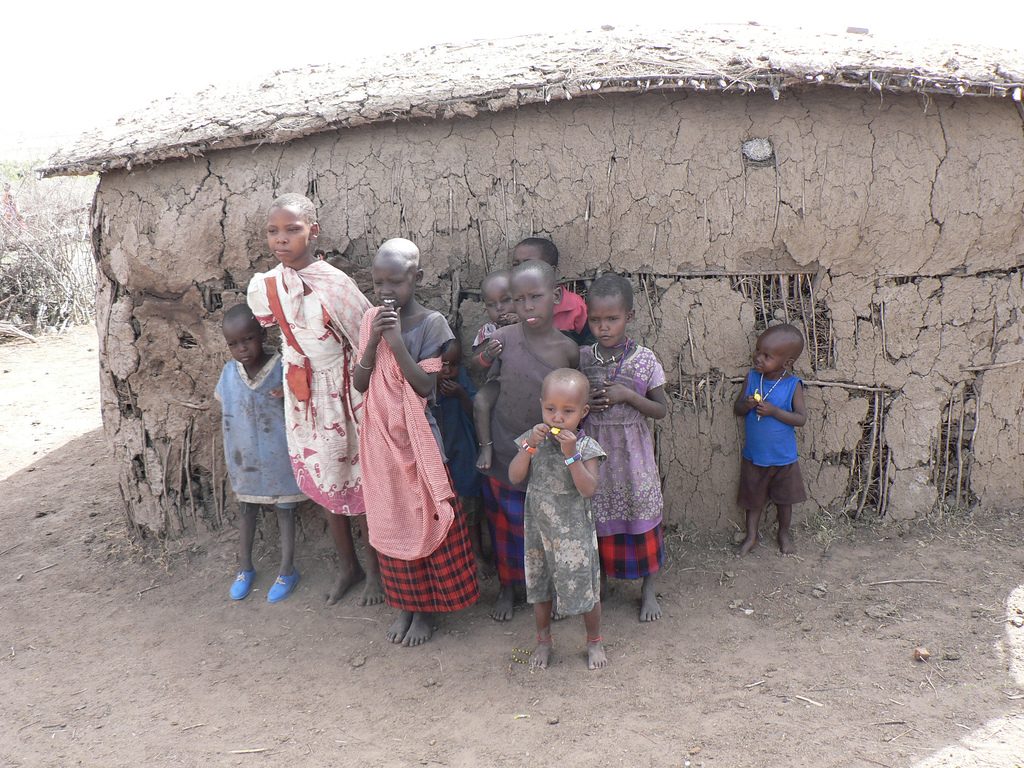
Kenya currently is among one of the countries in the world with the fastest growing super-rich individuals. However, only 8,300 individuals representing 0.1 percent of the population are enjoying the fruits of economic growth while the lesser population continue to wallow in poverty.
It is for this reason that Oxfam, an international association of 20 Non-Governmental Organizations focusing on putting an end to poverty injustices, warns that “If inequality remained at the same level for the following five years, 2.9 million more people could be living in extreme poverty.”
This comes shortly after a report by Wealth X placed Kenya at the same position as China in terms of the growth of High Net Worth individuals. With a growing percentage of 9.8 in the next five years, it presents one of the highest in Africa after Nigeria and Egypt.

Read More: Kenya Matches China, World’s 2nd Largest Economy in Millionaire Growth Rate
Oxfam said in a recent report that “While a minority of super-rich Kenyans are accumulating wealth and income, the fruits of economic growth are failing to trickle down to the poorest.
“It appears that a minority of wealthy individuals and investors are creaming off the yields of the country’s economic performance as the gap between the rich and the poor widens in Kenya,” said Oxfam.
Oxfam notes that although Kenya’s economic growth has been consistent for the past 14 years, many are still languishing in poverty.
With the highest growth of millionaires in the country, it has been established that Kenya’s 10 percent population of rich individuals earned 23 times more on average than the poorest 10 percent.
On the contrary, Kenya National Bureau of Statistics (KNBS) says that the number of Kenyans living below the poverty line dropped by 10.5 percent between 2005/6 to 2016.
Oxfam predicts that there is a chance of 80 percent increase of wealthy people in the next 10 years in the country.
What Next?
The reality is that the gap between the rich and the poor will be even greater with many failing to access several needs including access to healthcare and education among other mandatory services that amount to progress in the standards of living.
Oxfam states that on average, a child from a wealthy family in Kenya is bound to twice the amount of education as opposed to a child from a poor family.
The situation paints an undeniable picture in the country, and it is so dire that it pointed out that a girl from poor parents in Kenya has 1 in 250 chances of progressing with her studies beyond secondary school.
In a nutshell, the most hit by the widening gap between the rich and the poor are women and girls.
“Nearly one million primary school-aged children are still out-of-school — the ninth highest number of any country in the world. Kenya’s level of spending on education has gradually fallen each year since the early 2000s,” the report says.
There is plenty of blame to go around including fund misappropriation, failed government projects and myriad cases of corruption cases but the London-based firm points a finger at the government and corporate companies for “exacerbating inequality in the country.”
Oxfam says that the country’s government barely gives the healthcare and education sectors enough money making it a hard-knock life for citizens living below the poverty line.
Better education and healthcare for a country’s citizens are highly dependent on access to money. It is the universal truth. But it would seem like this really has eluded Kenya’s government.
According to Oxfam, a quarter of the Kenyan population regularly lack access to healthcare. A recent study estimated that nearly 2.6 million people fall into poverty or remain poor due to ill health each year.
Corporate tax evasions, says Oxfam, is robing Kenyans 100 billion shillings annually, an amount that doubles what the country spent on health in FY 2015/2016.
World Poverty Clock report released in 2018 indicated that of the 49,684,304 people in Kenya, only 29 percent, that is 14.7 million people, languish in extreme poverty consuming less than 197 shillings a day or 5,910 shillings in a month. This is why it ranked the country as the eighth on the global extreme poverty list.
The report further noted that the perpetual drive to hit the United Nation’s Sustainable Development Goals is not achievable considering the rate at which people are escaping poverty, 0.5 percent.
Africa’s top oil producer
Meanwhile, Africa’s top oil producer, Nigeria, is ironically suffering the same fate as Kenya. Incidentally, it would seem like that is the case across several African nations.
Across the globe, the research found that 26 richest people own same wealth as the poorest half of the world population. Looking at sub-Saharan Africa, the rates are rising.
The report showed that Nigeria overtook India in terms of the number of living in extreme poverty.
In Nigeria, 87 million people are in dire financial hardship, that is nearly half the country’s population. World Poverty Clock noted that 6 persons in the country slip into poverty every minute!
At that rate, it was established that between now and 2030, 45.5 percent of the population (120 million) will be living in extreme poverty.
Politicians in the country are busy playing politics instead of helping people out of poverty. Corruption cases are even worse than in Kenya. For decades, the military government has looted public funds and little has been done to amend the situation.
The funny thing is that Nigeria shouldn’t be in the position given that it is Africa’s leading oil producer. It produces two million barrels of crude every day, where does the money go?
Well, Oxfam report indicates that between 1960 and 2005, about 20 trillion US dollars were stolen from the treasury by public office holders.
“The combined wealth of Nigeria’s five richest men ($29.9 billion) could end extreme poverty at a national level,” it assessed.
Africa obviously has a lot to learn. Meanwhile, Oxfam recommends increasing taxes on the super-rich and deep cutting reforms that would make quality education and healthcare affordable, if at all inequality is to be rooted out.
READ MORE: Billionaire Fortunes Grew by $2.5 Billion a Day – Oxfam

About Soko Directory Team
Soko Directory is a Financial and Markets digital portal that tracks brands, listed firms on the NSE, SMEs and trend setters in the markets eco-system.Find us on Facebook: facebook.com/SokoDirectory and on Twitter: twitter.com/SokoDirectory

- January 2026 (220)
- February 2026 (248)
- March 2026 (287)
- April 2026 (207)
- May 2026 (192)
- June 2026 (238)
- July 2026 (281)
- August 2026 (225)
- September 2026 (255)
- October 2026 (17)
- January 2025 (119)
- February 2025 (191)
- March 2025 (212)
- April 2025 (193)
- May 2025 (161)
- June 2025 (157)
- July 2025 (227)
- August 2025 (211)
- September 2025 (267)
- October 2025 (297)
- November 2025 (230)
- December 2025 (220)
- January 2024 (238)
- February 2024 (227)
- March 2024 (190)
- April 2024 (133)
- May 2024 (157)
- June 2024 (145)
- July 2024 (136)
- August 2024 (154)
- September 2024 (212)
- October 2024 (255)
- November 2024 (196)
- December 2024 (143)
- January 2023 (182)
- February 2023 (203)
- March 2023 (322)
- April 2023 (297)
- May 2023 (267)
- June 2023 (214)
- July 2023 (212)
- August 2023 (257)
- September 2023 (237)
- October 2023 (264)
- November 2023 (286)
- December 2023 (177)
- January 2022 (293)
- February 2022 (329)
- March 2022 (358)
- April 2022 (292)
- May 2022 (271)
- June 2022 (232)
- July 2022 (278)
- August 2022 (253)
- September 2022 (246)
- October 2022 (196)
- November 2022 (232)
- December 2022 (167)
- January 2021 (182)
- February 2021 (227)
- March 2021 (325)
- April 2021 (259)
- May 2021 (285)
- June 2021 (272)
- July 2021 (277)
- August 2021 (232)
- September 2021 (271)
- October 2021 (303)
- November 2021 (364)
- December 2021 (249)
- January 2020 (272)
- February 2020 (310)
- March 2020 (390)
- April 2020 (321)
- May 2020 (335)
- June 2020 (327)
- July 2020 (333)
- August 2020 (276)
- September 2020 (214)
- October 2020 (233)
- November 2020 (242)
- December 2020 (187)
- January 2019 (251)
- February 2019 (215)
- March 2019 (283)
- April 2019 (254)
- May 2019 (269)
- June 2019 (249)
- July 2019 (335)
- August 2019 (292)
- September 2019 (306)
- October 2019 (313)
- November 2019 (362)
- December 2019 (318)
- January 2018 (291)
- February 2018 (213)
- March 2018 (275)
- April 2018 (223)
- May 2018 (235)
- June 2018 (176)
- July 2018 (256)
- August 2018 (247)
- September 2018 (255)
- October 2018 (282)
- November 2018 (282)
- December 2018 (184)
- January 2017 (183)
- February 2017 (194)
- March 2017 (207)
- April 2017 (104)
- May 2017 (169)
- June 2017 (205)
- July 2017 (189)
- August 2017 (195)
- September 2017 (186)
- October 2017 (235)
- November 2017 (253)
- December 2017 (266)
- January 2016 (164)
- February 2016 (165)
- March 2016 (189)
- April 2016 (143)
- May 2016 (245)
- June 2016 (182)
- July 2016 (271)
- August 2016 (247)
- September 2016 (233)
- October 2016 (191)
- November 2016 (243)
- December 2016 (153)
- January 2015 (1)
- February 2015 (4)
- March 2015 (164)
- April 2015 (107)
- May 2015 (116)
- June 2015 (119)
- July 2015 (145)
- August 2015 (157)
- September 2015 (186)
- October 2015 (169)
- November 2015 (173)
- December 2015 (205)
- March 2014 (2)
- March 2013 (10)
- June 2013 (1)
- March 2012 (7)
- April 2012 (15)
- May 2012 (1)
- July 2012 (1)
- August 2012 (4)
- October 2012 (2)
- November 2012 (2)
- December 2012 (1)