
Deadly Zika Virus Has Been Confirmed in Kenya
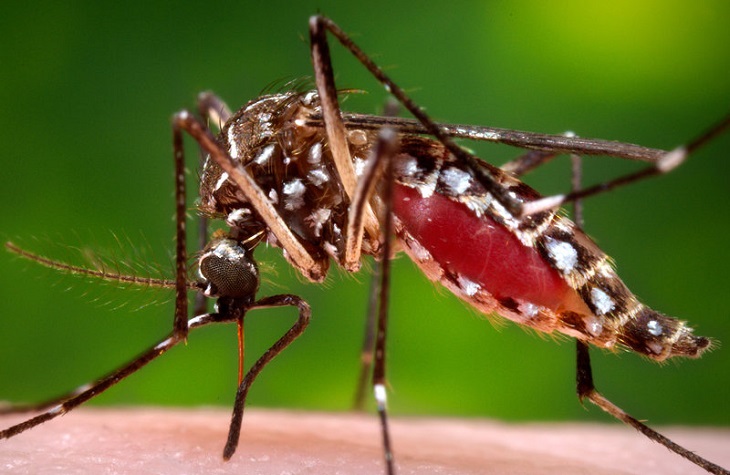
The deadly zika virus, which is primarily transmitted to people through the bite of an infected Aedes mosquito, has been detected in Kenya’s West Pokot and Turkana according to researchers.
The Aedes mosquito which also transmits chikungunya, dengue and yellow fever have been reported in West Pokot and Turkana County.
Zika virus was last reported in Brazil between 2016 and 2017 with 215,319 Zika infections diagnosed. Brazil reported 2,347 infants born with head deformities in a condition known as microcephaly due to the Zika infections.

The Kenyan researchers said they had detected 33 Zika incidents in West Pokot County and one in Turkana County. This is the first ever to be recorded in Kenya.
The researchers from the Ministry of Health, Kenya Medical Research Institute (Kemri), the Nairobi-based International Centre of Insect Physiology and Ecology (ICIPE) and the Jomo Kenyatta University of Agriculture and Technology have advised that the Government puts measures in place to avoid a possible outbreak of the deadly Zika virus.
The researching team, led by Icipe’s Edith Chepkorir, published a virology Journalon 17th May stating that they had found evidence of present Zika virus among human beings in West Pokot and Turkana.
The research team that was investigating the presence of yellow fever, West Nile, dengue fever and Zika virus in the two counties, reported the presence of all the Four killer viruses.
West Pokot and Turkana border South Sudan, Ethiopia and Uganda where recent outbreaks of dengue and yellow fever have been reported with the fear of them spilling over to Kenya.
In 877 samples collected from the two Counties, 33 samples turned positive for Zika in West Pokot while one was positive in Turkana.
The results of the study show an active circulation of Zika in both counties despite never having confirmed cases of the virus in Kenya.
In East Africa, Zika Virus was first detected in Zika forest Uganda in 1947 and it is, therefore, possible it spilled to West Pokot as the area the Zika was detected neighbors Uganda.
The research did not cover whether the present virus was responsible for any illness amongst Kenyans which ought to be urgently established to save lives.
Zika virus is said to mostly attack population between the ages of 13 to 19 years in the region, neutralizing antibodies while at it.
The research recommends more surveillance to include young children and expectant women as the virus is associated with congenital birth defects, in the developing fetus.
In West Pokot, the prevalence of Zika was twice as high amongst males and among those aged between 13–19 years.
“This calls for focused disease surveillance to forestall severe consequences of the virus in case of an outbreak,” the study recommends.

About Soko Directory Team
Soko Directory is a Financial and Markets digital portal that tracks brands, listed firms on the NSE, SMEs and trend setters in the markets eco-system.Find us on Facebook: facebook.com/SokoDirectory and on Twitter: twitter.com/SokoDirectory

- January 2026 (220)
- February 2026 (248)
- March 2026 (287)
- April 2026 (208)
- May 2026 (191)
- June 2026 (238)
- July 2026 (279)
- August 2026 (74)
- January 2025 (119)
- February 2025 (191)
- March 2025 (212)
- April 2025 (193)
- May 2025 (161)
- June 2025 (157)
- July 2025 (227)
- August 2025 (211)
- September 2025 (267)
- October 2025 (297)
- November 2025 (230)
- December 2025 (220)
- January 2024 (238)
- February 2024 (227)
- March 2024 (190)
- April 2024 (133)
- May 2024 (157)
- June 2024 (145)
- July 2024 (136)
- August 2024 (154)
- September 2024 (212)
- October 2024 (255)
- November 2024 (196)
- December 2024 (143)
- January 2023 (182)
- February 2023 (203)
- March 2023 (322)
- April 2023 (297)
- May 2023 (267)
- June 2023 (214)
- July 2023 (212)
- August 2023 (257)
- September 2023 (237)
- October 2023 (264)
- November 2023 (286)
- December 2023 (177)
- January 2022 (293)
- February 2022 (329)
- March 2022 (358)
- April 2022 (292)
- May 2022 (271)
- June 2022 (232)
- July 2022 (278)
- August 2022 (253)
- September 2022 (246)
- October 2022 (196)
- November 2022 (232)
- December 2022 (167)
- January 2021 (182)
- February 2021 (227)
- March 2021 (325)
- April 2021 (259)
- May 2021 (285)
- June 2021 (272)
- July 2021 (277)
- August 2021 (232)
- September 2021 (271)
- October 2021 (304)
- November 2021 (364)
- December 2021 (249)
- January 2020 (272)
- February 2020 (310)
- March 2020 (390)
- April 2020 (321)
- May 2020 (335)
- June 2020 (327)
- July 2020 (333)
- August 2020 (276)
- September 2020 (214)
- October 2020 (233)
- November 2020 (242)
- December 2020 (187)
- January 2019 (251)
- February 2019 (215)
- March 2019 (283)
- April 2019 (254)
- May 2019 (269)
- June 2019 (249)
- July 2019 (335)
- August 2019 (292)
- September 2019 (306)
- October 2019 (313)
- November 2019 (362)
- December 2019 (318)
- January 2018 (291)
- February 2018 (213)
- March 2018 (275)
- April 2018 (223)
- May 2018 (235)
- June 2018 (176)
- July 2018 (256)
- August 2018 (247)
- September 2018 (255)
- October 2018 (282)
- November 2018 (282)
- December 2018 (184)
- January 2017 (183)
- February 2017 (194)
- March 2017 (207)
- April 2017 (104)
- May 2017 (169)
- June 2017 (205)
- July 2017 (189)
- August 2017 (195)
- September 2017 (186)
- October 2017 (235)
- November 2017 (253)
- December 2017 (266)
- January 2016 (164)
- February 2016 (165)
- March 2016 (189)
- April 2016 (143)
- May 2016 (245)
- June 2016 (182)
- July 2016 (271)
- August 2016 (247)
- September 2016 (233)
- October 2016 (191)
- November 2016 (243)
- December 2016 (153)
- January 2015 (1)
- February 2015 (4)
- March 2015 (164)
- April 2015 (107)
- May 2015 (116)
- June 2015 (119)
- July 2015 (145)
- August 2015 (157)
- September 2015 (186)
- October 2015 (169)
- November 2015 (173)
- December 2015 (205)
- March 2014 (2)
- March 2013 (10)
- June 2013 (1)
- March 2012 (7)
- April 2012 (15)
- May 2012 (1)
- July 2012 (1)
- August 2012 (4)
- October 2012 (2)
- November 2012 (2)
- December 2012 (1)