
Kakuzi Is Banking Product Diversification To Boost Value
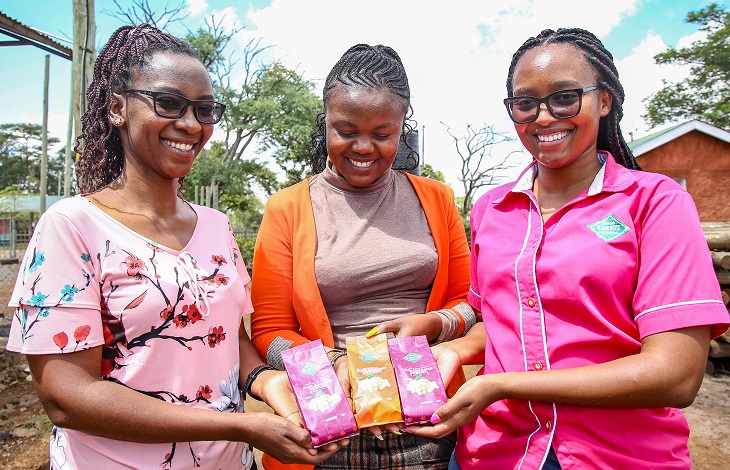
Listed agribusiness firm Kakuzi Plc shareholders have begun to enjoy the company’s diversification fruits even as plans to broaden revenue streams continue to be scaled up, Chairman Nicholas Ng’ang’a has said.
Speaking at the 94th Kakuzi PLC Annual General Meeting (AGM) held virtually this morning, Ng’ang’a assured the firm’s shareholders that strategic plans had been activated to accelerate and enhance shareholder returns by diversifying the variety of products delivered to both the domestic and international markets.
At the AGM, the firm’s shareholders unanimously voted for a KSh. 22 dividends per share, representing a 22% growth from the KSh. 18 per share paid out the previous year, continuing to make Kakuzi PLC one of the best performing returns on investment firms at the NSE. This increase in dividend payments from Ksh 352 million to Ksh 431 million reflects the Company’s strong financial position whilst accounting for the future investments in key long-term strategic developments.

The diversification strategy features the production of superfoods such as Macadamia and Blueberries and is now being complemented with the rearing of goats for meat, agroforestry, and a range of retail products for the domestic market.
Focus on a diverse variety of agricultural produce, Ng’ang’a told the firm’s shareholders will further insulate Kakuzi’s dependence on traditional products such as avocado and tea.
The diversification strategy, he added will be underpinned by the strict adoption of climate-smart agricultural (CSA) practices aimed at increasing productivity, enhancing resilience, and reducing emissions. Kakuzi, he said has adopted CSA for its natural resource utilization including water use and crop production including the use of climate-smart bee-keeping technologies that play an important role as pollinators are indicators of a healthy environment. The bees pollinate crops, pastures, and trees, thus contributing to food security and environmental conservation.
In the last financial year, potentially poor shareholder returns, he said had been mitigated by the positive income realized from some of the firm’s diversification strategy crops. Diversification he said was not new to Kakuzi. In the past, the firm derived its income from coffee and tea sales and then moved to avocados in the 1990s. We are now enjoying significant revenues from Macadamia crops as well as forestry products with further contributions coming from blueberry, livestock, and value addition opportunities coming in time.
“We are part of a global marketplace and the products we produce often face stiff competition from producers in other countries. We, therefore, embarked on a very significant diversification program several years ago to ensure that Kakuzi is not dependent on anyone’s crop,” Ng’ang’a said. He added that “The results of this revenue diversification strategy have played out in the 2021 financial year as we experienced a difficult market for avocados but a greater contribution to the company’s profitability from the macadamia revenue stream.”
While Kakuzi’s Hass avocado volumes were lower than the previous year by 17.5% as the orchards entered a low production year, the firm recorded greater profits from macadamia. Notably, macadamia sales increased to 513 tons from 320 tons delivered to market the previous year.
To sustain the value contribution of its flagship Hass Avocado crop, Kakuzi is also undertaking an 18% expansion for the popular fruit. The ongoing field developments will see the expansion of avocado trees from the current 980 ha to 1160 ha in the next four years.
“By the end of 2021, our avocado and macadamia orchards covered 927 ha and 1,032 ha respectively. In 2022 a further 60 ha of avocados and 100 ha of macadamias will be established. We anticipate that by 2026 all the land previously under pineapple production will have been converted to these two crops and the variety of cultivars planted will also give us a good spread of supply into our key and emerging markets,” Ng’ang’a assured the shareholders.
He added that “Our Avocado extension program for small and medium-sized farmers has been enhanced to provide technical training through both our online platform and our extension officers. Despite the lower market prices last year, we were able to offer farmers a total payment for their fruit of Kshs 335 per carton exported which represented 87% of the net return. This was only 12% lower than the previous year despite tough trading conditions.”
The firm’s diversification strategy, he assured will also focus on deepening the value of domestic sales. Local sales, he disclosed will be undertaken through strategic partnerships with leading local retailers and supplies to the medium to large Hotel/Restaurant/Café (HORECA) market.

About Soko Directory Team
Soko Directory is a Financial and Markets digital portal that tracks brands, listed firms on the NSE, SMEs and trend setters in the markets eco-system.Find us on Facebook: facebook.com/SokoDirectory and on Twitter: twitter.com/SokoDirectory

- January 2026 (220)
- February 2026 (246)
- March 2026 (286)
- April 2026 (207)
- May 2026 (32)
- January 2025 (119)
- February 2025 (191)
- March 2025 (212)
- April 2025 (193)
- May 2025 (161)
- June 2025 (157)
- July 2025 (227)
- August 2025 (211)
- September 2025 (270)
- October 2025 (297)
- November 2025 (230)
- December 2025 (219)
- January 2024 (238)
- February 2024 (227)
- March 2024 (190)
- April 2024 (133)
- May 2024 (157)
- June 2024 (145)
- July 2024 (136)
- August 2024 (154)
- September 2024 (212)
- October 2024 (255)
- November 2024 (196)
- December 2024 (143)
- January 2023 (182)
- February 2023 (203)
- March 2023 (322)
- April 2023 (297)
- May 2023 (267)
- June 2023 (214)
- July 2023 (212)
- August 2023 (257)
- September 2023 (237)
- October 2023 (264)
- November 2023 (286)
- December 2023 (177)
- January 2022 (293)
- February 2022 (329)
- March 2022 (358)
- April 2022 (292)
- May 2022 (271)
- June 2022 (232)
- July 2022 (278)
- August 2022 (253)
- September 2022 (246)
- October 2022 (196)
- November 2022 (232)
- December 2022 (167)
- January 2021 (182)
- February 2021 (227)
- March 2021 (325)
- April 2021 (259)
- May 2021 (285)
- June 2021 (272)
- July 2021 (277)
- August 2021 (232)
- September 2021 (271)
- October 2021 (304)
- November 2021 (364)
- December 2021 (249)
- January 2020 (272)
- February 2020 (310)
- March 2020 (390)
- April 2020 (321)
- May 2020 (335)
- June 2020 (327)
- July 2020 (333)
- August 2020 (276)
- September 2020 (214)
- October 2020 (233)
- November 2020 (242)
- December 2020 (187)
- January 2019 (251)
- February 2019 (215)
- March 2019 (283)
- April 2019 (254)
- May 2019 (269)
- June 2019 (249)
- July 2019 (335)
- August 2019 (293)
- September 2019 (306)
- October 2019 (313)
- November 2019 (362)
- December 2019 (318)
- January 2018 (291)
- February 2018 (213)
- March 2018 (275)
- April 2018 (223)
- May 2018 (235)
- June 2018 (176)
- July 2018 (256)
- August 2018 (247)
- September 2018 (255)
- October 2018 (282)
- November 2018 (282)
- December 2018 (184)
- January 2017 (183)
- February 2017 (194)
- March 2017 (207)
- April 2017 (104)
- May 2017 (169)
- June 2017 (205)
- July 2017 (189)
- August 2017 (195)
- September 2017 (186)
- October 2017 (235)
- November 2017 (253)
- December 2017 (266)
- January 2016 (164)
- February 2016 (165)
- March 2016 (189)
- April 2016 (143)
- May 2016 (245)
- June 2016 (182)
- July 2016 (271)
- August 2016 (247)
- September 2016 (233)
- October 2016 (191)
- November 2016 (243)
- December 2016 (153)
- January 2015 (1)
- February 2015 (4)
- March 2015 (164)
- April 2015 (107)
- May 2015 (116)
- June 2015 (119)
- July 2015 (145)
- August 2015 (157)
- September 2015 (186)
- October 2015 (169)
- November 2015 (173)
- December 2015 (205)
- March 2014 (2)
- March 2013 (10)
- June 2013 (1)
- March 2012 (7)
- April 2012 (15)
- May 2012 (1)
- July 2012 (1)
- August 2012 (4)
- October 2012 (2)
- November 2012 (2)
- December 2012 (1)