
Huawei Pitches Universities To enhance Investments In Research
Huawei Technologies has urged Kenyan institutions of higher learning to raise the level of investment that they put into research and to build stronger, deeper private sector partnerships to grow the country’s digital innovation pipeline.
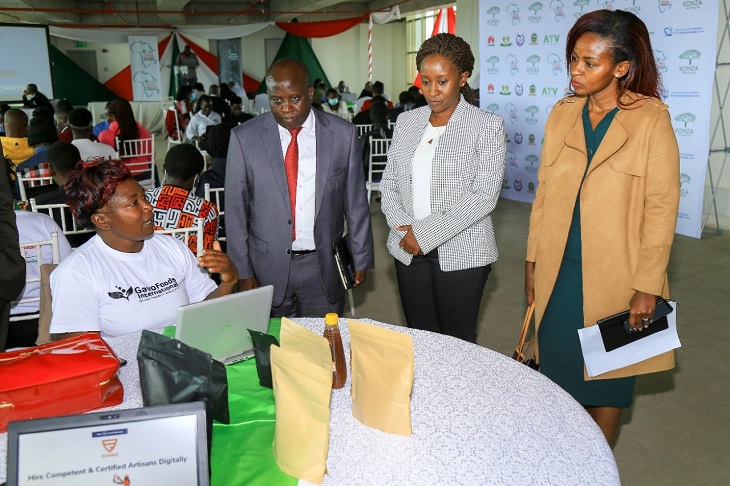
Speaking during this year’s Africa Division’s International Association of Science Parks and Areas of Innovation (IASP) Conference at Konza Technopolis, Huawei Kenya Vice Director for Programs Management, Maureen Mwaniki underscored the importance of Research and Development for the success of the Kenyan economy noting it urgently requires Kenyan universities and technical institutes to remarkably increase their degree of investment to deliver more innovative products and services.
High levels of investment in research and technology, she said, have been linked to innovation, competitiveness, and economic and social progress.

Themed ‘Science and Technology Parks and Areas of Innovation as Catalysts of Sustainable Growth in Africa’, the conference was designed as a platform to share knowledge and experiences on matters of innovation and technology development.
It was officially opened by Joe Mucheru, the Cabinet Secretary for ICT, Innovation, and Youth Affairs who lauded private sector firms such as Huawei for supporting other players in academia to build the youths’ ICT skills. He also noted that the government was committed to partnering with ICT players including Huawei to build a skills database designed to match skills to available industry opportunities.
Echoing his remarks, Ms. Mwaniki said that progressive innovation requires multiple things including commitment, self-reflection and learning, and a supportive environment. “This requires attention from management and workers, learning what the market has, the market/customer needs, mistakes the innovator has made, and constantly evolving to improve the product or service, be it functionality, quality, price point, or business model. Ultimately innovation needs mentors, training, guidance, and an ecosystem of partners including suppliers, developers, retailers, service and maintenance partners or investors, to bring the idea to market,” she said.
The innovation journey explained to Ms. Mwaniki, always begins with having a strong self-drive in wanting to participate in building the technology space. Fortunately for Kenyans, there are several areas that one can build upon and problems to solve with technology. “It is highly encouraging that young men and women are emerging to present great technology-driven ideas and solutions,” she added.
In addition, Ms. Mwaniki noted that partnerships were a critical factor and committed the firm’s support towards initiatives such as the IASP conference in which deliberations are designed to grow the country’s innovation pipeline. This includes bringing together different partners for these initiatives to support the youth with facilities that include training and access to investors “We believe this event is useful and important for fostering partnerships and developing ideas which can drive innovation in Kenya,” said.
According to the Ministry of Education website, Kenya has over the years been allocating Kshs 400 million annually to finance research and innovations, with a yearly pipeline of just about 1,000 projects. The funding target though is much larger, pegged at 2 percent of the country’s Kshs 1 trillion GDP, translating to about Ksh 200 billion.
Kenya’s ranking on the innovation investment (input) sub-index was 89 out of 129 countries in 2020, with a score of 38 points out of 100, according to the global innovation index. This placed the country in the bottom third of the list in terms of investment. The score has been stagnant since 2011 despite the potential of innovation in reducing the unemployment rate, which stands at 19 percent among young people aged 15-24, according to the World Bank.
Spending on research, science, technology, and innovation under the State Department for University Education was estimated to be Sh2.49 billion in the 2018/2019 financial year, according to the Treasury, accounting for two percent of the total spending on university education. Overall, the country spends 0.8 percent of its GDP on research, thus punching far below its weight in innovations.

About Soko Directory Team
Soko Directory is a Financial and Markets digital portal that tracks brands, listed firms on the NSE, SMEs and trend setters in the markets eco-system.Find us on Facebook: facebook.com/SokoDirectory and on Twitter: twitter.com/SokoDirectory

- January 2026 (220)
- February 2026 (248)
- March 2026 (287)
- April 2026 (207)
- May 2026 (192)
- June 2026 (238)
- July 2026 (279)
- August 2026 (224)
- September 2026 (34)
- January 2025 (119)
- February 2025 (191)
- March 2025 (212)
- April 2025 (193)
- May 2025 (161)
- June 2025 (157)
- July 2025 (227)
- August 2025 (211)
- September 2025 (267)
- October 2025 (297)
- November 2025 (230)
- December 2025 (220)
- January 2024 (238)
- February 2024 (227)
- March 2024 (190)
- April 2024 (133)
- May 2024 (157)
- June 2024 (145)
- July 2024 (136)
- August 2024 (154)
- September 2024 (212)
- October 2024 (255)
- November 2024 (196)
- December 2024 (143)
- January 2023 (182)
- February 2023 (203)
- March 2023 (322)
- April 2023 (297)
- May 2023 (267)
- June 2023 (214)
- July 2023 (212)
- August 2023 (257)
- September 2023 (237)
- October 2023 (264)
- November 2023 (286)
- December 2023 (177)
- January 2022 (293)
- February 2022 (329)
- March 2022 (358)
- April 2022 (292)
- May 2022 (271)
- June 2022 (232)
- July 2022 (278)
- August 2022 (253)
- September 2022 (246)
- October 2022 (196)
- November 2022 (232)
- December 2022 (167)
- January 2021 (182)
- February 2021 (227)
- March 2021 (325)
- April 2021 (259)
- May 2021 (285)
- June 2021 (272)
- July 2021 (277)
- August 2021 (232)
- September 2021 (271)
- October 2021 (303)
- November 2021 (364)
- December 2021 (249)
- January 2020 (272)
- February 2020 (310)
- March 2020 (390)
- April 2020 (321)
- May 2020 (335)
- June 2020 (327)
- July 2020 (333)
- August 2020 (276)
- September 2020 (214)
- October 2020 (233)
- November 2020 (242)
- December 2020 (187)
- January 2019 (251)
- February 2019 (215)
- March 2019 (283)
- April 2019 (254)
- May 2019 (269)
- June 2019 (249)
- July 2019 (335)
- August 2019 (292)
- September 2019 (306)
- October 2019 (313)
- November 2019 (362)
- December 2019 (318)
- January 2018 (291)
- February 2018 (213)
- March 2018 (275)
- April 2018 (223)
- May 2018 (235)
- June 2018 (176)
- July 2018 (256)
- August 2018 (247)
- September 2018 (255)
- October 2018 (282)
- November 2018 (282)
- December 2018 (184)
- January 2017 (183)
- February 2017 (194)
- March 2017 (207)
- April 2017 (104)
- May 2017 (169)
- June 2017 (205)
- July 2017 (189)
- August 2017 (195)
- September 2017 (186)
- October 2017 (235)
- November 2017 (253)
- December 2017 (266)
- January 2016 (164)
- February 2016 (165)
- March 2016 (189)
- April 2016 (143)
- May 2016 (245)
- June 2016 (182)
- July 2016 (271)
- August 2016 (247)
- September 2016 (233)
- October 2016 (191)
- November 2016 (243)
- December 2016 (153)
- January 2015 (1)
- February 2015 (4)
- March 2015 (164)
- April 2015 (107)
- May 2015 (116)
- June 2015 (119)
- July 2015 (145)
- August 2015 (157)
- September 2015 (186)
- October 2015 (169)
- November 2015 (173)
- December 2015 (205)
- March 2014 (2)
- March 2013 (10)
- June 2013 (1)
- March 2012 (7)
- April 2012 (15)
- May 2012 (1)
- July 2012 (1)
- August 2012 (4)
- October 2012 (2)
- November 2012 (2)
- December 2012 (1)