
Gender Inequality Driving Rise In HIV Infection
KEY POINTS
Last year, the Center for Rights Education and Awareness received over 3,762 cases of GBV with most cases of rape, incest, and defilement occurring in dysfunctional families.
The AIDS Healthcare Foundation (AHF) has called for concerted efforts to address gender inequality as a root cause of the HIV epidemic citing that gender inequality increases women’s risk of HIV infection by limiting their ability to negotiate safer sex, access HIV testing, and treatment, and protect themselves from sexual violence.
The urgent call to action came on International Women’s Day, a day dedicated to celebrating women’s achievements and promoting gender equality worldwide. Speaking on the issue, Dr. Samuel Kinyanjui, the AHF Country Director, stated that Sexual-based violence, a product of gender inequality, is one of the key drivers to increased HIV infections and teenage pregnancies.
“Women who experience gender-based violence feel disempowered and lack the confidence to negotiate safe sex practices or access sexual health services. Neglected children from abusive homes are often raped and defiled by relatives and often engage in transactional sex. This increases their risk of contracting HIV and experiencing unintended pregnancies,” said Dr. Kinyanjui.

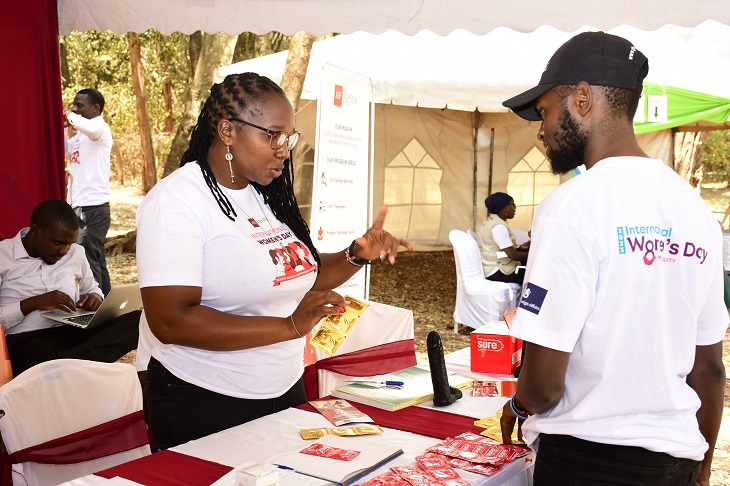
In a series of events organized in Homabay, Kwale, and Nairobi to commemorate International Women’s Day, AHF, the County Governments, and other civil society organizations in the health sector, provided free cervical cancer screening, HIV testing, and counseling, and educated women and girls on available interventions that protect them from HIV and promote socio-economic empowerment.
Dr. Kinyanjui also noted that gender inequality remains a significant factor in the rise of HIV infections among women and girls in Kenya, as they are disproportionately affected by poverty, violence, and cultural practices that limit their access to education, healthcare, and economic opportunities. This vulnerability increases their risk of HIV infection. According to the Joint United Nations Programme on HIV/AIDS (UNAIDS), women accounted for 59% of new HIV infections in the country in 2020.
Last year, the Center for Rights Education and Awareness received over 3,762 cases of GBV with most cases of rape, incest, and defilement occurring in dysfunctional families.
The Kenyan Government has promised bold action to address the social and structural factors that increase women’s vulnerability to HIV. During last month’s meeting of the global alliance to end AIDS in children held in Dar es Salaam, Tanzania, the Kenyan Cabinet Secretary for Health, Dr. Nakhumicha S. Wafula, stated that the Kenyan Government is committed to using digital technology to ensure access to treatment and care for all pregnant and breastfeeding women.
AHF is calling for structural reforms beyond the health sector, policy changes to combat violence against women and girls, and major investments in initiatives to change harmful gender norms.
Speaking on the sidelines of one of the events, the AHF Nursing Officer Aska Omwancha stated that AHF is keen on empowering women with sufficient information to pursue HIV testing, get started on HIV treatment, and adhere to treatment.

About Soko Directory Team
Soko Directory is a Financial and Markets digital portal that tracks brands, listed firms on the NSE, SMEs and trend setters in the markets eco-system.Find us on Facebook: facebook.com/SokoDirectory and on Twitter: twitter.com/SokoDirectory

- January 2026 (220)
- February 2026 (248)
- March 2026 (287)
- April 2026 (208)
- May 2026 (53)
- January 2025 (119)
- February 2025 (191)
- March 2025 (212)
- April 2025 (193)
- May 2025 (161)
- June 2025 (157)
- July 2025 (227)
- August 2025 (211)
- September 2025 (270)
- October 2025 (297)
- November 2025 (230)
- December 2025 (219)
- January 2024 (238)
- February 2024 (227)
- March 2024 (190)
- April 2024 (133)
- May 2024 (157)
- June 2024 (145)
- July 2024 (136)
- August 2024 (154)
- September 2024 (212)
- October 2024 (255)
- November 2024 (196)
- December 2024 (143)
- January 2023 (182)
- February 2023 (203)
- March 2023 (322)
- April 2023 (297)
- May 2023 (267)
- June 2023 (214)
- July 2023 (212)
- August 2023 (257)
- September 2023 (237)
- October 2023 (264)
- November 2023 (286)
- December 2023 (177)
- January 2022 (293)
- February 2022 (329)
- March 2022 (358)
- April 2022 (292)
- May 2022 (271)
- June 2022 (232)
- July 2022 (278)
- August 2022 (253)
- September 2022 (246)
- October 2022 (196)
- November 2022 (232)
- December 2022 (167)
- January 2021 (182)
- February 2021 (227)
- March 2021 (325)
- April 2021 (259)
- May 2021 (285)
- June 2021 (272)
- July 2021 (277)
- August 2021 (232)
- September 2021 (271)
- October 2021 (304)
- November 2021 (364)
- December 2021 (249)
- January 2020 (272)
- February 2020 (310)
- March 2020 (390)
- April 2020 (321)
- May 2020 (335)
- June 2020 (327)
- July 2020 (333)
- August 2020 (276)
- September 2020 (214)
- October 2020 (233)
- November 2020 (242)
- December 2020 (187)
- January 2019 (251)
- February 2019 (215)
- March 2019 (283)
- April 2019 (254)
- May 2019 (269)
- June 2019 (249)
- July 2019 (335)
- August 2019 (293)
- September 2019 (306)
- October 2019 (313)
- November 2019 (362)
- December 2019 (318)
- January 2018 (291)
- February 2018 (213)
- March 2018 (275)
- April 2018 (223)
- May 2018 (235)
- June 2018 (176)
- July 2018 (256)
- August 2018 (247)
- September 2018 (255)
- October 2018 (282)
- November 2018 (282)
- December 2018 (184)
- January 2017 (183)
- February 2017 (194)
- March 2017 (207)
- April 2017 (104)
- May 2017 (169)
- June 2017 (205)
- July 2017 (189)
- August 2017 (195)
- September 2017 (186)
- October 2017 (235)
- November 2017 (253)
- December 2017 (266)
- January 2016 (164)
- February 2016 (165)
- March 2016 (189)
- April 2016 (143)
- May 2016 (245)
- June 2016 (182)
- July 2016 (271)
- August 2016 (247)
- September 2016 (233)
- October 2016 (191)
- November 2016 (243)
- December 2016 (153)
- January 2015 (1)
- February 2015 (4)
- March 2015 (164)
- April 2015 (107)
- May 2015 (116)
- June 2015 (119)
- July 2015 (145)
- August 2015 (157)
- September 2015 (186)
- October 2015 (169)
- November 2015 (173)
- December 2015 (205)
- March 2014 (2)
- March 2013 (10)
- June 2013 (1)
- March 2012 (7)
- April 2012 (15)
- May 2012 (1)
- July 2012 (1)
- August 2012 (4)
- October 2012 (2)
- November 2012 (2)
- December 2012 (1)