
Kenya’s State Of Care For Patients With Brain And Spine Tumors
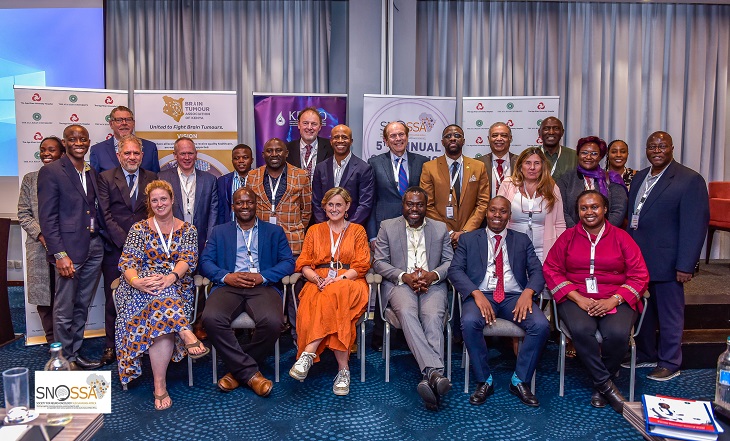
Health practitioners and patient advocates from across Africa gathered in Nairobi for the 5th Society for Neuro-oncology in sub-Saharan Africa conference to discuss how to improve care for patients with brain and spine tumors.
Even as the experts from the continent take stock of the capacity of care, just how well equipped is Kenya to provide effective neuro-oncology care?
What is the local capacity for neuro-oncology care?

This depends on what the problem is. Most of the requirements needed for diagnosis, treatment, and rehabilitation are now available locally. As local health professionals, we often seek guidance on treatment options on the patient’s behalf with our colleagues overseas and would be able to advise if care abroad is required. However, these instances are rare, and largely quality neuro-oncology care is available in Kenya.
Over the years, we have expanded the number of public health facilities that offer Neuro-oncology care in major cities including Nairobi, Mombasa, and Kisumu. Some hospitals like Aga Khan University Hospital, Nairobi where I work have a full complement team of specialists with the ability to do extended testing on tissues and a multidisciplinary approach to neuro-oncology care.
How advanced is Kenya when it comes to neuro-oncology technology?
Kenya has made significant strides in availing critical technology required for optimum advanced neuro-oncology care in different facilities. Positron emission tomography (PET) CT Scan services are available in 2 facilities – Kenyatta University Teaching, Referral and Research Hospital and Aga Khan University Hospital. Several hospitals now have a cathlab, an essential facility for interventional procedures, while essential MRI services are readily available across the country. Neuro-navigation equipment is also available locally.
What is the capacity of neuro-care specialists in Kenya?
For correct and timely diagnosis Kenya needs to do more. The country currently has 4 neuro-radiologists, two based in Nairobi at Aga Khan University Hospital. However, it would be good to highlight the successful team approach to neuro-care, key optimum care. At Aga Khan University Hospital, for example, we have the support of our neuro-pathology colleagues to review the tissue whilst we are in theatre to ensure we have the correct specimen (frozen section – the only center in the region doing this). Our anaesthesiologists have specialist training in neuro-anesthesia. Some patients need endo-vascular care and we have the only fully operational endo-vascular service in the region. Our pathologists do extended immunohistochemistry tests in line with the international WHO standards. In addition, we have oncologists and radio-oncologists who can provide the required post-operative care usually in an outpatient setting making it easier for the patient and family. This also ensures that the patients receive the care they need timely. We need to duplicate this kind of team approach in more facilities.
How would you rate access to neuro-oncology care?
Access to Neuro-oncology care has substantially improved with 9 public neuro-surgical sites and many more oncology sites. We have many centers with radiological investigative capabilities. `The challenge is in our patients knowing where these services are located as often patients have serial visits before they get to the right specialist’s care.
When it comes to knowledge sharing, the Society for Neuro-oncology sub-Saharan Africa already runs a monthly webinar series for continuous medical education. It partners with larger and more established Neuro-oncology societies like the Society of Neuro-oncology (SNO) in North America and the European Association of Neuro-oncology (EANO) to expand our educational and technical knowhow of problems affecting patients and how we can improve treatment outcomes.
Is there research and training locally available to grow the practice?
We do clinical research reporting on patient outcomes. However, we need a more robust research collaborative network to do better-powered studies, increase access to research grants and upskill our research capacity. The next big step will be to drive the research agenda by establishing studies that answer pertinent questions for our patients in disease prevalence, tumor genomics, access to care, health economics, treatment side effects, patient satisfaction, and compliance.
Aga Khan University has established a Clinical Research Unit that is doing clinical trials presently at international standards in oesophageal, breast tumors, and multiple sclerosis. We now need to develop and partner in Neuro-oncology clinical trials and we are actively looking out for international partners for the same. At the same time, the University’s Brain and Mind Institute is developing a wide collaborative network of neuroscience research with more exciting announcements coming with the inaugural conference in November this year in Kenya. Additionally, Aga Khan University also has a medical oncology fellowship which is a start in upskilling doctors.
With regards to training, we need neuro-oncology nurses and therapists training. Apart from medical oncology fellowships, we need post-graduate Neuro-oncology fellowship training opportunities in all the relevant specialties – radiology, neurosurgery, anesthesia, pathology, oncology, radio-oncology, and palliative care). It is important to note that local or regional training is the best way to retain technical expertise and also develop culturally sensitive care.
Are there any gaps and what can be done?
We have made great strides in the last 20 years but there are still gaps. We need clearer and heightened public education for patients to know where to access care because we have people who are not aware that we can handle neuro-oncology problems locally.
Secondly, many communities have strong beliefs about brain and spine diseases, often pessimistic or shrouded in spiritual beliefs around curses or the evil eye. Often, these patients seek alternative care that leads to poor outcomes or only seek care when the neurological problems are much more advanced and difficult to treat. However, if we can advocate for earlier presentations and for the community to have faith in the treatment process locally, we would have substantially better outcomes.
The other gap is in training because much of the training has focused on doctors. Though we still need to substantially ramp up training in the region for doctors, there is currently no Neuro-oncology training for nurses. The backbone of care is multidisciplinary with nurses and other therapists as a fundamental component of the same. So we need to have dedicated nurse training as well as therapists (occupational therapy, physiotherapists, and speech and language therapists) training in the region.
At the national level, we need to increase our human resource capacity in Neuro-oncology to meet the growing demand. Partnerships with the National Cancer Institute (NCI), Kenya Society for haemato-oncology (KESHO), and the Brain tumor alliance of Kenya (BTAK) are important to achieve this. Bringing all the stakeholders to the table amplifies our capacity to collaborate and advocate for improved patient care.
By Dr Beverly Cheserem, Consultant Neurosurgeon at Aga Khan University Hospital and Chair, Organizing Committee, 5th Society for Neuro-oncology in sub-Saharan Africa conference

About Soko Directory Team
Soko Directory is a Financial and Markets digital portal that tracks brands, listed firms on the NSE, SMEs and trend setters in the markets eco-system.Find us on Facebook: facebook.com/SokoDirectory and on Twitter: twitter.com/SokoDirectory

- January 2026 (220)
- February 2026 (248)
- March 2026 (287)
- April 2026 (208)
- May 2026 (191)
- June 2026 (238)
- July 2026 (279)
- August 2026 (145)
- January 2025 (119)
- February 2025 (191)
- March 2025 (212)
- April 2025 (193)
- May 2025 (161)
- June 2025 (157)
- July 2025 (227)
- August 2025 (211)
- September 2025 (267)
- October 2025 (297)
- November 2025 (230)
- December 2025 (220)
- January 2024 (238)
- February 2024 (227)
- March 2024 (190)
- April 2024 (133)
- May 2024 (157)
- June 2024 (145)
- July 2024 (136)
- August 2024 (154)
- September 2024 (212)
- October 2024 (255)
- November 2024 (196)
- December 2024 (143)
- January 2023 (182)
- February 2023 (203)
- March 2023 (322)
- April 2023 (297)
- May 2023 (267)
- June 2023 (214)
- July 2023 (212)
- August 2023 (257)
- September 2023 (237)
- October 2023 (264)
- November 2023 (286)
- December 2023 (177)
- January 2022 (293)
- February 2022 (329)
- March 2022 (358)
- April 2022 (292)
- May 2022 (271)
- June 2022 (232)
- July 2022 (278)
- August 2022 (253)
- September 2022 (246)
- October 2022 (196)
- November 2022 (232)
- December 2022 (167)
- January 2021 (182)
- February 2021 (227)
- March 2021 (325)
- April 2021 (259)
- May 2021 (285)
- June 2021 (272)
- July 2021 (277)
- August 2021 (232)
- September 2021 (271)
- October 2021 (303)
- November 2021 (364)
- December 2021 (249)
- January 2020 (272)
- February 2020 (310)
- March 2020 (390)
- April 2020 (321)
- May 2020 (335)
- June 2020 (327)
- July 2020 (333)
- August 2020 (276)
- September 2020 (214)
- October 2020 (233)
- November 2020 (242)
- December 2020 (187)
- January 2019 (251)
- February 2019 (215)
- March 2019 (283)
- April 2019 (254)
- May 2019 (269)
- June 2019 (249)
- July 2019 (335)
- August 2019 (292)
- September 2019 (306)
- October 2019 (313)
- November 2019 (362)
- December 2019 (318)
- January 2018 (291)
- February 2018 (213)
- March 2018 (275)
- April 2018 (223)
- May 2018 (235)
- June 2018 (176)
- July 2018 (256)
- August 2018 (247)
- September 2018 (255)
- October 2018 (282)
- November 2018 (282)
- December 2018 (184)
- January 2017 (183)
- February 2017 (194)
- March 2017 (207)
- April 2017 (104)
- May 2017 (169)
- June 2017 (205)
- July 2017 (189)
- August 2017 (195)
- September 2017 (186)
- October 2017 (235)
- November 2017 (253)
- December 2017 (266)
- January 2016 (164)
- February 2016 (165)
- March 2016 (189)
- April 2016 (143)
- May 2016 (245)
- June 2016 (182)
- July 2016 (271)
- August 2016 (247)
- September 2016 (233)
- October 2016 (191)
- November 2016 (243)
- December 2016 (153)
- January 2015 (1)
- February 2015 (4)
- March 2015 (164)
- April 2015 (107)
- May 2015 (116)
- June 2015 (119)
- July 2015 (145)
- August 2015 (157)
- September 2015 (186)
- October 2015 (169)
- November 2015 (173)
- December 2015 (205)
- March 2014 (2)
- March 2013 (10)
- June 2013 (1)
- March 2012 (7)
- April 2012 (15)
- May 2012 (1)
- July 2012 (1)
- August 2012 (4)
- October 2012 (2)
- November 2012 (2)
- December 2012 (1)