
SMEs Need Support For Sustainability And Climate Change Resilience
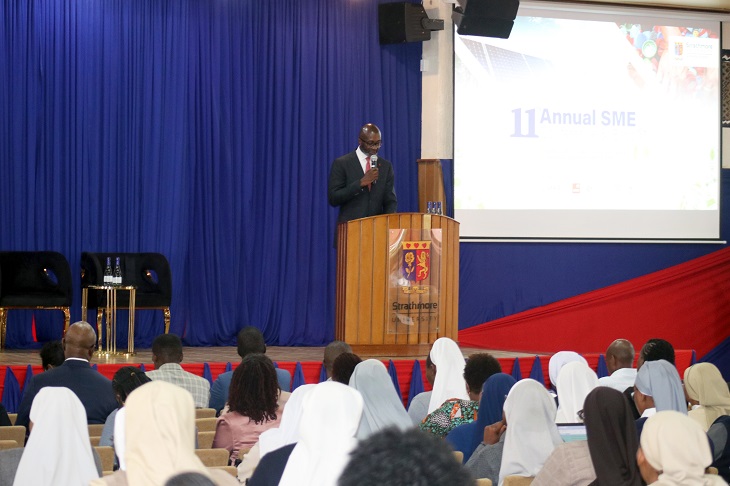
There is an urgent need to support small and medium enterprises (SMEs) within and without Africa for them to gain sustainability and climate change resilience. This is according to the Regional CEO of East & Southern Africa – Ebele Ogbue of United Bank for Africa (UBA).
Speaking at the Strathmore University Business School, Mr. Ebele Ogbue said that at a time when the world is moving towards green investment, SMEs in Africa will play a crucial role in ensuring the success of the same given that they form the majority of businesses in the continent.
“The urgency of mitigating climate change and building resilience cannot be overstated. Addressing climate change in Africa presents a $3 trillion economic investment opportunity in the continent by the year 2030,” he said.

SMEs are the backbone of the world economy, accounting for most businesses in nearly every region. In the developing world, SMEs make up 90 percent of the private sector and create more than 50 percent of jobs in their corresponding economies.
Read Also: 10 Challenges Kenyan SMEs Face In Market Access
In Africa, SMEs provide an estimated 80 percent of jobs across the continent, representing an important driver of economic growth. Sub-Saharan Africa alone has 44 million micro, small, and medium enterprises, almost all of which are micro. For these businesses to grow, create more jobs, and generate economic growth, they need access to capital especially when faced with climate change-related risks, which pose additional threats, from supply chain disruptions to increased operating costs.
The private sector in Africa is critical to adapting to, as well as mitigating, climate change. This is especially true of SMEs, given that they make up a significant part of the continent’s private sector. Incentivization must exist for SMEs to function sustainably and achieve green growth.
“African SMEs’ lack of access to financing unfortunately often forces them to behave in ways that are not sustainable. It is harder for SMEs focused on sustainability and green business to gain financial support because there are typically higher up-front costs and the markets are underdeveloped. Green technology is expensive because it is newer and comes with many up-front costs,” he added.
It is therefore important to find ways for SMEs to access affordable financial support to build more climate-resilient businesses and business models. This involves assessing vulnerabilities, developing adaptation strategies, and ensuring the resilience of
supply chains and operations. Collaborative efforts with industry peers, government agencies, and international organizations can facilitate access to knowledge, resources, and support in this regard.
Read Also: How Delayed Payments Are Killing SMEs In Kenya
So How Can SMEs Turn these Challenges into Opportunities?
The current climate crisis demands innovation. It is the SMEs that are perfectly poised to turn this mammoth challenge into a plethora of opportunities.
Sustainable practices can lead to cost savings, access to new markets, and enhanced reputation, which can be particularly advantageous for SMEs. Some of these opportunities are:
- Creating Sustainable Products & Services: Consumers globally are increasingly looking for eco-friendly products. African SMEs can carve a niche in producing sustainable goods, tapping into both local and global markets.
- Developing Innovative Agri-business Models: With changing weather patterns, there is an urgent need for adaptive agricultural practices. This opens avenues for SMEs in areas like drought-resistant seeds, water-saving irrigation systems, and sustainable farming consultancies.
- Energy Efficiency: SMEs can reduce their energy consumption and costs by investing in energy-efficient technologies and processes. This not only lowers their carbon footprint but also enhances their competitiveness by exploring opportunities in the production, installation, and maintenance of renewable energy technologies such as solar panels, biomass energy systems, etc. This sector is growing rapidly as governments and businesses aim to reduce greenhouse gas emissions.
- Green Financing: Commercial banks like mine can play a pivotal role by offering green financing options tailored to SMEs. These loans can support investments in renewable energy, eco-friendly infrastructure, and sustainable supply chains.
- Digital Transformation: Embracing digital technologies can enable SMEs to optimize their operations, reduce resource consumption, and access global markets more efficiently.
- Waste Management, Climate Risk Assessment, and Adaptation: SMEs can provide Consultancy services and technology solutions to help businesses and communities assess and adapt to the impact of climate change. This includes developing strategies to minimize waste and reduce environmental impact, manage water scarcity, extreme weather events, and shifting climatic conditions.
Read Also: Safaricom PLC: Pioneering Corporate Social Responsibility in Kenya – 25 Lessons For SMEs
This falls within the Tony Elumelu Foundation’s Theme for this year’s Seed Capital Funding working with UBA to support SMEs in the area of Sustainability and Climate Change Resilience.
The Tony Elumelu Foundation, founded by African investor, philanthropist, and Chairman of United Bank of Africa PLC, Tony E. Elumelu is a Non-Governmental Organization aimed at creating prosperity for all through supporting and creating African Entrepreneurs. It has thus far funded 15,847 young entrepreneurs and SMEs across 54 Countries in Africa.
Since its inception in Kenya in 2015, the Tony Elumelu Entrepreneurship Program has disbursed USD 3.42Mn as seed capital to a total of 684 Kenyan entrepreneurs who fall within the SME Space. It has also provided critical non-financial support such as: –
- Mentoring
- 12-week business management training
- Knowledge Resources on TEFConnect.net
- Meetups and Networking
- Annual TEF Entrepreneurship Forum
It is therefore no surprise that the theme for this year’s Seed Funding Capital is a resounding call to Green Entrepreneurs in the Waste Management Sector in Kenya to participate and be part of the #BeGreenAfrica Initiative a first-of-its-kind Green Entrepreneurship Program to address African youth unemployment.
The program aims to train 1,000 Kenyan MSMEs in the waste management sector, and subsequently economically empower 120 of these Entrepreneurs with Seed Funding Capital of USD 5,000 each to run their businesses. The Programme targets Entrepreneurs under the age of 35, with new or existing green businesses in Kenya.
So what is this BeGreenInitiative, some might ask?
BeGreen Africa is a green entrepreneurship pilot program co-created by The Tony Elumelu Foundation, in partnership with UNICEF Generation Unlimited (GenU), and the IKEA Foundation with the key objective to create a holistic, sustainable, and youth-led green entrepreneurship initiative in the waste sector in Kenya.
Read Also: Sharp Increase In Optimism Among SMEs In Kenya Compared To Previous Year
This Initiative aims to strengthen Kenya’s path towards sustainable, climate-resilient development while achieving low carbon emissions and aligns with the Sustainable Waste Management Act responsible for instituting the legal and institutional framework to sustainably and effectively manage waste in Kenya.
I, therefore, encourage all the young entrepreneurs and women in entrepreneurship gathered here today to check out and interact with the online platforms for the Tony Elumelu Foundation to ensure you do not miss such opportunities now and in the future.
At UBA Bank, we are committed to supporting the growth and development of SMEs across Africa. This is in line with our bank’s strategic focus on the SME segment being a catalyst for the economic development of Africa.
We, therefore, do have a pivotal role to play in supporting SMEs in Africa by:
- Creating financial products tailored for SMEs focusing on sustainability.
- Capacity Building through workshops, webinars, and training, to empower SMEs with the knowledge and skills required to navigate the changing landscape.
- By Investing in Research and development to understand the evolving needs of our customers, ensuring that our financial solutions remain relevant.
Read Also: Microsoft And M-PESA Africa Partner To Develop Digital Skills For MSMEs

About Soko Directory Team
Soko Directory is a Financial and Markets digital portal that tracks brands, listed firms on the NSE, SMEs and trend setters in the markets eco-system.Find us on Facebook: facebook.com/SokoDirectory and on Twitter: twitter.com/SokoDirectory

- January 2026 (220)
- February 2026 (243)
- March 2026 (252)
- January 2025 (119)
- February 2025 (191)
- March 2025 (212)
- April 2025 (193)
- May 2025 (161)
- June 2025 (157)
- July 2025 (227)
- August 2025 (211)
- September 2025 (270)
- October 2025 (297)
- November 2025 (230)
- December 2025 (219)
- January 2024 (238)
- February 2024 (227)
- March 2024 (190)
- April 2024 (133)
- May 2024 (157)
- June 2024 (145)
- July 2024 (136)
- August 2024 (154)
- September 2024 (212)
- October 2024 (255)
- November 2024 (196)
- December 2024 (143)
- January 2023 (182)
- February 2023 (203)
- March 2023 (322)
- April 2023 (297)
- May 2023 (267)
- June 2023 (214)
- July 2023 (212)
- August 2023 (257)
- September 2023 (237)
- October 2023 (264)
- November 2023 (286)
- December 2023 (177)
- January 2022 (293)
- February 2022 (329)
- March 2022 (358)
- April 2022 (292)
- May 2022 (271)
- June 2022 (232)
- July 2022 (278)
- August 2022 (253)
- September 2022 (246)
- October 2022 (196)
- November 2022 (232)
- December 2022 (167)
- January 2021 (182)
- February 2021 (227)
- March 2021 (325)
- April 2021 (259)
- May 2021 (285)
- June 2021 (272)
- July 2021 (277)
- August 2021 (232)
- September 2021 (271)
- October 2021 (304)
- November 2021 (364)
- December 2021 (249)
- January 2020 (272)
- February 2020 (310)
- March 2020 (390)
- April 2020 (321)
- May 2020 (335)
- June 2020 (327)
- July 2020 (333)
- August 2020 (276)
- September 2020 (214)
- October 2020 (233)
- November 2020 (242)
- December 2020 (187)
- January 2019 (251)
- February 2019 (215)
- March 2019 (283)
- April 2019 (254)
- May 2019 (269)
- June 2019 (249)
- July 2019 (335)
- August 2019 (293)
- September 2019 (306)
- October 2019 (313)
- November 2019 (362)
- December 2019 (318)
- January 2018 (291)
- February 2018 (213)
- March 2018 (275)
- April 2018 (223)
- May 2018 (235)
- June 2018 (176)
- July 2018 (256)
- August 2018 (247)
- September 2018 (255)
- October 2018 (282)
- November 2018 (282)
- December 2018 (184)
- January 2017 (183)
- February 2017 (194)
- March 2017 (207)
- April 2017 (104)
- May 2017 (169)
- June 2017 (205)
- July 2017 (189)
- August 2017 (195)
- September 2017 (186)
- October 2017 (235)
- November 2017 (253)
- December 2017 (266)
- January 2016 (164)
- February 2016 (165)
- March 2016 (189)
- April 2016 (143)
- May 2016 (245)
- June 2016 (182)
- July 2016 (271)
- August 2016 (247)
- September 2016 (233)
- October 2016 (191)
- November 2016 (243)
- December 2016 (153)
- January 2015 (1)
- February 2015 (4)
- March 2015 (164)
- April 2015 (107)
- May 2015 (116)
- June 2015 (119)
- July 2015 (145)
- August 2015 (157)
- September 2015 (186)
- October 2015 (169)
- November 2015 (173)
- December 2015 (205)
- March 2014 (2)
- March 2013 (10)
- June 2013 (1)
- March 2012 (7)
- April 2012 (15)
- May 2012 (1)
- July 2012 (1)
- August 2012 (4)
- October 2012 (2)
- November 2012 (2)
- December 2012 (1)