
Tony Elumelu’s Visit To Kenya And What It Means For Africa
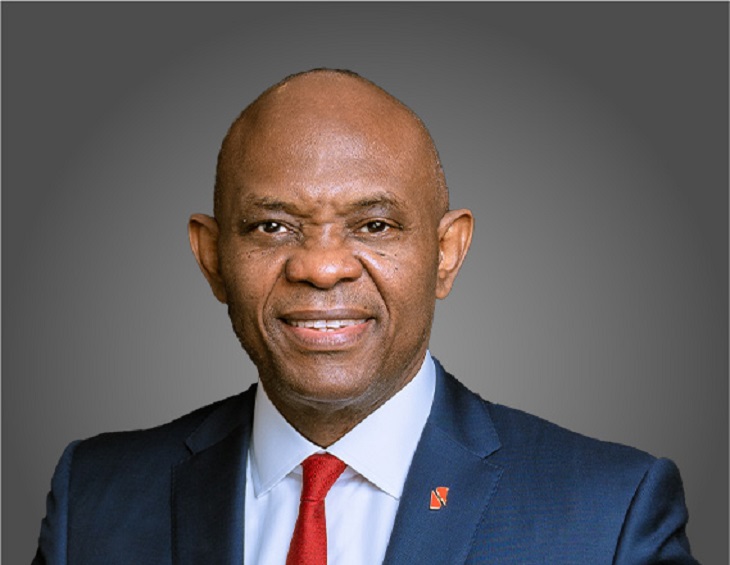
When Tony Elumelu, Chairman of the United Bank for Africa (UBA) Group, touched down in Nairobi last week, it was more than a courtesy visit. It was a statement of intent. His meeting with President William Ruto marked a defining moment in Africa’s journey toward financing its own development, one where Kenya is emerging as a continental leader.
At the heart of the conversation was Kenya’s ambitious USD 1 billion Road Infrastructure Securitization Programme, a pioneering financing model that seeks to unlock long-term capital for the country’s most critical road projects. UBA didn’t just endorse the programme; it backed it with a bold USD 150 million commitment, one of the largest single investments by the bank in Kenya’s infrastructure to date.
This commitment underscores a clear message: Africa’s development will increasingly be financed by African institutions that understand the continent’s needs and believe in its potential.

The Road Network
In East Africa, roads are much more than tarmac and markings; they are the arteries through which commerce flows. Good roads are the difference between a journey that supports trade and one that stifles it. They determine whether fresh produce reaches markets, whether manufacturers can compete, and whether regional integration becomes a lived reality instead of a policy aspiration.
From the Mombasa Port corridor that fuels Kenya’s regional logistics to the border arteries feeding Uganda, Rwanda, Burundi, and South Sudan, better roads mean faster movement of goods, lower transport costs, increased competitiveness, and greater mobility for millions.
Infrastructure is not an accessory to growth; it is the engine.
UBA’s backing of Kenya’s securitization framework signals confidence not only in local infrastructure but in Kenya’s broader long-term economic blueprint. It complements the government’s shift toward innovative, sustainable financing structures that do not overload public debt while attracting private capital.
A New Whitepaper Redefines Africa’s Development Narrative
Tony Elumelu’s visit coincided with the launch of UBA’s powerful new white paper, “Banking on Africa: Unlocking Capital and Partnerships for Sustainable Growth.” It is arguably one of the boldest calls yet for a fundamental shift in how Africa funds its future.
The white paper reveals a transformative truth: Africa holds an estimated USD 4 trillion in domestic financial assets, yet less than 15% is directed toward productive infrastructure. This is not a scarcity problem. It is a coordination problem.
The report argues that Africa must move from aid dependency toward an investment-centered paradigm, one rooted in African-led solutions, blended capital models, and long-term institutional financing.
Infrastructure as the Bedrock of Economic Integration
The white paper illustrates how domestic pension funds, sovereign wealth funds, and insurance pools can shape Africa’s next development chapter. It highlights successful models such as:
- InfraCredit Nigeria which has unlocked over $278 million in infrastructure bonds tailored to pension investors.
- KEPFIC in Kenya, which pooled 24 pension schemes to raise $113 million—with a 157% oversubscription—to invest in local infrastructure.
- Ghana’s GIIF, leveraging $325 million in equity for a $3.6 billion portfolio.
These examples show that African capital—long-term, stable, and local—is uniquely suited to finance the infrastructure that will anchor regional competitiveness.
AfCFTA and PAPSS: Connecting Markets, Empowering SMEs
UBA positions the African Continental Free Trade Area (AfCFTA) as the “architectural blueprint for integration,” unlocking opportunities for industrialization, supply-chain reconfiguration, and SME growth.
The bank projects intra-African trade to hit $220 billion in 2025, driven by improved connectivity and digital payments.
A cornerstone here is the Pan-African Payment and Settlement System (PAPSS), which enables instant cross-border payments in local currencies—saving Africa $5 billion annually in transaction costs. PAPSS is set to turbocharge trade velocity, strengthen local economies, and enhance financial inclusion.
What This Means for Kenya, and the Continent
Tony Elumelu’s visit and UBA’s $150 million investment are emblematic of a deeper shift: Africa financing African growth.
For Kenya, the implications are profound:
- New roads will unlock rural-urban connectivity.
- Businesses will move goods faster and cheaply.
- Regional trade will accelerate under AfCFTA.
- Pension funds and banks will become engines of national development.
- Global partners will be drawn into African-led financing structures.
For Africa, it signals a future where domestic capital mobilization replaces dependency, where innovation replaces traditional aid models, and where institutions like UBA serve as bridges between African ambition and global finance.
By unlocking just a fraction of its own resources, Africa can build the roads, power grids, and digital highways that will define its prosperity for generations.

About Soko Directory Team
Soko Directory is a Financial and Markets digital portal that tracks brands, listed firms on the NSE, SMEs and trend setters in the markets eco-system.Find us on Facebook: facebook.com/SokoDirectory and on Twitter: twitter.com/SokoDirectory

- January 2026 (220)
- February 2026 (243)
- March 2026 (274)
- January 2025 (119)
- February 2025 (191)
- March 2025 (212)
- April 2025 (193)
- May 2025 (161)
- June 2025 (157)
- July 2025 (227)
- August 2025 (211)
- September 2025 (270)
- October 2025 (297)
- November 2025 (230)
- December 2025 (219)
- January 2024 (238)
- February 2024 (227)
- March 2024 (190)
- April 2024 (133)
- May 2024 (157)
- June 2024 (145)
- July 2024 (136)
- August 2024 (154)
- September 2024 (212)
- October 2024 (255)
- November 2024 (196)
- December 2024 (143)
- January 2023 (182)
- February 2023 (203)
- March 2023 (322)
- April 2023 (297)
- May 2023 (267)
- June 2023 (214)
- July 2023 (212)
- August 2023 (257)
- September 2023 (237)
- October 2023 (264)
- November 2023 (286)
- December 2023 (177)
- January 2022 (293)
- February 2022 (329)
- March 2022 (358)
- April 2022 (292)
- May 2022 (271)
- June 2022 (232)
- July 2022 (278)
- August 2022 (253)
- September 2022 (246)
- October 2022 (196)
- November 2022 (232)
- December 2022 (167)
- January 2021 (182)
- February 2021 (227)
- March 2021 (325)
- April 2021 (259)
- May 2021 (285)
- June 2021 (272)
- July 2021 (277)
- August 2021 (232)
- September 2021 (271)
- October 2021 (304)
- November 2021 (364)
- December 2021 (249)
- January 2020 (272)
- February 2020 (310)
- March 2020 (390)
- April 2020 (321)
- May 2020 (335)
- June 2020 (327)
- July 2020 (333)
- August 2020 (276)
- September 2020 (214)
- October 2020 (233)
- November 2020 (242)
- December 2020 (187)
- January 2019 (251)
- February 2019 (215)
- March 2019 (283)
- April 2019 (254)
- May 2019 (269)
- June 2019 (249)
- July 2019 (335)
- August 2019 (293)
- September 2019 (306)
- October 2019 (313)
- November 2019 (362)
- December 2019 (318)
- January 2018 (291)
- February 2018 (213)
- March 2018 (275)
- April 2018 (223)
- May 2018 (235)
- June 2018 (176)
- July 2018 (256)
- August 2018 (247)
- September 2018 (255)
- October 2018 (282)
- November 2018 (282)
- December 2018 (184)
- January 2017 (183)
- February 2017 (194)
- March 2017 (207)
- April 2017 (104)
- May 2017 (169)
- June 2017 (205)
- July 2017 (189)
- August 2017 (195)
- September 2017 (186)
- October 2017 (235)
- November 2017 (253)
- December 2017 (266)
- January 2016 (164)
- February 2016 (165)
- March 2016 (189)
- April 2016 (143)
- May 2016 (245)
- June 2016 (182)
- July 2016 (271)
- August 2016 (247)
- September 2016 (233)
- October 2016 (191)
- November 2016 (243)
- December 2016 (153)
- January 2015 (1)
- February 2015 (4)
- March 2015 (164)
- April 2015 (107)
- May 2015 (116)
- June 2015 (119)
- July 2015 (145)
- August 2015 (157)
- September 2015 (186)
- October 2015 (169)
- November 2015 (173)
- December 2015 (205)
- March 2014 (2)
- March 2013 (10)
- June 2013 (1)
- March 2012 (7)
- April 2012 (15)
- May 2012 (1)
- July 2012 (1)
- August 2012 (4)
- October 2012 (2)
- November 2012 (2)
- December 2012 (1)