
Kenya Launches The E-Mobility Policy To Drive The Use Of EVs
Kenya has launched the National Electric Mobility (e-Mobility) Policy, a move expected to slash the country’s ballooning fuel import bill and accelerate the shift to low-carbon transport.
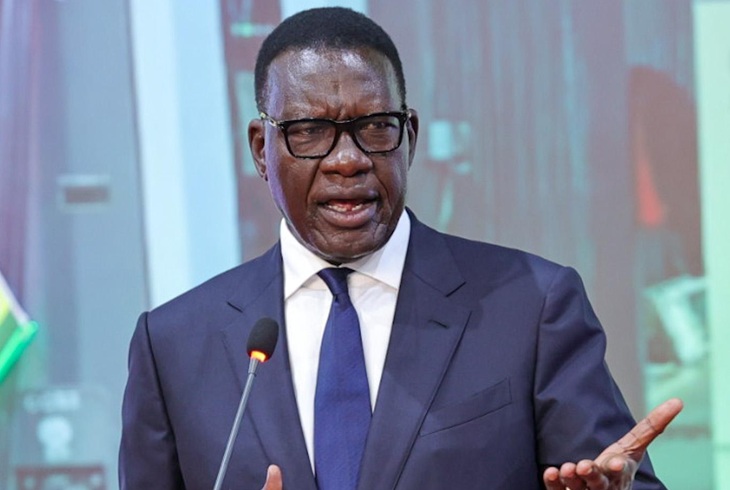
The policy was officially unveiled on Monday at the Kenyatta International Convention Centre (KICC) by Cabinet Secretary for Roads and Transport Davis Chirchir, who said electric mobility is no longer a choice but a strategic necessity for Kenya’s economic stability and environmental sustainability.
“This substantial fuel import bill reflects Kenya’s heavy reliance on imported petroleum for transport, industry, power generation, and aviation – making fuel one of the most significant components of our total import expenditure,” said CS Chirchir.

Kenya currently spends an estimated US$5 billion annually on petroleum imports, a burden that continues to strain foreign exchange reserves and expose the economy to global fuel price volatility. According to data from the Kenya National Bureau of Statistics, fuel imports rose sharply to KSh628.4 billion in 2023, up from KSh348.3 billion in 2021, making petroleum products the country’s single largest import category.
“This substantial fuel import bill reflects our heavy reliance on imported petroleum for transport, industry and power generation,” CS Chirchir said, noting that electric vehicles offer a clear pathway to reduce this dependence.
As part of the rollout, the government also introduced green reflective number plates exclusively for fully electric vehicles, a move aimed at improving visibility, regulation, and public awareness of EV adoption.
Electric vehicle uptake in Kenya has surged in recent years. By 2025, the country had cumulatively registered 39,324 electric vehicles, up from just 1,378 in 2022 — a growth of more than 2,700 per cent in three years. The biggest gains have been recorded in the electric motorcycle segment, driven by affordable models and targeted financing for the bodaboda sector.
“Kenya’s National E-Mobility Policy marks a bold step toward a cleaner, more competitive future for the country. IFC is proud to have partnered with the Government of Kenya to support the legal and regulatory framework for this transformation. Electric mobility will create jobs, boost local manufacturing, and reduce dependence on costly fuel imports. For drivers, this policy will mean lower operating costs for vehicles and better access to charging stations. IFC looks forward to helping Kenya attract the investment it needs to build its e-mobility infrastructure and help the country become an African leader in the sector.” Mary Porter Peschka, Division Director, Eastern Africa, International Finance Corporation
To support this momentum, the government is developing a National Electric Mobility Strategy to guide coordinated implementation across institutions and the private sector. Recent fiscal incentives introduced through the Finance Bill 2025 include zero-rating VAT on electric buses, bicycles, motorcycles and lithium-ion batteries, alongside the removal of excise duty on key EV components.
The policy applies to all modes of transport and provides a comprehensive framework for regulation, investment and expansion of electric mobility. Beyond emissions reduction, it is expected to unlock new opportunities in manufacturing, assembly, charging infrastructure, skills development and green jobs under the Bottom-Up Economic Transformation Agenda.
Principal Secretary for Industrialisation Juma Mukhwana said demand for electric vehicles in Kenya is already outstripping supply, calling for increased short-term financing to help firms scale up local assembly as the country positions itself for long-term EV manufacturing. He also flagged the need to expand charging infrastructure beyond Nairobi to other towns and transport corridors.
Development partners welcomed the policy, with Germany and the European Union reaffirming their support for Kenya’s clean transport ambitions. Germany’s Ambassador to Kenya, Sebastian Groth, said the country has the potential to become a regional leader in electric mobility, while EU Deputy Head of Mission Ondrej Šimek cited Kenya’s strong renewable energy base — which accounts for over 90 per cent of electricity generation — as a key advantage.
The policy was developed with technical and financial backing from partners including the European Union, Germany (through GIZ), the United Kingdom, the International Finance Corporation and the University of California, Davis, underscoring growing international confidence in Kenya’s green transport transition.
Read Also: Crown Paints Ramps Up Sustainability, Launches E-mobility Fleet

About Soko Directory Team
Soko Directory is a Financial and Markets digital portal that tracks brands, listed firms on the NSE, SMEs and trend setters in the markets eco-system.Find us on Facebook: facebook.com/SokoDirectory and on Twitter: twitter.com/SokoDirectory

- January 2026 (220)
- February 2026 (243)
- March 2026 (59)
- January 2025 (119)
- February 2025 (191)
- March 2025 (212)
- April 2025 (193)
- May 2025 (161)
- June 2025 (157)
- July 2025 (227)
- August 2025 (211)
- September 2025 (270)
- October 2025 (297)
- November 2025 (230)
- December 2025 (219)
- January 2024 (238)
- February 2024 (227)
- March 2024 (190)
- April 2024 (133)
- May 2024 (157)
- June 2024 (145)
- July 2024 (136)
- August 2024 (154)
- September 2024 (212)
- October 2024 (255)
- November 2024 (196)
- December 2024 (143)
- January 2023 (182)
- February 2023 (203)
- March 2023 (322)
- April 2023 (297)
- May 2023 (267)
- June 2023 (214)
- July 2023 (212)
- August 2023 (257)
- September 2023 (237)
- October 2023 (264)
- November 2023 (286)
- December 2023 (177)
- January 2022 (293)
- February 2022 (329)
- March 2022 (358)
- April 2022 (292)
- May 2022 (271)
- June 2022 (232)
- July 2022 (278)
- August 2022 (253)
- September 2022 (246)
- October 2022 (196)
- November 2022 (232)
- December 2022 (167)
- January 2021 (182)
- February 2021 (227)
- March 2021 (325)
- April 2021 (259)
- May 2021 (285)
- June 2021 (272)
- July 2021 (277)
- August 2021 (232)
- September 2021 (271)
- October 2021 (304)
- November 2021 (364)
- December 2021 (249)
- January 2020 (272)
- February 2020 (310)
- March 2020 (390)
- April 2020 (321)
- May 2020 (335)
- June 2020 (327)
- July 2020 (333)
- August 2020 (276)
- September 2020 (214)
- October 2020 (233)
- November 2020 (242)
- December 2020 (187)
- January 2019 (251)
- February 2019 (215)
- March 2019 (283)
- April 2019 (254)
- May 2019 (269)
- June 2019 (249)
- July 2019 (335)
- August 2019 (293)
- September 2019 (306)
- October 2019 (313)
- November 2019 (362)
- December 2019 (318)
- January 2018 (291)
- February 2018 (213)
- March 2018 (275)
- April 2018 (223)
- May 2018 (235)
- June 2018 (176)
- July 2018 (256)
- August 2018 (247)
- September 2018 (255)
- October 2018 (282)
- November 2018 (282)
- December 2018 (184)
- January 2017 (183)
- February 2017 (194)
- March 2017 (207)
- April 2017 (104)
- May 2017 (169)
- June 2017 (205)
- July 2017 (189)
- August 2017 (195)
- September 2017 (186)
- October 2017 (235)
- November 2017 (253)
- December 2017 (266)
- January 2016 (164)
- February 2016 (165)
- March 2016 (189)
- April 2016 (143)
- May 2016 (245)
- June 2016 (182)
- July 2016 (271)
- August 2016 (247)
- September 2016 (233)
- October 2016 (191)
- November 2016 (243)
- December 2016 (153)
- January 2015 (1)
- February 2015 (4)
- March 2015 (164)
- April 2015 (107)
- May 2015 (116)
- June 2015 (119)
- July 2015 (145)
- August 2015 (157)
- September 2015 (186)
- October 2015 (169)
- November 2015 (173)
- December 2015 (205)
- March 2014 (2)
- March 2013 (10)
- June 2013 (1)
- March 2012 (7)
- April 2012 (15)
- May 2012 (1)
- July 2012 (1)
- August 2012 (4)
- October 2012 (2)
- November 2012 (2)
- December 2012 (1)