Why Fuliza and M-Shwari Should Anchor Kenya’s Working-Capital Revolution

If I were leading Safaricom, I would convene every serious source of domestic liquidity in the country — banks, SACCOs and well-run microfinance institutions — and put one proposition on the table: allocate a defined portion of deposits into a disciplined, data-driven lending pool that can be deployed through Fuliza and M-Shwari. Kenya does not have a shortage of hustle. Kenya has a shortage of affordable, predictable working capital. That is the gap these products have helped to close, and the numbers already show the scale of the opportunity.
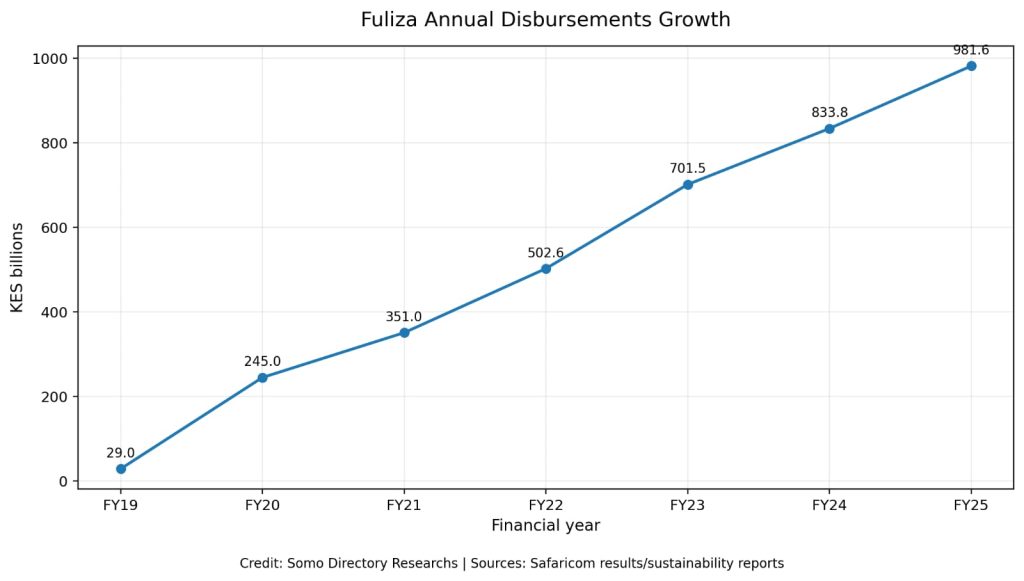
Fuliza is no longer a side product. It is a cash-flow engine embedded in the daily life of millions of Kenyans. Safaricom’s latest full-year disclosures show Fuliza disbursements at about KSh 981.6 billion in a year. That works out to roughly KSh 2.69 billion every day, KSh 18.88 billion every week, and about KSh 81.8 billion every month. NCBA’s 2024 annual report adds the long-view: from inception to 31 December 2024, Fuliza had disbursed 7.54 billion loans with a cumulative value of about USD 22.4 billion. That is not a fringe facility. That is a national liquidity rail.
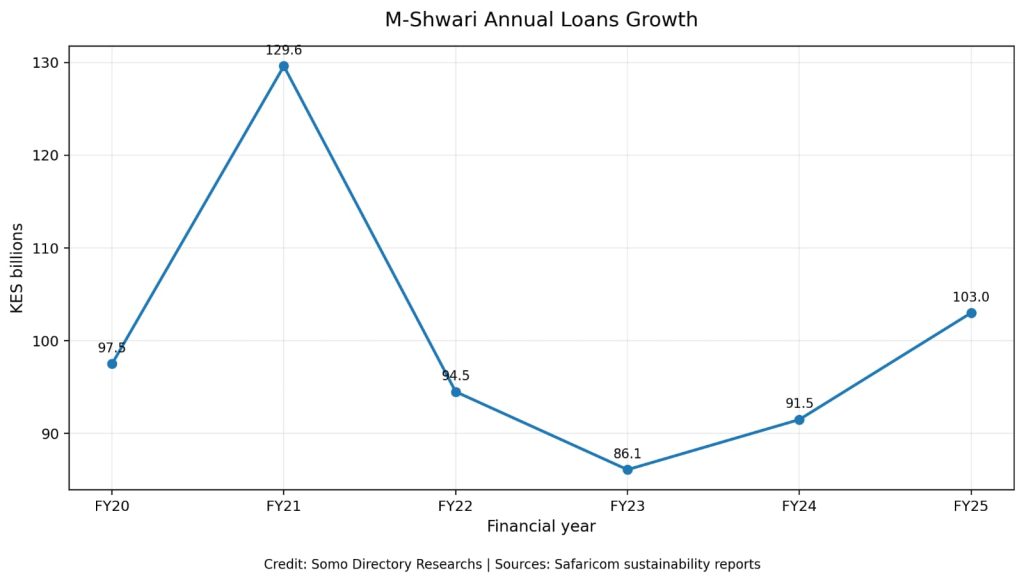
M-Shwari tells a different but equally important story. It has been one of the clearest proofs that digital finance can build both credit access and a savings culture at the same time. The latest disclosed annual loan value for M-Shwari stands at about KSh 103.0 billion. That translates to around KSh 282.2 million a day, KSh 1.98 billion a week, and about KSh 8.58 billion a month. Since inception to 31 December 2024, NCBA reports that M-Shwari had disbursed 210.7 million loans with a cumulative value of about USD 6.06 billion. Put simply, this is one of the most consequential retail financial products Kenya has produced in the mobile era.

That is why I would think bigger. Instead of leaving small-business liquidity to predatory digital lenders and shylocks, I would build a deeper, broader credit marketplace around the rails that already work. Safaricom, through M-PESA, sees the movement of money in real time. It sees income patterns, repayment behavior, merchant flows and cash cycle realities with a depth that most lenders can only dream of. That visibility does not eliminate risk, but it dramatically improves underwriting, pricing and collections.
The real crisis in Kenya is not that people hate debt. The real crisis is that too many people are borrowing from the wrong places, at the wrong price, under the wrong terms. A boda rider, kiosk owner, mama mboga, freelance technician or small trader usually does not need toxic money. They need timely money. They need stock money. Float money. School-fee bridge money. Emergency supplier money. Business continuity money. When cash flow is predictable, debt can be productive. When cash flow is starved, the entire economy starts borrowing just to survive.
Fuliza and M-Shwari have proved that small-ticket lending at scale can be done faster, cleaner and with more dignity than what millions of Kenyans face in the informal credit market. The next step is to industrialize that model responsibly. Let banks bring balance-sheet muscle. Let SACCOs bring community trust and member knowledge. Let MFIs bring customer segmentation and field experience. Let Safaricom bring the rails, the data signals, the user base and the collection architecture. Then structure the pool properly, price it responsibly and build consumer protections into the core.
The argument here is not for reckless lending. It is for smarter lending. It is for replacing panic borrowing with productive borrowing. It is for moving Kenya away from exploitative digital debt traps and toward credit that actually supports commerce. It is also for recognizing what the data is already suggesting: repayment discipline is stronger than many elites assume when the product matches the customer’s real cash cycle. Safaricom’s FY25 disclosures show Fuliza repayments of about KSh 996.7 billion against KSh 981.6 billion in disbursements during the year, a sign of powerful collection velocity within the ecosystem.
Kenya’s entrepreneurs are not asking for miracles. Most are asking for breathing room. They are asking for working capital that does not destroy them before it helps them. They are asking for a financial system that understands that the difference between collapse and growth is often just one week of cash flow. If the country is serious about supporting MSMEs, protecting households and expanding financial inclusion, then scaling responsible, affordable digital liquidity should be near the top of the agenda.
So yes, if I were the CEO of Safaricom, I would call that meeting. I would tell every bank, SACCO and MFI in the room that the country has already shown us the demand. Fuliza and M-Shwari have already shown us the rails. The only remaining question is whether Kenya’s financial system is bold enough to pool capital around what is already working — and disciplined enough to do it in a way that grows businesses instead of trapping them.
Read Also: The Fuliza Magic That Powers Kenya’s Kadogo Economy
About Steve Biko Wafula
Steve Biko is the CEO OF Soko Directory and the founder of Hidalgo Group of Companies. Steve is currently developing his career in law, finance, entrepreneurship and digital consultancy; and has been implementing consultancy assignments for client organizations comprising of trainings besides capacity building in entrepreneurial matters.He can be reached on: +254 20 510 1124 or Email: info@sokodirectory.com
- January 2026 (220)
- February 2026 (246)
- March 2026 (286)
- April 2026 (202)
- May 2026 (8)
- January 2025 (119)
- February 2025 (191)
- March 2025 (212)
- April 2025 (193)
- May 2025 (161)
- June 2025 (157)
- July 2025 (227)
- August 2025 (211)
- September 2025 (270)
- October 2025 (297)
- November 2025 (230)
- December 2025 (219)
- January 2024 (238)
- February 2024 (227)
- March 2024 (190)
- April 2024 (133)
- May 2024 (157)
- June 2024 (145)
- July 2024 (136)
- August 2024 (154)
- September 2024 (212)
- October 2024 (255)
- November 2024 (196)
- December 2024 (143)
- January 2023 (182)
- February 2023 (203)
- March 2023 (322)
- April 2023 (297)
- May 2023 (267)
- June 2023 (214)
- July 2023 (212)
- August 2023 (257)
- September 2023 (237)
- October 2023 (264)
- November 2023 (286)
- December 2023 (177)
- January 2022 (293)
- February 2022 (329)
- March 2022 (358)
- April 2022 (292)
- May 2022 (271)
- June 2022 (232)
- July 2022 (278)
- August 2022 (253)
- September 2022 (246)
- October 2022 (196)
- November 2022 (232)
- December 2022 (167)
- January 2021 (182)
- February 2021 (227)
- March 2021 (325)
- April 2021 (259)
- May 2021 (285)
- June 2021 (272)
- July 2021 (277)
- August 2021 (232)
- September 2021 (271)
- October 2021 (304)
- November 2021 (364)
- December 2021 (249)
- January 2020 (272)
- February 2020 (310)
- March 2020 (390)
- April 2020 (321)
- May 2020 (335)
- June 2020 (327)
- July 2020 (333)
- August 2020 (276)
- September 2020 (214)
- October 2020 (233)
- November 2020 (242)
- December 2020 (187)
- January 2019 (251)
- February 2019 (215)
- March 2019 (283)
- April 2019 (254)
- May 2019 (269)
- June 2019 (249)
- July 2019 (335)
- August 2019 (293)
- September 2019 (306)
- October 2019 (313)
- November 2019 (362)
- December 2019 (318)
- January 2018 (291)
- February 2018 (213)
- March 2018 (275)
- April 2018 (223)
- May 2018 (235)
- June 2018 (176)
- July 2018 (256)
- August 2018 (247)
- September 2018 (255)
- October 2018 (282)
- November 2018 (282)
- December 2018 (184)
- January 2017 (183)
- February 2017 (194)
- March 2017 (207)
- April 2017 (104)
- May 2017 (169)
- June 2017 (205)
- July 2017 (189)
- August 2017 (195)
- September 2017 (186)
- October 2017 (235)
- November 2017 (253)
- December 2017 (266)
- January 2016 (164)
- February 2016 (165)
- March 2016 (189)
- April 2016 (143)
- May 2016 (245)
- June 2016 (182)
- July 2016 (271)
- August 2016 (247)
- September 2016 (233)
- October 2016 (191)
- November 2016 (243)
- December 2016 (153)
- January 2015 (1)
- February 2015 (4)
- March 2015 (164)
- April 2015 (107)
- May 2015 (116)
- June 2015 (119)
- July 2015 (145)
- August 2015 (157)
- September 2015 (186)
- October 2015 (169)
- November 2015 (173)
- December 2015 (205)
- March 2014 (2)
- March 2013 (10)
- June 2013 (1)
- March 2012 (7)
- April 2012 (15)
- May 2012 (1)
- July 2012 (1)
- August 2012 (4)
- October 2012 (2)
- November 2012 (2)
- December 2012 (1)
