
The Rise of Pochi La Biashara: How Safaricom is Quietly Transforming Women-Owned Businesses in Kenya
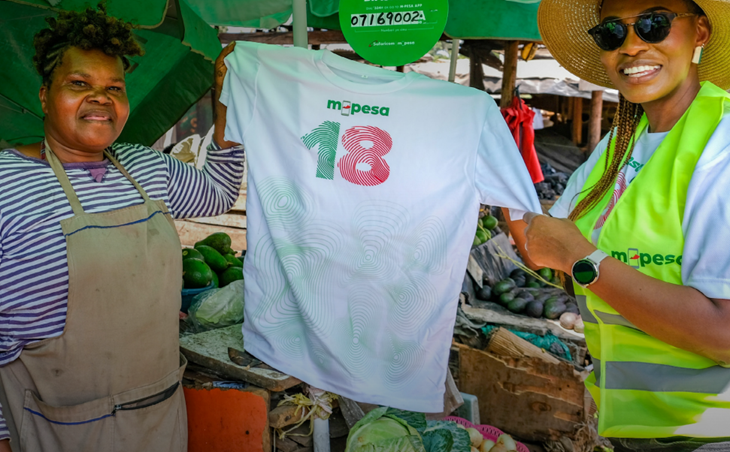
If the report released by GSMA about Pochi La Bishara is something to go by, then women in Kenya are carrying the weight of biashara across the country.
From vegetable stalls in Murang’a to small fashion shops in Nairobi and mobile money kiosks in Kajiado, women micro-entrepreneurs are powering households, educating children, and sustaining local economies.
According to the latest GSMA report on Pochi la Biashara and Women Micro-Entrepreneurs in Kenya, women now make up the majority of active Pochi la Biashara users, signaling something bigger than just mobile payments.

This is not merely a fintech success story. It is a story about dignity, financial control, safety, and the evolution of biashara in Kenya.
Launched by Safaricom in 2020, Pochi la Biashara was designed to help small business owners separate business money from personal funds while allowing them to receive customer payments seamlessly. But behind this seemingly simple innovation lies a deep understanding of the realities facing Kenyan women in business.
For years, many women traders have struggled with one major problem: mixing household money with business money. A customer pays for tomatoes in the morning, and by lunchtime, the money has already been used for supper, school transport, or emergency family needs. Business records disappear. Profit becomes difficult to track. Growth becomes almost impossible.
Pochi la Biashara appears to have solved a problem many banks and financial institutions ignored for years.
The report reveals that women using Pochi reported increased savings, improved financial discipline, higher sales, better business tracking, and stronger control over spending habits. One woman entrepreneur from Kajiado summed it up perfectly:
“Pochi makes me feel like the CEO of my business. I’m in control, I track my money, and I’m able to support my family.”
That sentence captures the emotional power behind digital financial inclusion.
In Kenya’s informal economy, trust is currency. And one of the biggest reasons Pochi gained traction among women was the non-reversal feature. Unlike ordinary M-PESA transfers, where customers can reverse transactions after receiving goods, Pochi protects merchants from fraudulent reversals.
For mama mbogas, mitumba traders, salon owners, and kiosk operators, this is not a small feature. It is business security.
The findings show that between December 2024 and December 2025, the number of women actively using Pochi grew by approximately 92 percent, outpacing growth among men. Women now account for over 52 percent of active Pochi users, representing more than 900,000 users.
That statistic alone tells a powerful story.
It shows that when financial products are designed around real customer pain points rather than boardroom assumptions, adoption follows naturally.
Interestingly, the report also highlights something often ignored in discussions about digital finance: women adopt technology faster when trust is built through people, not just advertising. Nearly half of new users learned about Pochi from friends or family, while Safaricom’s field agents played a major role in driving adoption through demonstrations and face-to-face support.
This human-centered approach may be one of Safaricom’s biggest wins.
Instead of simply pushing an app, the company invested in training agents, educating users, offering incentives, and listening to women traders directly. The result is a financial product that feels less like a corporate tool and more like a biashara companion.
Another critical insight from the report is the importance of safety and privacy. Many women traders expressed concerns about harassment after customers obtained their phone numbers from payment stickers. In response, Safaricom removed mobile numbers from payment SMS notifications and is developing enhanced privacy features for rollout.
That responsiveness matters.
Because financial inclusion is not just about access to money. It is about creating systems where women feel secure, respected, and empowered to grow.
The broader economic implications are enormous. Kenya’s micro-enterprises account for roughly 15 million jobs and nearly 85 percent of non-farm employment. If digital tools like Pochi can help even a fraction of these businesses become more stable and profitable, the ripple effect across households and communities could be transformative.
At a time when many SMEs are struggling with shrinking margins, high transaction costs, and financial uncertainty, Pochi la Biashara is quietly becoming more than a payment platform.
It is becoming a survival tool for Kenya’s informal economy — especially for women who have long operated at the center of biashara, often without recognition, protection, or structured financial support.

About Soko Directory Team
Soko Directory is a Financial and Markets digital portal that tracks brands, listed firms on the NSE, SMEs and trend setters in the markets eco-system.Find us on Facebook: facebook.com/SokoDirectory and on Twitter: twitter.com/SokoDirectory

- January 2026 (220)
- February 2026 (248)
- March 2026 (287)
- April 2026 (207)
- May 2026 (192)
- June 2026 (238)
- July 2026 (279)
- August 2026 (223)
- September 2026 (122)
- January 2025 (119)
- February 2025 (191)
- March 2025 (212)
- April 2025 (193)
- May 2025 (161)
- June 2025 (157)
- July 2025 (227)
- August 2025 (211)
- September 2025 (267)
- October 2025 (297)
- November 2025 (230)
- December 2025 (220)
- January 2024 (238)
- February 2024 (227)
- March 2024 (190)
- April 2024 (133)
- May 2024 (157)
- June 2024 (145)
- July 2024 (136)
- August 2024 (154)
- September 2024 (212)
- October 2024 (255)
- November 2024 (196)
- December 2024 (143)
- January 2023 (182)
- February 2023 (203)
- March 2023 (322)
- April 2023 (297)
- May 2023 (267)
- June 2023 (214)
- July 2023 (212)
- August 2023 (257)
- September 2023 (237)
- October 2023 (264)
- November 2023 (286)
- December 2023 (177)
- January 2022 (293)
- February 2022 (329)
- March 2022 (358)
- April 2022 (292)
- May 2022 (271)
- June 2022 (232)
- July 2022 (278)
- August 2022 (253)
- September 2022 (246)
- October 2022 (196)
- November 2022 (232)
- December 2022 (167)
- January 2021 (182)
- February 2021 (227)
- March 2021 (325)
- April 2021 (259)
- May 2021 (285)
- June 2021 (272)
- July 2021 (277)
- August 2021 (232)
- September 2021 (271)
- October 2021 (303)
- November 2021 (364)
- December 2021 (249)
- January 2020 (272)
- February 2020 (310)
- March 2020 (390)
- April 2020 (321)
- May 2020 (335)
- June 2020 (327)
- July 2020 (333)
- August 2020 (276)
- September 2020 (214)
- October 2020 (233)
- November 2020 (242)
- December 2020 (187)
- January 2019 (251)
- February 2019 (215)
- March 2019 (283)
- April 2019 (254)
- May 2019 (269)
- June 2019 (249)
- July 2019 (335)
- August 2019 (292)
- September 2019 (306)
- October 2019 (313)
- November 2019 (362)
- December 2019 (318)
- January 2018 (291)
- February 2018 (213)
- March 2018 (275)
- April 2018 (223)
- May 2018 (235)
- June 2018 (176)
- July 2018 (256)
- August 2018 (247)
- September 2018 (255)
- October 2018 (282)
- November 2018 (282)
- December 2018 (184)
- January 2017 (183)
- February 2017 (194)
- March 2017 (207)
- April 2017 (104)
- May 2017 (169)
- June 2017 (205)
- July 2017 (189)
- August 2017 (195)
- September 2017 (186)
- October 2017 (235)
- November 2017 (253)
- December 2017 (266)
- January 2016 (164)
- February 2016 (165)
- March 2016 (189)
- April 2016 (143)
- May 2016 (245)
- June 2016 (182)
- July 2016 (271)
- August 2016 (247)
- September 2016 (233)
- October 2016 (191)
- November 2016 (243)
- December 2016 (153)
- January 2015 (1)
- February 2015 (4)
- March 2015 (164)
- April 2015 (107)
- May 2015 (116)
- June 2015 (119)
- July 2015 (145)
- August 2015 (157)
- September 2015 (186)
- October 2015 (169)
- November 2015 (173)
- December 2015 (205)
- March 2014 (2)
- March 2013 (10)
- June 2013 (1)
- March 2012 (7)
- April 2012 (15)
- May 2012 (1)
- July 2012 (1)
- August 2012 (4)
- October 2012 (2)
- November 2012 (2)
- December 2012 (1)