
The Diabolical Cleverness of Ruto’s Politics of Poverty
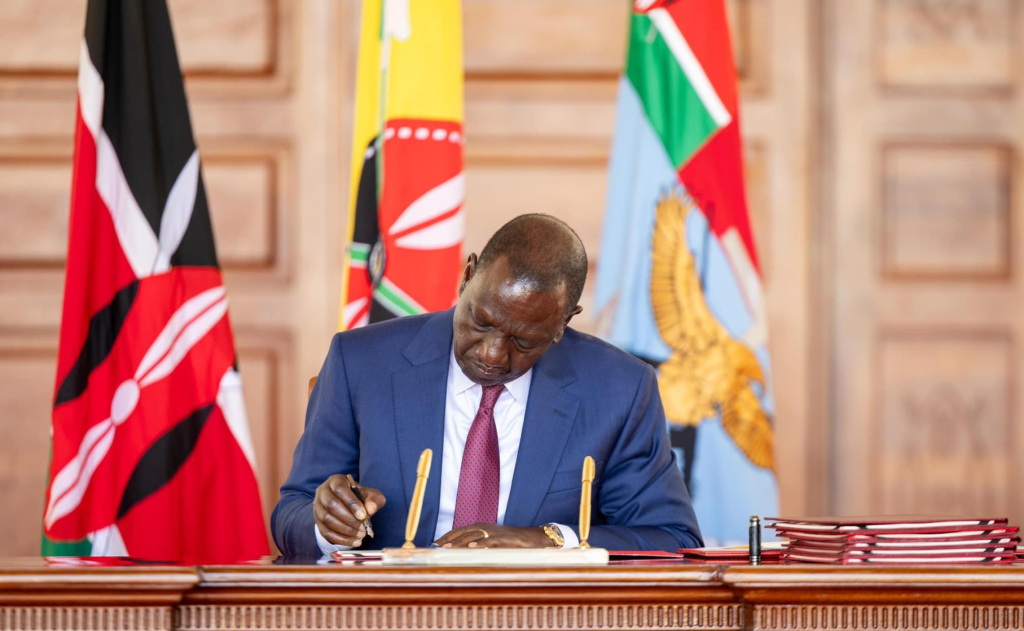
For a long time, I struggled to understand why President William Ruto’s regime keeps pushing projects that make little economic sense to ordinary Kenyans. I wondered why a government facing a debt crisis, collapsing household incomes, high unemployment, weak purchasing power and a restless population would still insist on expensive projects whose economic returns are either unclear, delayed or politically exaggerated. Then it became painfully clear: the problem is not that the regime does not understand economics. The problem is that it understands political control too well.
This is the centre-piece of its political strategy. Political optics matter more than economic sense. The launch, the billboard, the motorcade, the press statement and the choreographed photo opportunity have become more important than productivity, jobs, exports, food security or industrial recovery. A project does not have to transform lives. It only needs to create the image of motion. It does not have to return money to the economy. It only needs to return applause to the podium. That is the tragedy of Kenya today: we are being governed by people who understand the political value of poverty better than the economic value of prosperity.
An economically empowered population is an existential threat to this kind of regime. A citizen with a job is harder to manipulate. A young person with a payslip is harder to hire as a heckler. A farmer with a reliable market is harder to frighten with empty promises. A trader with affordable credit is harder to silence with political favours. A worker who can pay rent, school fees and medical bills is harder to drag to rallies on a weekday. Poverty is not just a social condition in Kenya; it has become political infrastructure. It supplies crowds, it manufactures loyalty, it creates desperation, and it lowers the price of human dignity.

That is why reviving industries would be politically dangerous to the current order. Revived industries would create jobs. Jobs would end the dependence on handouts. Jobs would reduce the number of idle young people available for political mobilisation. Jobs would give citizens the confidence to question power because a person who earns from work does not need to kneel before a politician to survive. The factory floor is one of the strongest antidotes to political slavery. It gives people routine, income, skill, discipline and bargaining power. That is exactly why any regime that thrives on dependency will never be fully committed to industrial revival.
The same logic applies to agriculture. If Kenya seriously built irrigation dams, supported farmers with real inputs, secured markets, invested in storage and protected local production, the country would have abundant food. Abundant food would weaken one of the oldest political weapons in this country: hunger. Food scarcity has created a whole economy of manipulation. It has justified questionable importation deals, emergency procurement, inflated contracts and campaign-season generosity. It has enabled politicians to arrive in villages with relief food as if they are saviours, when in truth they are beneficiaries of a system that failed to feed its own people.
A well-fed population cannot be easily wooed using a bag of maize flour. A food-secure citizen does not clap because a leader has arrived with rice. A farmer who is supported properly does not need to be photographed receiving fertiliser as though government has performed a miracle. Food security changes politics because it gives people independence. When people are not hungry, politicians must compete on serious ideas. They must explain how they will grow incomes, reduce taxes, protect savings, create value chains, build factories and expand markets. Hunger allows lazy politics to survive. Abundance forces leadership to think.
Electricity follows the same logic. If Kenya built serious hydropower capacity and lowered the cost of power, industries would breathe again. Manufacturers would expand. Small factories would return. Cold storage would become cheaper. Welders, millers, processors, bakers, carpenters and producers would compete better. Lower power costs would reduce the cost of doing business and increase the number of people earning from productive work. But once again, cheap power would create independent citizens. It would shift economic power from political offices to workshops, farms, factories and enterprises. For a regime that survives through control, that is not a small threat; it is a political earthquake.
This is what makes Ruto’s political economy so chillingly clever. It is not merely about bad policy. It is about the management of dependency. Whether by design, arrogance or cynical convenience, the result is the same: the people remain under pressure, and a pressured population has less time, less energy and less confidence to demand better. When citizens are busy looking for rent, school fees, food, transport and hospital money, they are easier to exhaust politically. Suffering becomes a cage. Survival becomes a full-time job. Accountability becomes a luxury. That is how a country is subdued without openly declaring war on its people.
The most dangerous thing about this model is that it can disguise itself as development. A government can borrow billions, launch projects, cut ribbons, and still leave the economy weaker than before. It can parade concrete while destroying productivity. It can build things that photograph well but do not pay back the debt used to fund them. It can confuse motion with progress and publicity with performance. That is why Kenyans must stop judging projects by speeches and start judging them by economic returns. Does the project create jobs? Does it lower the cost of production? Does it increase exports? Does it reduce imports? Does it raise household income? Does it expand the tax base without punishing the poor? Does it generate enough value to help repay the debt? If the answer is no, then it is not development. It is political theatre financed by public pain.
The debt question makes this even more dangerous. If these projects were being funded from surplus national savings, Kenyans would have less reason to panic. But we are borrowing. We are taking money that must be repaid by taxpayers, workers, businesses and future generations. Borrowed money is not free money. It is a claim on tomorrow’s sweat. When borrowed funds are poured into projects without clear productive returns, the country is left with the worst of both worlds: no transformation today and debt repayment tomorrow. That is how nations are trapped. They borrow in the name of development, spend in the service of politics, and repay through the suffering of citizens.
This is why we must not give the regime the comfort of being dismissed as merely incompetent. Incompetence is when leaders do not know what they are doing. This feels worse. It looks like a system that has discovered how to convert poverty into political advantage. It looks like a leadership that understands that a broke citizen is easier to buy, a hungry citizen is easier to silence, and an unemployed youth is easier to mobilise. That is the diabolical cleverness of the politics of poverty: it does not need citizens to believe in the government; it only needs citizens to be too desperate to resist it effectively.
Kenya must reject this model completely. We must demand productive investment, not vanity economics. We must demand irrigation that feeds the country, not food scandals that feed campaigns. We must demand power projects that reduce the cost of production, not energy arrangements that suffocate consumers. We must demand industrial revival, not speeches about jobs while factories die. We must demand borrowing that builds assets capable of paying for themselves, not debt that buys applause today and hardship tomorrow. Every shilling borrowed in the name of the people must create measurable value for the people.
The coming political struggle will not just be about parties, personalities or slogans. It will be about whether Kenya continues to be governed through scarcity or finally chooses leadership that builds abundance. It will be about whether poverty remains a political tool or becomes a national emergency to be defeated. It will be about whether citizens continue to receive handouts from those who killed opportunity, or whether they demand the jobs, food, power and dignity that would make handouts irrelevant. A government that fears empowered citizens has no business leading a country that desperately needs empowerment.
Ruto’s great political trick is to make suffering look accidental while harvesting its political benefits. Kenya must see through it. A nation cannot borrow itself into poverty, call it development, and expect citizens to clap forever. The people of Kenya deserve an economy that frees them, not a political system that feeds on their struggle. The politics of poverty must be exposed, rejected and defeated before it buries the future of this country beneath debt, hunger, dependency and carefully staged deception.
Read Also: A Presidency Written In Tears: How Kenyans Will Remember Ruto

About Steve Biko Wafula
Steve Biko is the CEO OF Soko Directory and the founder of Hidalgo Group of Companies. Steve is currently developing his career in law, finance, entrepreneurship and digital consultancy; and has been implementing consultancy assignments for client organizations comprising of trainings besides capacity building in entrepreneurial matters.He can be reached on: +254 20 510 1124 or Email: info@sokodirectory.com

- January 2026 (220)
- February 2026 (248)
- March 2026 (287)
- April 2026 (207)
- May 2026 (192)
- June 2026 (238)
- July 2026 (279)
- August 2026 (190)
- January 2025 (119)
- February 2025 (191)
- March 2025 (212)
- April 2025 (193)
- May 2025 (161)
- June 2025 (157)
- July 2025 (227)
- August 2025 (211)
- September 2025 (267)
- October 2025 (297)
- November 2025 (230)
- December 2025 (220)
- January 2024 (238)
- February 2024 (227)
- March 2024 (190)
- April 2024 (133)
- May 2024 (157)
- June 2024 (145)
- July 2024 (136)
- August 2024 (154)
- September 2024 (212)
- October 2024 (255)
- November 2024 (196)
- December 2024 (143)
- January 2023 (182)
- February 2023 (203)
- March 2023 (322)
- April 2023 (297)
- May 2023 (267)
- June 2023 (214)
- July 2023 (212)
- August 2023 (257)
- September 2023 (237)
- October 2023 (264)
- November 2023 (286)
- December 2023 (177)
- January 2022 (293)
- February 2022 (329)
- March 2022 (358)
- April 2022 (292)
- May 2022 (271)
- June 2022 (232)
- July 2022 (278)
- August 2022 (253)
- September 2022 (246)
- October 2022 (196)
- November 2022 (232)
- December 2022 (167)
- January 2021 (182)
- February 2021 (227)
- March 2021 (325)
- April 2021 (259)
- May 2021 (285)
- June 2021 (272)
- July 2021 (277)
- August 2021 (232)
- September 2021 (271)
- October 2021 (303)
- November 2021 (364)
- December 2021 (249)
- January 2020 (272)
- February 2020 (310)
- March 2020 (390)
- April 2020 (321)
- May 2020 (335)
- June 2020 (327)
- July 2020 (333)
- August 2020 (276)
- September 2020 (214)
- October 2020 (233)
- November 2020 (242)
- December 2020 (187)
- January 2019 (251)
- February 2019 (215)
- March 2019 (283)
- April 2019 (254)
- May 2019 (269)
- June 2019 (249)
- July 2019 (335)
- August 2019 (292)
- September 2019 (306)
- October 2019 (313)
- November 2019 (362)
- December 2019 (318)
- January 2018 (291)
- February 2018 (213)
- March 2018 (275)
- April 2018 (223)
- May 2018 (235)
- June 2018 (176)
- July 2018 (256)
- August 2018 (247)
- September 2018 (255)
- October 2018 (282)
- November 2018 (282)
- December 2018 (184)
- January 2017 (183)
- February 2017 (194)
- March 2017 (207)
- April 2017 (104)
- May 2017 (169)
- June 2017 (205)
- July 2017 (189)
- August 2017 (195)
- September 2017 (186)
- October 2017 (235)
- November 2017 (253)
- December 2017 (266)
- January 2016 (164)
- February 2016 (165)
- March 2016 (189)
- April 2016 (143)
- May 2016 (245)
- June 2016 (182)
- July 2016 (271)
- August 2016 (247)
- September 2016 (233)
- October 2016 (191)
- November 2016 (243)
- December 2016 (153)
- January 2015 (1)
- February 2015 (4)
- March 2015 (164)
- April 2015 (107)
- May 2015 (116)
- June 2015 (119)
- July 2015 (145)
- August 2015 (157)
- September 2015 (186)
- October 2015 (169)
- November 2015 (173)
- December 2015 (205)
- March 2014 (2)
- March 2013 (10)
- June 2013 (1)
- March 2012 (7)
- April 2012 (15)
- May 2012 (1)
- July 2012 (1)
- August 2012 (4)
- October 2012 (2)
- November 2012 (2)
- December 2012 (1)