
How Kenya Can Turn Toys, Creativity and Light Manufacturing into Thousands of Dignified Jobs
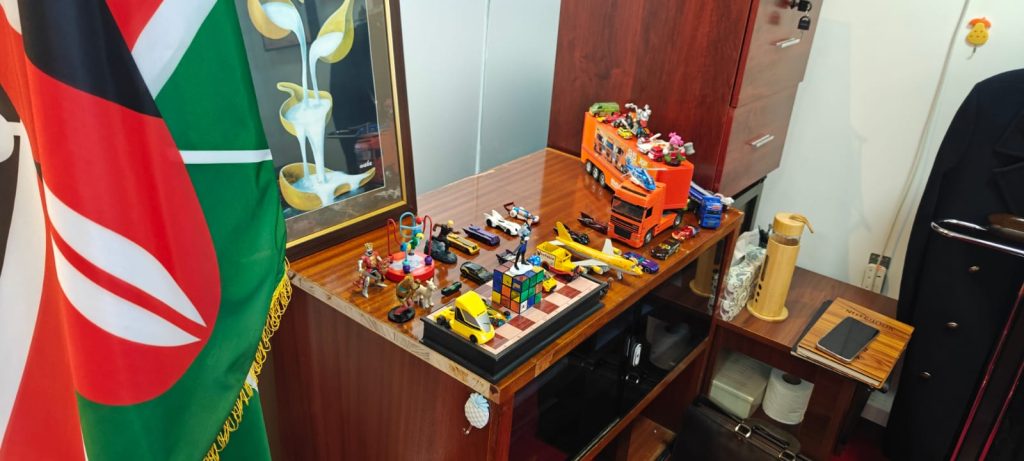
The toy on the shelf is also a factory we failed to build
Walk into a supermarket, toy shop, or open-air market in Kenya and study the shelves. You will see dolls, balls, puzzles, miniature cars, building blocks, stuffed animals, learning boards, plastic kitchen sets and electronic games. Children see play. A serious country should also see industrial capacity: designers, mould makers, textile workers, carpenters, printers, software developers, packagers, warehouse teams, retailers and exporters.
Aliko Dangote’s call for Africa to keep more of its capital at home is therefore not only about giant refineries, cement plants or steel mills. It is about a deeper discipline: whenever Africans buy a product that could reasonably be designed, processed or assembled here, some of our capital leaves and finances skills, wages, taxes and technology elsewhere. Industrialisation begins when we decide that more of those opportunities must remain at home.
The toy industry is one of the clearest places for Kenya to begin. Toys are familiar, varied and scalable. They can be made from fabric, wood, paper, recycled plastic, rubber, metal and simple electronics. Some require a small workshop; others need sophisticated moulds and quality-control systems. That makes toys an ideal training ground for a country seeking to connect jua kali talent, technical colleges, artists, manufacturers, investors and export markets.

The numbers reveal an opportunity hiding in plain sight
Global toy sales reached approximately US$123 billion in 2025, up 8 per cent from 2024 and 24 per cent above 2020, according to global sales data published by The Toy Association using Circana research. This is not a fringe market. It is a large consumer industry built on imagination, intellectual property, engineering, entertainment and repeat purchases.
Kenya already spends meaningful sums on products in this family. UN Comtrade data compiled through the World Integrated Trade Solution show that Kenya imported US$8.83 million of the broad “other toys” category in 2024, weighing about 4.24 million kilograms. China supplied US$6.63 million, roughly three quarters of that category by value. A broader trade category covering toys, games and sporting requisites recorded about US$24.57 million in Kenyan imports in 2023. These categories are not identical, but together they show the same structural fact: local demand exists, while much of the value is created elsewhere.
| Indicator | Latest figure | What it means for Kenya |
| Global toy sales | US$123.0 billion in 2025 | A large, growing market in which design and intellectual property matter as much as raw materials. |
| Five year global growth | 24% from 2020 to 2025 | Demand is durable enough to justify building capabilities, brands and export channels. |
| Kenya imports of “other toys” | US$8.83 million in 2024 | A visible import-substitution opening in one product category alone. |
| Weight of those imports | 4.24 million kg in 2024 | The opportunity involves real production volume, freight and distribution. |
| China share in that category | About 75% by value in 2024 | Kenya is highly dependent on one external manufacturing ecosystem. |
| Kenya manufacturing jobs | 388,564 formal jobs in 2025 | Manufacturing already supports livelihoods, but its employment base can be widened. |
| Manufacturing job growth | 5.2% in 2025 | The sector can add work when firms invest and demand expands. |
The trade figures should be read carefully. Customs categories include different products, and reported trade data do not capture informal production or every retail sale. They nevertheless provide a credible directional picture: Kenya consumes toys, imports a substantial share, and has room to build local capacity. The question is not whether Kenya can replace every imported toy. It is which product families we can make competitively, safely, and distinctively, then scale across East Africa.
Why toys are a serious jobs strategy
A toy is rarely the work of one factory line. Before it reaches a child, somebody researches the age group, sketches the idea, develops a character, engineers the parts, sources materials, makes a prototype, tests safety, prints packaging, photographs the product, markets it, stores it and transports it. Every stage contains a job or a small business.
This matters because Kenya’s employment challenge cannot be solved by waiting for a few enormous factories. We need a portfolio of industries: some capital-intensive, some labour-intensive, and many that allow micro and small enterprises to enter supply chains. Toys fit that model particularly well. A youth cooperative can sew culturally relevant dolls. A carpenter can produce durable puzzles and miniature furniture. A plastics firm can make wheels and connectors. A graduate can design educational content. A software developer can add an augmented-reality lesson to a physical card game.
The toy value chain also creates different levels of work. It needs entry-level assemblers and packers, technicians who operate cutters and moulding machines, artisans with refined hand skills, industrial designers, safety specialists, marketers and managers. If structured properly, the industry does not merely create temporary gigs; it creates a ladder through which a young worker can progress from basic production to skilled supervision, product ownership and entrepreneurship.
What Kenya should manufacture first
Kenya should not begin by imitating the most complex imported electronic toys. It should start where local materials, culture and skills offer a cost or identity advantage, while building steadily toward more advanced products.
| Product family | Kenyan advantage | Jobs and capabilities created |
| Educational kits | Large school system; demand for CBC-aligned learning aids; local teachers understand classroom needs | Curriculum writing, graphic design, printing, die cutting, assembly, teacher sales and distribution |
| African dolls and plush characters | Rich Kenyan stories, clothing, languages and heroes are underrepresented | Fashion design, sewing, embroidery, stuffing, illustration, character licensing and digital content |
| Wooden puzzles and construction sets | Existing carpentry base and access to bamboo and responsibly sourced wood | Carpentry, CNC routing, sanding, non-toxic finishing, packaging and quality inspection |
| Balls and outdoor play equipment | Strong sporting culture and year-round outdoor use | Rubber processing, stitching, moulding, metal fabrication, institutional sales and repair |
| Board games and card games | Low initial capital and strong potential for Kenyan history, finance and language themes | Writers, artists, printers, app developers, event hosts and retailers |
| Recycled-plastic toys | Plastic waste can become controlled industrial feedstock where safety standards are met | Collection, sorting, washing, pelletising, moulding, testing and environmental compliance |
| Science and robotics kits | Growing STEM interest and technical talent | Electronics assembly, coding, technical support, school training and component design |
| Collectibles and tourism miniatures | Wildlife, landmarks, matatu art and county identities provide exportable themes | Sculpting, 3D printing, painting, merchandising, tourism retail and e-commerce |
The bigger lesson is not toys alone
Toys demonstrate a method that Kenya can apply to other everyday products. We should examine what households, schools, hospitals, farms, hotels and county governments buy repeatedly, then build local production clusters around the simplest competitive opportunities. The objective is not isolation or a blanket ban on imports. It is strategic learning: use domestic demand to acquire machines, improve standards, train workers and create brands capable of exporting.
- School furniture and classroom supplies: desks, lockers, laboratory stools, whiteboards, geometry sets, exercise books and science equipment can support timber, metal, plastics and printing clusters.
- Baby and childcare products: cots, feeding chairs, mattresses, reusable nappies, school bags and safe play mats combine textiles, foam, metalwork and plastics.
- Affordable home goods: storage boxes, buckets, kitchen utensils, lamps, brushes, furniture fittings and simple appliances can absorb local plastics and fabrication capacity.
- Agro-processing machinery: small dryers, graders, choppers, milk coolers and packaging equipment can raise farm productivity while creating technical jobs.
- Mobility and repair products: bicycle parts, wheelbarrows, handcarts, protective gear, motorcycle accessories and spare parts can deepen metalworking and rubber skills.
- Green products: solar toy kits, rechargeable lamps, compost bins, recycled boards and water-saving devices connect manufacturing with climate needs.
- Healthcare basics: selected furniture, uniforms, mobility aids, simple diagnostic consumables and packaging can support reliable local procurement where standards are strictly enforced.
- Creative merchandise: books, animation characters, sports merchandise, music collectibles and tourism products turn Kenyan culture into intellectual property rather than raw inspiration exported for free.
A practical Kenya toy manufacturing initiative
Kenya needs more than speeches about buying local. It needs an execution system that reduces the cost and risk of moving from an idea to a certified product on a shelf. A five-part programme could be launched through collaboration among national government, counties, TVET institutions, universities, manufacturers, retailers and patient investors.
1 Build shared production and prototyping centres
Young designers rarely fail because they have no ideas. They fail because tooling, moulds, industrial sewing, CNC machines, electronics benches and product testing are expensive. Shared facilities in Nairobi, Mombasa, Kisumu, Nakuru and western Kenya could allow approved businesses to rent production time, develop prototypes and receive engineering support. The centres should be commercially managed, publish clear fees and measure how many products graduate into sustained sales.
2. Link TVET training to real purchase orders
Training should begin with market demand, not certificates alone. Retailers, schools and distributors can identify products they would purchase if cost, quality and safety requirements are met. TVET students would then work on real briefs under instructors and industry mentors. A learner who helps produce 5,000 safe counting kits has stronger employability than one who has completed only theoretical modules.
3. Use public procurement as a launch customer
Public institutions buy learning aids, sports equipment and early-childhood materials. A transparent procurement window can reserve a carefully designed share for standards-compliant local producers without protecting poor quality or inflated prices. Orders should be broken into sensible lots so that smaller manufacturers can participate, while contracts must include delivery, safety and durability requirements.
4 Finance tools, working capital and certification
Many small manufacturers can produce but cannot finance raw materials for a large order, pay for a mould, or wait months for settlement. Kenya needs invoice finance, leasing for production equipment, small tooling grants awarded competitively, and affordable product-testing services. Money should follow verified orders and milestones, not political connections.
5. Build Kenyan brands and export stories
Contract manufacturing creates jobs, but brands create lasting value. A Kenyan toy should not compete only because it is locally made. It must be attractive, safe, durable, and emotionally meaningful. Products based on Wangari Maathai, Kenyan wildlife, African space adventures, local languages, entrepreneurship, farming and engineering can travel across the continent and into the diaspora. Storybooks, cartoons, mobile games and toys can reinforce one another, multiplying the value of the original character.
A realistic jobs model
Job claims must be honest. It would be irresponsible to promise a precise national figure before product mix, factory size, automation, demand and financing are known. But Kenya can set transparent pilot assumptions and test them.
Consider a five-year programme supporting 100 small and medium toy and learning-product manufacturers. If each enterprise builds an average core team of 30 direct workers, that would produce 3,000 direct jobs. If supplier, logistics, retail, creative, and service activity adds a conservative 1.5 indirect or induced jobs for every direct job, the ecosystem would support approximately 7,500 jobs in total. This is an illustrative planning scenario, not a forecast. Its value is that every assumption can be measured and revised.
| Five-year pilot assumption | Illustrative value |
| Participating manufacturers | 100 |
| Average direct jobs per manufacturer | 30 |
| Estimated direct jobs | 3,000 |
| Indirect and induced job multiplier used | 1.5 for every direct job |
| Estimated wider jobs supported | 4,500 |
| Illustrative total employment footprint | 7,500 |
A stronger programme could grow beyond this by enabling hundreds of artisan suppliers and by exporting. The discipline is to publish annual data: firms surviving, jobs created, worker earnings, women and youth employed, products certified, domestic sales, exports, rejection rates, local content and taxes paid. Industrial policy should be judged by factories and livelihoods, not launches and slogans.
How manufacturing raises living standards
A job changes a household most when it is stable, productive, and capable of paying a rising wage. Manufacturing can support this because workers learn repeatable technical skills, firms invest in equipment, and productivity can improve over time. A sewing operator can become a pattern maker; an assembler can become a quality supervisor; a CNC operator can become a product engineer; a retailer can become a distributor; and a designer can own a brand.
Local production also circulates money through more Kenyan hands. A locally made puzzle can pay a timber supplier, machine operator, illustrator, printer, transporter, shopkeeper and tax authority. An imported finished puzzle mainly rewards the final distribution end of the chain locally. Importing will always remain necessary, especially for machinery and components we do not yet make. The goal is to shift progressively from importing finished consumption to importing productive capability.
There is also a social return. Well-designed educational toys improve early learning, language development, spatial reasoning and problem-solving. Toys that represent Kenyan children and communities strengthen identity. Sports equipment encourages physical activity. Science kits can turn curiosity into technical ambition. The industry can therefore create both income and human capability.
The standards question cannot be compromised
Children put toys in their mouths, sleep beside them and handle them roughly. A local manufacturing strategy that ignores safety would be reckless. Kenya must enforce limits on toxic paints and chemicals, choking hazards, sharp edges, flammability, battery access and electrical risk. Recycled materials should be used only where traceability and testing make them safe for the intended age group.
The Kenya Bureau of Standards, testing laboratories, universities and industry associations should publish practical guidance for small producers and create affordable testing pathways. Every product should carry age guidance, material information, manufacturer details and traceable batch identification. Safety is not an obstacle to local manufacturing; it is the foundation of a trusted Kenyan brand.
What government, business and citizens must do
| Actor | Priority actions |
| National government | Set clear standards; reduce the cost of machinery and verified inputs; finance shared facilities; enforce fair competition; pay suppliers on time; negotiate export access. |
| County governments | Map local skills and materials; provide compliant workspaces; aggregate ECD and school demand; support clusters tied to measurable orders. |
| Manufacturers | Invest in design and quality; train workers; share supplier requirements; build local-content road maps; protect worker safety. |
| Banks and investors | Offer equipment leasing, order finance and patient equity; evaluate cash flows and capabilities instead of demanding only property collateral. |
| Universities and TVETs | Create prototypes, test materials, solve production problems and train against live industry briefs. |
| Retailers and platforms | Give certified Kenyan products shelf space, sales data and fair payment terms; help promising brands reach regional customers. |
| Parents and schools | Demand safe, durable and educational products; consider quality local options; give manufacturers honest feedback. |
| Creative industry | Build characters, stories, games and animation that can become licensable Kenyan intellectual property. |
From importing toys to exporting imagination
Kenya will not industrialise by admiring factories built elsewhere. It will industrialise by repeatedly choosing products, mastering their processes, meeting standards, lowering costs and earning customer trust. Toys offer a powerful beginning because they connect manufacturing to the one resource Kenya has in abundance: the creativity and ambition of its young people.
The child holding a Kenyan-made doll should see herself in its face. The student opening a Kenyan science kit should imagine becoming an engineer. The young worker operating a cutting machine should see a route to becoming a supervisor and then an owner. The designer creating a board game should know that Kenyan stories can become valuable intellectual property.
Africa’s capital must build African factories, but those factories must do more than produce objects. They must produce skills, wages, confidence, technology, and ownership. Kenya should begin with what our people already buy, make it better, and then sell it to the region and the world.
The future will not be imported in a shipping container. We must design it, test it, manufacture it, and put our own name on the box.
A first 100-day action agenda
Kenya does not need to wait for a perfect national master plan before learning. A focused coalition can begin with a tightly governed demonstration programme and publish the results.
- Convene retailers, ECD providers, schools, local manufacturers, creatives, KEBS, TVETs and financiers to identify 20 high-demand products that Kenya can credibly manufacture.
- Publish technical briefs for those products covering expected price, annual demand, material requirements, safety standards, packaging and delivery conditions.
- Select three shared prototyping sites through transparent criteria and equip them for textile, wood, printing, plastics and simple electronics work.
- Run a national design challenge whose winners receive prototype support, testing and a route to a real purchase order rather than a ceremonial cash prize.
- Create a supplier finance window tied to verified orders, delivery milestones and prompt payment, then publish performance data every quarter.
- Place the first certified products in schools and retail stores, collect user feedback, correct defects and prepare the strongest brands for East African export markets.
The purpose of the first 100 days is not to declare victory. It is to turn the industrialisation debate into products, orders, training and evidence. Kenya can then scale what works and stop funding what does not.
Read Also: Why Boring Consistency Builds Businesses That Last

About Steve Biko Wafula
Steve Biko is the CEO OF Soko Directory and the founder of Hidalgo Group of Companies. Steve is currently developing his career in law, finance, entrepreneurship and digital consultancy; and has been implementing consultancy assignments for client organizations comprising of trainings besides capacity building in entrepreneurial matters.He can be reached on: +254 20 510 1124 or Email: info@sokodirectory.com

- January 2026 (220)
- February 2026 (248)
- March 2026 (287)
- April 2026 (207)
- May 2026 (192)
- June 2026 (238)
- July 2026 (279)
- August 2026 (223)
- September 2026 (156)
- January 2025 (119)
- February 2025 (191)
- March 2025 (212)
- April 2025 (193)
- May 2025 (161)
- June 2025 (157)
- July 2025 (227)
- August 2025 (211)
- September 2025 (267)
- October 2025 (297)
- November 2025 (230)
- December 2025 (220)
- January 2024 (238)
- February 2024 (227)
- March 2024 (190)
- April 2024 (133)
- May 2024 (157)
- June 2024 (145)
- July 2024 (136)
- August 2024 (154)
- September 2024 (212)
- October 2024 (255)
- November 2024 (196)
- December 2024 (143)
- January 2023 (182)
- February 2023 (203)
- March 2023 (322)
- April 2023 (297)
- May 2023 (267)
- June 2023 (214)
- July 2023 (212)
- August 2023 (257)
- September 2023 (237)
- October 2023 (264)
- November 2023 (286)
- December 2023 (177)
- January 2022 (293)
- February 2022 (329)
- March 2022 (358)
- April 2022 (292)
- May 2022 (271)
- June 2022 (232)
- July 2022 (278)
- August 2022 (253)
- September 2022 (246)
- October 2022 (196)
- November 2022 (232)
- December 2022 (167)
- January 2021 (182)
- February 2021 (227)
- March 2021 (325)
- April 2021 (259)
- May 2021 (285)
- June 2021 (272)
- July 2021 (277)
- August 2021 (232)
- September 2021 (271)
- October 2021 (303)
- November 2021 (364)
- December 2021 (249)
- January 2020 (272)
- February 2020 (310)
- March 2020 (390)
- April 2020 (321)
- May 2020 (335)
- June 2020 (327)
- July 2020 (333)
- August 2020 (276)
- September 2020 (214)
- October 2020 (233)
- November 2020 (242)
- December 2020 (187)
- January 2019 (251)
- February 2019 (215)
- March 2019 (283)
- April 2019 (254)
- May 2019 (269)
- June 2019 (249)
- July 2019 (335)
- August 2019 (292)
- September 2019 (306)
- October 2019 (313)
- November 2019 (362)
- December 2019 (318)
- January 2018 (291)
- February 2018 (213)
- March 2018 (275)
- April 2018 (223)
- May 2018 (235)
- June 2018 (176)
- July 2018 (256)
- August 2018 (247)
- September 2018 (255)
- October 2018 (282)
- November 2018 (282)
- December 2018 (184)
- January 2017 (183)
- February 2017 (194)
- March 2017 (207)
- April 2017 (104)
- May 2017 (169)
- June 2017 (205)
- July 2017 (189)
- August 2017 (195)
- September 2017 (186)
- October 2017 (235)
- November 2017 (253)
- December 2017 (266)
- January 2016 (164)
- February 2016 (165)
- March 2016 (189)
- April 2016 (143)
- May 2016 (245)
- June 2016 (182)
- July 2016 (271)
- August 2016 (247)
- September 2016 (233)
- October 2016 (191)
- November 2016 (243)
- December 2016 (153)
- January 2015 (1)
- February 2015 (4)
- March 2015 (164)
- April 2015 (107)
- May 2015 (116)
- June 2015 (119)
- July 2015 (145)
- August 2015 (157)
- September 2015 (186)
- October 2015 (169)
- November 2015 (173)
- December 2015 (205)
- March 2014 (2)
- March 2013 (10)
- June 2013 (1)
- March 2012 (7)
- April 2012 (15)
- May 2012 (1)
- July 2012 (1)
- August 2012 (4)
- October 2012 (2)
- November 2012 (2)
- December 2012 (1)