
Why Kenya’s Tourism Boom Runs Through Kenya Airways
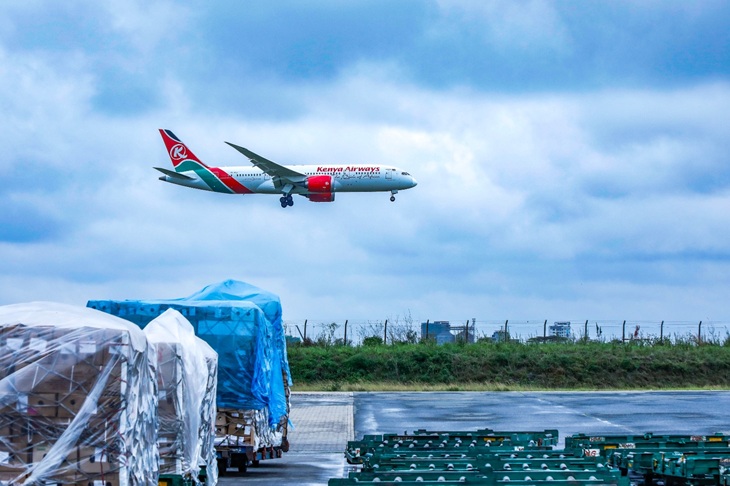
When the Middle East conflict escalated in February, airspace closed and corridors that airlines had relied on for years became unusable almost overnight. Carriers across the region scrambled to reroute flights or suspend services altogether. Kenya Airways kept flying. For a country whose tourism sector had just posted its strongest year on record, that mattered more a lot.
Air transport is economic infrastructure. It isn’t only about the cash generated by the air travel service provider; but the value generted to a country and its people. At the heights of the Middle East crisis earlier this year, Kenya Airways could reroute through Europe and Turkey, keeping is network running. Other mnarkets that don’t have national airlines weren’t as lucky as Kenya, with some airports even remaining completely silent with all foreign operators choosing to avoid them entirely.
The Case for Treating Air Connectivity as Infrastructure

Over the years, Kenya Airways has shown resilience through turbulent times, supporting industries that depend heavily on air travel. That resilience sits behind a tourism sector that, by the Tourism Research Institute’s own numbers, had a landmark 2025. International arrivals reached 2,652,540, up 7.2% from 2,474,551 in 2024 and a sustained climb from 2,138,649 in 2023, according to the Annual Tourism Sector Performance Report 2025. Inbound tourism earnings rose 10.55% to KSh 501.34 billion, following 20.13% growth the year before. Tourism-related tax collections moved in step: domestic VAT from accommodation and food services grew 6.5% to KSh 22.4 billion.
Not much of that arrives by road. Jomo Kenyatta International Airport remained, in the report’s words, Kenya’s principal entry point for international visitors, particularly from the major long-haul markets that matter most to the tourism economy: the United States (304,491 arrivals, 11.5% of the total), the United Kingdom (170,936), India (112,893), China (94,997), Germany, and France. Kenya Airways carries roughly five million passengers a year and accounts for about 60% of all air traffic arriving in the country, running close to 100 daily flights. A 2025 report by IATA estimates that aviation contributes KES 425 billion — about US$3.4 billion, or 3.1% of GDP — in facilitated economic activity, supporting roughly 460,000 jobs.
The tourism report reaches a similar conclusion from the other direction. It credits 2025’s arrivals growth in part to “a transformative expansion” in Kenya’s aviation landscape powered by KQ’s network growth through partnerships and increased frequencies.
A road isn’t profitable on every kilometre. A port doesn’t generate the same volume every day. Both are still treated as essential, because they connect people, goods and opportunity. Aviation, and by extension tourism connectivity, deserves the same framing rather than being judged as a purely commercial service.
Recent Wins Back Up the Claim
Kenya Airways has spent the months since that February disruption adding evidence to its case as a tourism enabler rather than just a national flag carrier. At the 2026 World Travel Awards gala in Zanzibar in August, the airline was named Africa’s Leading Airline after growing its network to 42 global destinations and returning its 400-seat Boeing 777 to service. It also retained Africa’s Leading Airline – Economy Class for the sixth time, while its Pride Lounge at JKIA was named Africa’s Leading Airline Lounge and its Msafiri in-flight magazine took Africa’s Leading Inflight Magazine for a fifth straight year. Kenya Airways has also been shortlisted, with a shot at a double win, at the 2026 World Travel Tech Awards, recognising its investment in digital and customer-facing technology.
KQ’s win is further butressed by Nairobi being named Africa’s Leading Business Travel Destination in 2026, and award the city has now won sinnce the category was introduced in 2019. A national capital doesn’t win that title on hotels alone. It wins it on the ease of getting there, the frequency of onward connections, and the confidence business and MICE travellers have that the route network will hold up.
KQ Road to 50
Kenya Airways is approaching its 50th anniversary in January 2027, working to restore grounded aircraft and grow its fleet from 43 today to a targeted 60 by 2030, with further expansion planned through 2035. Two grounded Dreamliners are undergoing engine work, one expected back by the end of September 2026, the other by year-end, while the Boeing 777 has already added capacity on the London Heathrow route, running load factors of roughly 75% outbound and 83 to 85% inbound. Each of those aircraft is also a tourism seat: capacity the Ministry of Tourism and Wildlife’s own report says the country will need to sustain arrivals growth into 2026 and beyond, as it flags improved air connectivity from Europe, the Middle East, Asia and North America as one of the sector’s key drivers for the year ahead.
Strip Kenya Airways out of that week in February and the tourism picture looks very different: no reroute through Europe and Turkey, no way to keep travellers and cargo moving when the routes around them shut down, and a much shakier claim to the record arrivals and earnings Kenya’s tourism sector posted in 2025. Other countries lived that scenario when their foreign carriers pulled out. Kenya didn’t, because when the test came, the national carrier held — and the tourism numbers, and the awards that followed, suggest it has kept doing so ever since.
Read Also: Kenya Airways Posts 9% Revenue Growth as Fleet Recovery and Resilient Demand Support Turnaround
