
Low Productivity in the Agricultural Sector Persist Despite Government Efforts
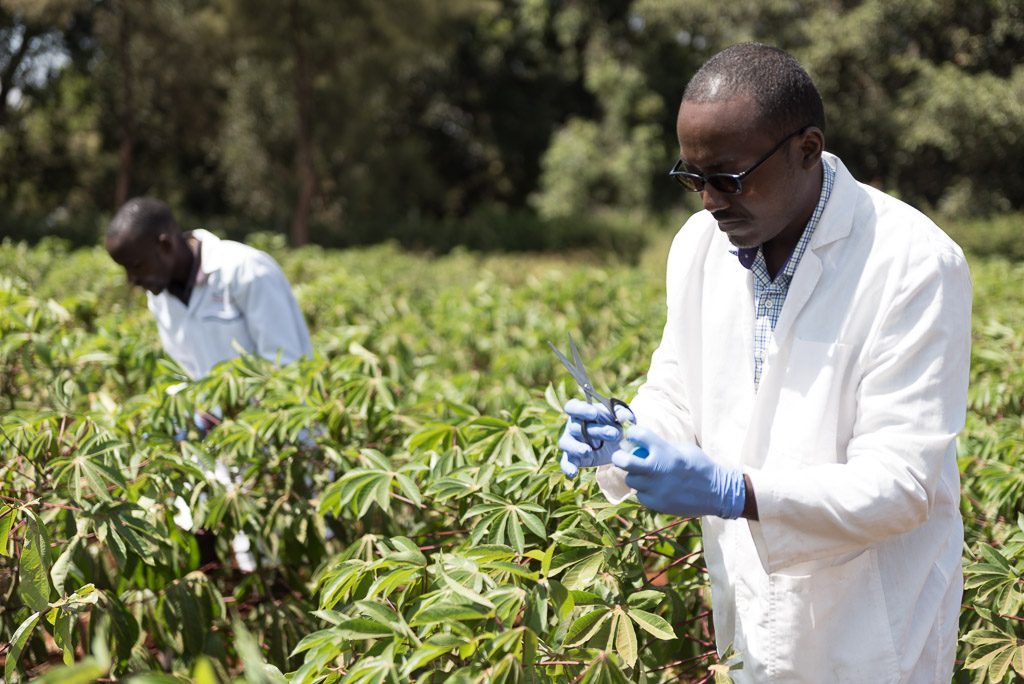
Productivity in Kenya’s agricultural sector has decreased relative to what was realized in 2016 due to weather shocks, prevalence of pests and disease, and dwindling knowledge delivery systems, among other reasons. This is according to the 2019 Kenya Economic Update released by the World Bank.
Kenya has strived to ensure food security for its citizens by boosting farmers through the agricultural sector despite having a number of loopholes which continue to frustrate the sector’s growth.
There are a number of factors, according to the Kenya Economic Update 2019, that have contributed to low productivity in the agricultural sector resulting in poor results.

Read Kenya’s Overall Agricultural Output Continues to Decline Amidst Shocks in the Sector
Prevalent use of Input Subsidies
The quality of the inputs reflects the quality of production output one ought to expect. The quality of the seed one plants; its breed, is crucial to the expected results.
The general use of input subsidies that are not aimed at, tend to crowd out other basic expenditures that are key in increasing productivity.
The latest Public Expenditure of Agriculture Sector (PEAS) report reveals that on average 22 percent of expenditures in the Agricultural sector is directed to input subsidies, mainly to fertilizers and seeds.
The subsidies are highly distorted and force out the private sector from investing in fertilizer importation and distribution in the country.
The format in which the beneficiaries are chosen is inefficient to the point that farmers holding medium-to-large sized farms are benefiting from subsidized fertilizers at the expense of smallholders.
See Also Agriculture and Improved Business Drive Kenya’s Economic Growth Up by 6.0% in 2018
The Quality of the Fertilizer
The use of fertilizer, according to the World Bank, remains low affecting productivity gains despite the government’s efforts to increase fertilizer use through subsidy programs.
Fertilizer is a key ingredient in ensuring great productivity gains though Kenya continues to lag behind with the current use of fertilizer at 30 kilograms per hectare compared to the peak of the green revolution in Asia which is averaged at over 100kilograms per hectare.
Cereal production in Kenya lags behind compared to its regional peers in East Africa which is a clear reflection of the country’s inefficiency in the sector.
Minimal adoption of modern production technology is likely to cause a high incidence of pests and diseases with examples of Fall Armyworm, Peste des Petit Ruminants (PPR), Rift Valley Fever and Contagious Bovine Pleuropneumonia (CBPP).
Related Prolonged Drought Hurting Kenyan Households as Commodity Prices Heighten
The health of the soil is also a key determiner on the quality of production. Excessive use of nitrogen-based fertilizers increases the acidity of the soil which adversely affects production.
Distorted Marketing of the Agricultural Produce
The government continues to retain an outsized role in marketing agriculture produce despite market liberalization reforms in the 1990s.
The government’s marketing of agricultural produce is majorly felt in maize produce through National Cereals and Produce Board (NCPB).
NCPB creates a heavy government presence which in turn creates loopholes for corrupt public officials and politicians who scare off participation from the private sector.
NCPB’s buying operation is based on depots spread around the country while still centered in the maize-surplus zones of the northern Rift Valley and Western Kenya. NCBP buys maize at a premium above the price offered by the market which results in double subsidy to farmers who also received subsidized fertilizers.
NCBP also released stocks by selling to milling companies at a reduced price leading to financial losses as witnessed in 2017, when the body purchased maize at 3,200 shillings per 90 Kilogram bag and released the stocks to millers at 2,600 shillings per 90 kilograms, despite incurring miscellaneous costs such as transport and storage.
See Also Kenya Economic Update: Transforming Agricultural Productivity to Achieve Food Security for All
The government had to further subsidize maize flour in 2018 after the prices spiked following a shortage of maize in the country after successive drought years.
The interventions by the government caused fiscal strain and created fear in the private sector which in turn forced out to participate in maize marketing activities.
Lack of Sufficient Land for Production
Farms in Kenya are normally small and continue to shrink which is uneconomical to operate on as 83 percent is the Arid Semi-Arid Land (ASAL).
The country’s land which is suitable for crop production is only 17 percent while the population continues to increase resulting in rising in urbanization.
The increased population has 80 percent of the population lives on arable land which reduces per capita the arable land from about 0.7 acres in the mid-1970s to 0.3 acres in 2015.
87 percent of farmers currently operate on less than 2 hectares while approximately 67 percent operate less than 1 hectare.
Lack of Integration of smallholders into agricultural value chains
Many geographically dispersed smallholders in the country are not integrated into key agriculture value chains.
Dispersion is known to increase production costs which reduce small farmers’ competitiveness while small production volumes increase purchaser transaction costs.
Stronger Farmer Organizations (FOs) can strengthen the economic inclusion of smallholders and increase their market power. Vertical integration between FOs off-takers and aggregators can help overcome the challenges of processing, branding and retailing high value and perishable commodities such as vegetables, fruits, and dairy products.
Read State of the Nation: The Rogue Economy
Low-value addition to Agricultural Products
The value addition to agricultural commodities remains low and the sector growth is largely coming from increasing production and marketing activities.
Despite the sector contributing nearly two-thirds, which is 65 percent of the merchandise exports, an estimated 91 percent of these agricultural exports are in raw or semi-processed form. The country hence foregoes substantial income by not adding value to its products and exports manufacturing jobs.
Agro-processing provides avenues for the growth of skills, inspiring product, and process innovations, and strengthening the backward and forward linkages with the rest of the economy.
Lack of Financial prowess to drive sufficient investments into Agricultural
Infrastructure takes up the largest share in the budgetary allocation, averaging 26 percent
(2013-2017), however, much more needs to be done to acquire a suitable level of investment for improved returns in the agricultural sector.
Kenya has 83 percent of its land being in ASALs but only two percent of arable land is under irrigation following poor infrastructure.
Kenya’s irrigation potential is estimated to be at 539,000 hectares based on surface water and another 800,000 hectares if groundwater and water harvesting are considered according to the National Water Master Plan (1992).
Currently, only about 120,000 hectares are under irrigation and massive investments would be needed in small-scale farmer-managed irrigation schemes to spur the sector’s growth.
Development and maintenance of rural roads and the establishment of marketing and storage facilities such as warehouses, cold rooms, and milk collection centers would go a long way to boosting the agricultural sector.
Need for Mechanism to Boost Irrigation and Climate-Proof the Agricultural Sector
Irrigation ensures resilience in the agricultural sector and enables consistency in production irrespective of the seasons.
A report by the government, Government of Kenya, 2018, showed that returns to public spending on smallholder irrigation schemes could be significant.
Sub-Saharan Africa returns to irrigation range from 17 percent for large-scale farmers to 43 percent for small-scale farmers and could triple per capita farm incomes, which would significantly impact on poverty reduction.
Limited Access to credit and Financial Services
Farmers in Kenya suffer low accessibility to credit and financial services as most financial institutions are located in the urban areas and lack of awareness is rife in the rural areas.
A majority of the farmers are often hindered in the purchase of productivity-enhancing inputs such as seeds, fertilizer, and pesticides following limited access to finance.
In 2015, the annual credit needs of key commodity chains amounted to 130 billion shillings whereas credit was only 40 billion shillings according to the Alliance for a Green Revolution in Africa (AGRA) and the Government of Kenya.
To ease the accessibility of finances in the sector, there could be passing and implementation of the warehouse receipts bill that would allow farmers to use receipts as collateral.

About Soko Directory Team
Soko Directory is a Financial and Markets digital portal that tracks brands, listed firms on the NSE, SMEs and trend setters in the markets eco-system.Find us on Facebook: facebook.com/SokoDirectory and on Twitter: twitter.com/SokoDirectory

- January 2026 (220)
- February 2026 (243)
- March 2026 (75)
- January 2025 (119)
- February 2025 (191)
- March 2025 (212)
- April 2025 (193)
- May 2025 (161)
- June 2025 (157)
- July 2025 (227)
- August 2025 (211)
- September 2025 (270)
- October 2025 (297)
- November 2025 (230)
- December 2025 (219)
- January 2024 (238)
- February 2024 (227)
- March 2024 (190)
- April 2024 (133)
- May 2024 (157)
- June 2024 (145)
- July 2024 (136)
- August 2024 (154)
- September 2024 (212)
- October 2024 (255)
- November 2024 (196)
- December 2024 (143)
- January 2023 (182)
- February 2023 (203)
- March 2023 (322)
- April 2023 (297)
- May 2023 (267)
- June 2023 (214)
- July 2023 (212)
- August 2023 (257)
- September 2023 (237)
- October 2023 (264)
- November 2023 (286)
- December 2023 (177)
- January 2022 (293)
- February 2022 (329)
- March 2022 (358)
- April 2022 (292)
- May 2022 (271)
- June 2022 (232)
- July 2022 (278)
- August 2022 (253)
- September 2022 (246)
- October 2022 (196)
- November 2022 (232)
- December 2022 (167)
- January 2021 (182)
- February 2021 (227)
- March 2021 (325)
- April 2021 (259)
- May 2021 (285)
- June 2021 (272)
- July 2021 (277)
- August 2021 (232)
- September 2021 (271)
- October 2021 (304)
- November 2021 (364)
- December 2021 (249)
- January 2020 (272)
- February 2020 (310)
- March 2020 (390)
- April 2020 (321)
- May 2020 (335)
- June 2020 (327)
- July 2020 (333)
- August 2020 (276)
- September 2020 (214)
- October 2020 (233)
- November 2020 (242)
- December 2020 (187)
- January 2019 (251)
- February 2019 (215)
- March 2019 (283)
- April 2019 (254)
- May 2019 (269)
- June 2019 (249)
- July 2019 (335)
- August 2019 (293)
- September 2019 (306)
- October 2019 (313)
- November 2019 (362)
- December 2019 (318)
- January 2018 (291)
- February 2018 (213)
- March 2018 (275)
- April 2018 (223)
- May 2018 (235)
- June 2018 (176)
- July 2018 (256)
- August 2018 (247)
- September 2018 (255)
- October 2018 (282)
- November 2018 (282)
- December 2018 (184)
- January 2017 (183)
- February 2017 (194)
- March 2017 (207)
- April 2017 (104)
- May 2017 (169)
- June 2017 (205)
- July 2017 (189)
- August 2017 (195)
- September 2017 (186)
- October 2017 (235)
- November 2017 (253)
- December 2017 (266)
- January 2016 (164)
- February 2016 (165)
- March 2016 (189)
- April 2016 (143)
- May 2016 (245)
- June 2016 (182)
- July 2016 (271)
- August 2016 (247)
- September 2016 (233)
- October 2016 (191)
- November 2016 (243)
- December 2016 (153)
- January 2015 (1)
- February 2015 (4)
- March 2015 (164)
- April 2015 (107)
- May 2015 (116)
- June 2015 (119)
- July 2015 (145)
- August 2015 (157)
- September 2015 (186)
- October 2015 (169)
- November 2015 (173)
- December 2015 (205)
- March 2014 (2)
- March 2013 (10)
- June 2013 (1)
- March 2012 (7)
- April 2012 (15)
- May 2012 (1)
- July 2012 (1)
- August 2012 (4)
- October 2012 (2)
- November 2012 (2)
- December 2012 (1)