
Naimina Enkiyio: Mystical Forest Protected For Centuries Now Under Threat
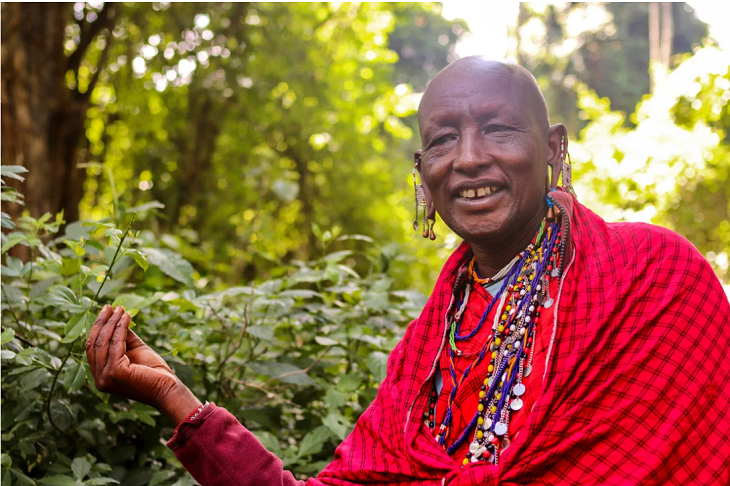
Kenya’s Naimina Enkiyio, or the “Forest of the Lost Child,” is under threat. It is said to be haunted by the spirit of a young girl lost while herding her family’s livestock. The remote place is sacred to the Indigenous Maasai people, of whom around 25,000 live in and around it.
Parmuat Ntirua Koikai, a Maasai elder, sees himself as a custodian of the forest. He and most of the community believe it is their duty to protect it – and in turn, they believe the forest will protect them. “Without the forest there would be no people,” he says. “We use it as a clinic, a hospital, so we must handle it with a lot of care.”
But there is a growing fear among the community and conservationists that this could soon change, due to threats from land privatization, cultural shifts and the climate crisis. Rob O’Meara, a conservationist who, together with his wife Sarah, lives at the centre of the forest with permission from the Maasai, explains how the forest, if preserved, could provide a lifeline for humans and animals amidst growing climate change consequences, “It is a crucial drought reserve for elephants and a lot of the wildlife that comes up from the Mara Serengeti ecosystem”.

The Maasai elders explain that the biggest threat to the forest is land adjudication, a Kenyan government policy whereby communal land is subdivided into individual plots. This practice has ecological consequences, leading not only to an increase in fenced enclosures that prevent wildlife movement, but also roads, crop farming and timber trade.
The elders say this policy goes against the Maasai tradition of communal ownership, representing a disregard for their culture. According to eighty-five-year-old Oltukai Ole Koikai, the eldest of the group, “If you own the land, you can do whatever you want to do: you can sell it, you can give it to a different person outside the community … They don’t know our culture, they don’t know the forest, all they know is maize and beans.”
Ole Koikai blames the “digital” generation who will not learn the ways of the forest and how to live alongside it. But it is the handful of Maasai youths who are committed to maintaining the forest, such as Josephat Olokula, 25, that provide hope for the future. While modernisation is unavoidable, attractive opportunities available to the younger generation within their communities may allow the cultural values and respect for the forest to live on.
Read Also: NCBA Establishes A Whole Forest In Kitui, Plants 40,000 Seedlings
The article is extracted from the recent report by CNN as part of Call to Earth See more from Call to Earth: https://edition.cnn.com/interactive/call-to-earth/#/

About Soko Directory Team
Soko Directory is a Financial and Markets digital portal that tracks brands, listed firms on the NSE, SMEs and trend setters in the markets eco-system.Find us on Facebook: facebook.com/SokoDirectory and on Twitter: twitter.com/SokoDirectory

- January 2026 (220)
- February 2026 (248)
- March 2026 (287)
- April 2026 (208)
- May 2026 (191)
- June 2026 (238)
- July 2026 (278)
- August 2026 (44)
- January 2025 (119)
- February 2025 (191)
- March 2025 (212)
- April 2025 (193)
- May 2025 (161)
- June 2025 (157)
- July 2025 (227)
- August 2025 (211)
- September 2025 (267)
- October 2025 (297)
- November 2025 (230)
- December 2025 (220)
- January 2024 (238)
- February 2024 (227)
- March 2024 (190)
- April 2024 (133)
- May 2024 (157)
- June 2024 (145)
- July 2024 (136)
- August 2024 (154)
- September 2024 (212)
- October 2024 (255)
- November 2024 (196)
- December 2024 (143)
- January 2023 (182)
- February 2023 (203)
- March 2023 (322)
- April 2023 (297)
- May 2023 (267)
- June 2023 (214)
- July 2023 (212)
- August 2023 (257)
- September 2023 (237)
- October 2023 (264)
- November 2023 (286)
- December 2023 (177)
- January 2022 (293)
- February 2022 (329)
- March 2022 (358)
- April 2022 (292)
- May 2022 (271)
- June 2022 (232)
- July 2022 (278)
- August 2022 (253)
- September 2022 (246)
- October 2022 (196)
- November 2022 (232)
- December 2022 (167)
- January 2021 (182)
- February 2021 (227)
- March 2021 (325)
- April 2021 (259)
- May 2021 (285)
- June 2021 (272)
- July 2021 (277)
- August 2021 (232)
- September 2021 (271)
- October 2021 (304)
- November 2021 (364)
- December 2021 (249)
- January 2020 (272)
- February 2020 (310)
- March 2020 (390)
- April 2020 (321)
- May 2020 (335)
- June 2020 (327)
- July 2020 (333)
- August 2020 (276)
- September 2020 (214)
- October 2020 (233)
- November 2020 (242)
- December 2020 (187)
- January 2019 (251)
- February 2019 (215)
- March 2019 (283)
- April 2019 (254)
- May 2019 (269)
- June 2019 (249)
- July 2019 (335)
- August 2019 (292)
- September 2019 (306)
- October 2019 (313)
- November 2019 (362)
- December 2019 (318)
- January 2018 (291)
- February 2018 (213)
- March 2018 (275)
- April 2018 (223)
- May 2018 (235)
- June 2018 (176)
- July 2018 (256)
- August 2018 (247)
- September 2018 (255)
- October 2018 (282)
- November 2018 (282)
- December 2018 (184)
- January 2017 (183)
- February 2017 (194)
- March 2017 (207)
- April 2017 (104)
- May 2017 (169)
- June 2017 (205)
- July 2017 (189)
- August 2017 (195)
- September 2017 (186)
- October 2017 (235)
- November 2017 (253)
- December 2017 (266)
- January 2016 (164)
- February 2016 (165)
- March 2016 (189)
- April 2016 (143)
- May 2016 (245)
- June 2016 (182)
- July 2016 (271)
- August 2016 (247)
- September 2016 (233)
- October 2016 (191)
- November 2016 (243)
- December 2016 (153)
- January 2015 (1)
- February 2015 (4)
- March 2015 (164)
- April 2015 (107)
- May 2015 (116)
- June 2015 (119)
- July 2015 (145)
- August 2015 (157)
- September 2015 (186)
- October 2015 (169)
- November 2015 (173)
- December 2015 (205)
- March 2014 (2)
- March 2013 (10)
- June 2013 (1)
- March 2012 (7)
- April 2012 (15)
- May 2012 (1)
- July 2012 (1)
- August 2012 (4)
- October 2012 (2)
- November 2012 (2)
- December 2012 (1)