
Africa’s Hospitality Sector Is Growing — But Scaling Remains the Real Challenge
Walk into any busy restaurant in Nairobi today and you’ll notice something different. People are not just there to eat. They are there to spend time, to connect, to be part of something. The music matters. The space matters. The feeling matters just as much as the food.
That shift is happening across East Africa. As cities grow and a younger, more confident consumer emerges, hospitality is changing. It is becoming more experiential, more local, and more ambitious.
But behind that growth, there is another reality. Many great ideas struggle to move beyond one location. Scaling is hard. Capital is not always easy to access. And building something that can work across different markets takes more than just a good concept.

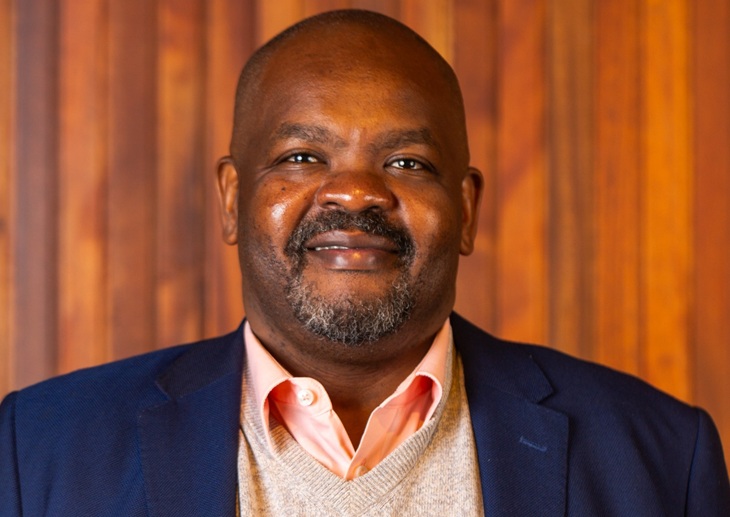
To understand what it really takes, we sat down with Leonard Mudachi, Founder and Chief Vision & Growth Officer at Branded Restaurants & Retail Africa Ltd. From his early days in global hospitality to building and scaling brands across the region, he has seen both the opportunities and the challenges up close.
In this conversation, he shares what defines a successful hospitality business today, why many brands struggle to scale, and what it will take to build African brands that can grow across the continent.You’ve spent years building and scaling hospitality brands in Kenya and across the region. What fundamentally defines a successful hospitality business in Africa today?
At its core, hospitality globally is about people. In Africa we are in the early stages of understanding how the modern African people live, how they spend, and what they value when they step out. These insights inform the journey of building African hospitality and restaurant businesses
Early in my career, working with an international brand like Hyatt and local brands like Sarova and Tamarind, the focus was very much on international standards. That was important. But what I have come to appreciate over time is that success in Africa comes from blending those standards with a deep understanding of and incorporating of local context. I’ve been privileged witness this first hand in brands like the Carnivore, Blanco’s Lounge & Grill and more recently Cakes & Cakes Bakery Ltd.
In my opinion a successful hospitality business today is consistent, accessible, and culturally relevant. It cannot just be aspirational. It has to fit into people’s everyday lives.
Kenya has one of the most dynamic hospitality sectors in East Africa. What is it getting right and where are the gaps that still hold the industry back?
Kenya has built a strong foundation in hospitality, and in many ways, it was ahead of its time in establishing institutions like Kenya Utalii College in the early 1970s. This has played a pivotal role in producing highly skilled professionals who not only shaped the local industry but also became globally competitive talent. That investment in training gave Kenya a strong reputation for service excellence across Africa and beyond.
Today, that foundation is visible in a vibrant urban culture, a growing middle class, and a clear willingness to spend on experiences. Nairobi in particular has become a hub for new concepts, from boutique dining to lifestyle-driven hospitality spaces.
Where we still have work to do is on structure, scale and the investment in the ecosystem to service scale. Many great ideas remain single-location successes, and the systems needed to replicate and expand those ideas are not always in place. Scale comes with challenges of access to capital, compliance (known and unknown) and legal & structure, lack of appreciation of this is holding many a small business from growth. The reality, is we don’t know what we don’t know, admitting this is not weakness, it is strength as it presents an opportunity to learn and hence scale.
There is also a gap in how we think about long-term investment. Hospitality is often treated as a short-term play, yet it requires patient capital, strong operational discipline, and a long-term view to truly unlock its potential.
Many strong restaurant concepts struggle to scale. From your experience, what separates a good hospitality idea from a scalable African brand?
What separates a good hospitality idea from a scalable African brand is the ability to move from personality and product to process.
Many concepts start with a strong founder vision or a standout location, but that alone cannot carry growth. Scaling demands a deliberate shift into systems thinking, standardising product, service, and customer experience in a way that can be replicated without losing quality and consistency of both product and service. It also requires building the invisible backbone of the business: supply chains that can support expansion, training frameworks that embed culture at every level, and operational discipline that ensures consistency across markets.
When we expanded brands I worked with, success was not driven by how many outlets we opened, but by how well the business could sustain itself across locations. Without that foundation, growth becomes fragile. With it, you build a brand that can travel, adapt, and endure.
For a long time, global chains have dominated premium hospitality. Do you see African brands beginning to compete at that level and what will it take to get there?
Yes, I do. And we are already seeing early signs of it. In fact in a Kenyan context, local restaurant brands have trumped international ones in the middle to premium segment.
African brands have an advantage that global chains do not, they understand the market instinctively. They understand taste, pricing sensitivity, local payment rails and cultural nuance.
More importantly we need the confidence to grow sustainably..profitably and on own on terms. Too many a local business have closed from imposition of growth metric that are not in tune with what sustainable local growth is.
What is needed now is consistency, ambition and local contextualized sustainability. We need to build brands that can deliver the same experience in Nairobi, Kampala, Kinshasa, Zanzibar or Dar es Salaam without losing their identity.
That is how you move from being a local success to a regional brand. We have several local examples of sustainable local growth.
African cities are changing rapidly. How are shifting consumer expectations reshaping the hospitality experience?
The biggest shift is that people are no longer just buying food. They are buying experience.
Younger consumers in particular are looking for spaces that combine dining with lifestyle, whether that is music, design, or community.
We are seeing hospitality move closer to entertainment. The lines are blurring. A restaurant is no longer just a place to eat. It is a place to connect, to spend time, and to express identity. The recent Showman’s Residency by local super star Nyashinski at the Carnivore Gardens is an example of what this blurring looks like, this was African Excellence on display. Champions of African excellence are emerging and being executed, locations need to emerge.
That shift is redefining how we think about concepts and spaces.
You’ve experience businesses operating in multiple markets. What are the biggest challenges restaurants or hotels businesses face when expanding regionally?
Each market has its own realities and efforts to study regional nuance specific to hospitality and restaurants is still nascent. Regulation can differ significantly. Supply chains are not always reliable across borders, and talent development becomes more complex as you grow.
One of the biggest challenges, though, is maintaining consistency while still adapting to local nuances. You cannot copy and paste a model. You have to translate it. What works in Nairobi will not automatically work in Kampala or Dar es Salaam, whether it is customer preferences, pricing sensitivity, or even how people experience service.
You can see this with regional hotel groups like Serena Hotels. While the brand maintains a consistent standard across markets, each property reflects its local context, from design and cuisine to guest experience. At the same time, they have had to navigate different regulatory environments, build local supplier networks, having the patience and willingness to hire and empower locally and invest consistently in training to ensure service quality remains high across countries.
It ultimately comes down to leadership and patience. You need strong systems, but you also need local insight on the ground. Without that balance, expansion can stretch the brand too thin. With it, you create something that feels both consistent and locally relevant.
Looking ahead, what will define the next generation of successful African hospitality brands and what role do you see yourself playing in shaping that future?
The next generation of brands will be defined by their ability to scale without losing authenticity.
They will combine strong local identity with world-class execution. They will also be more structured and more deliberate about growth.
For me, the focus is on building platforms that enable that kind of growth, identifying strong concepts, supporting them with capital and systems, building confident, competent and empowered local teams and helping them expand across markets.
If we get that right, we will not just build successful businesses. We will build African brands that can stand on a global stage. Brands that we can export to the world at large.
I invite you to listen to my AfriCAN Do! Podcast, where we curate stories of Excellent Africans executing excellently.
Read Also: How Kenya’s Hotels Are Redefining the Future Of Hospitality

About Soko Directory Team
Soko Directory is a Financial and Markets digital portal that tracks brands, listed firms on the NSE, SMEs and trend setters in the markets eco-system.Find us on Facebook: facebook.com/SokoDirectory and on Twitter: twitter.com/SokoDirectory

- January 2026 (220)
- February 2026 (248)
- March 2026 (287)
- April 2026 (208)
- May 2026 (191)
- June 2026 (238)
- July 2026 (279)
- August 2026 (144)
- January 2025 (119)
- February 2025 (191)
- March 2025 (212)
- April 2025 (193)
- May 2025 (161)
- June 2025 (157)
- July 2025 (227)
- August 2025 (211)
- September 2025 (267)
- October 2025 (297)
- November 2025 (230)
- December 2025 (220)
- January 2024 (238)
- February 2024 (227)
- March 2024 (190)
- April 2024 (133)
- May 2024 (157)
- June 2024 (145)
- July 2024 (136)
- August 2024 (154)
- September 2024 (212)
- October 2024 (255)
- November 2024 (196)
- December 2024 (143)
- January 2023 (182)
- February 2023 (203)
- March 2023 (322)
- April 2023 (297)
- May 2023 (267)
- June 2023 (214)
- July 2023 (212)
- August 2023 (257)
- September 2023 (237)
- October 2023 (264)
- November 2023 (286)
- December 2023 (177)
- January 2022 (293)
- February 2022 (329)
- March 2022 (358)
- April 2022 (292)
- May 2022 (271)
- June 2022 (232)
- July 2022 (278)
- August 2022 (253)
- September 2022 (246)
- October 2022 (196)
- November 2022 (232)
- December 2022 (167)
- January 2021 (182)
- February 2021 (227)
- March 2021 (325)
- April 2021 (259)
- May 2021 (285)
- June 2021 (272)
- July 2021 (277)
- August 2021 (232)
- September 2021 (271)
- October 2021 (303)
- November 2021 (364)
- December 2021 (249)
- January 2020 (272)
- February 2020 (310)
- March 2020 (390)
- April 2020 (321)
- May 2020 (335)
- June 2020 (327)
- July 2020 (333)
- August 2020 (276)
- September 2020 (214)
- October 2020 (233)
- November 2020 (242)
- December 2020 (187)
- January 2019 (251)
- February 2019 (215)
- March 2019 (283)
- April 2019 (254)
- May 2019 (269)
- June 2019 (249)
- July 2019 (335)
- August 2019 (292)
- September 2019 (306)
- October 2019 (313)
- November 2019 (362)
- December 2019 (318)
- January 2018 (291)
- February 2018 (213)
- March 2018 (275)
- April 2018 (223)
- May 2018 (235)
- June 2018 (176)
- July 2018 (256)
- August 2018 (247)
- September 2018 (255)
- October 2018 (282)
- November 2018 (282)
- December 2018 (184)
- January 2017 (183)
- February 2017 (194)
- March 2017 (207)
- April 2017 (104)
- May 2017 (169)
- June 2017 (205)
- July 2017 (189)
- August 2017 (195)
- September 2017 (186)
- October 2017 (235)
- November 2017 (253)
- December 2017 (266)
- January 2016 (164)
- February 2016 (165)
- March 2016 (189)
- April 2016 (143)
- May 2016 (245)
- June 2016 (182)
- July 2016 (271)
- August 2016 (247)
- September 2016 (233)
- October 2016 (191)
- November 2016 (243)
- December 2016 (153)
- January 2015 (1)
- February 2015 (4)
- March 2015 (164)
- April 2015 (107)
- May 2015 (116)
- June 2015 (119)
- July 2015 (145)
- August 2015 (157)
- September 2015 (186)
- October 2015 (169)
- November 2015 (173)
- December 2015 (205)
- March 2014 (2)
- March 2013 (10)
- June 2013 (1)
- March 2012 (7)
- April 2012 (15)
- May 2012 (1)
- July 2012 (1)
- August 2012 (4)
- October 2012 (2)
- November 2012 (2)
- December 2012 (1)