
Equity’s Tech-Led Transformation Powers Record Q1 Performance, Regional Subsidiaries Drive Half of Group Profitability
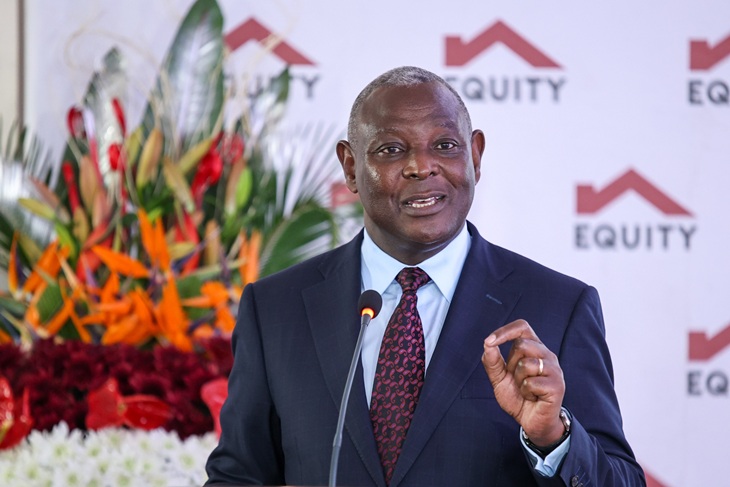
Equity Group Holdings Plc has reported strong first-quarter results for 2026, demonstrating the continued success of its deliberate transformation into a resilient, technology-led, pan‑African financial services Group. Profit After Tax rose 24% to KSh19.1 billion, reflecting strengthened balance sheet quality, disciplined execution, and growing contributions from regional subsidiaries.
The Group’s balance sheet expanded 16% to KSh2.04 trillion, supported by 13% growth in customer deposits and 9% growth in net loans, signaling sustained customer confidence and broad-based economic activity across its markets. This growth was driven by a strong and growing customer base of 22.7 million customers, supported by an extensive distribution infrastructure comprising 86,910 Agency Outlets and 1.4 million merchants, reinforcing the Group’s position as a leading integrated financial services provider in the region.
A Deliberate Journey of Transformation

Equity’s Q1 performance reflects a multi‑year transformation agenda anchored in resilience, diversification, and technology. The Group has restructured its operating model, strengthened its regional footprint, and invested heavily in digital and AI‑enabled capabilities to build a future‑ready institution.
Operational efficiency continued to improve, with the cost‑to‑income ratio declining to 50.6% from 54.2% – a direct outcome of productivity gains, shared services, and customer‑led migration to digital channels.
Return on assets and equity remained strong, with ROA at 3.9% and ROE at 22.6% signaling strong asset productivity and disciplined capital deployment.
Commenting on the results, Dr. James Mwangi, Group Managing Director and CEO, said: “Our Q1 performance reflects the success of our deliberate transformation into a diversified, regional, technology‑led financial services Group. We are building a future‑ready institution; scalable, secure, and impact‑led, anchored in digital capabilities, staff upskilling, and a culture of disciplined execution.”
He added:
“As we progress toward our 2030 ambitions, we are evolving beyond traditional banking into a Transformation Finance Institution that mobilizes capital, connects ecosystems, and accelerates inclusive, sustainable prosperity across Africa.” Equity’s technology‑led transformation is now firmly embedded across the Group. Customer behavior continues to shift decisively toward digital channels, with 98.3% of all transactions occurring outside branches and 89.5% processed through digital platforms, demonstrating that customers are actively choosing the convenience and reliability of Equity’s digital ecosystem.
The Group’s technology organization, strengthened through the buildout of the Technology Group in the fourth quarter, continues to modernize core systems, payments infrastructure, and risk analytics. This transformation is reinforced by large-scale staff upskilling, with employees embracing AI and digital training at impressive scale, positioning the workforce to lead the next phase of innovation. This includes 80% of Group staff completing a business-focused generative AI course, with over 20,000 hours of instruction achieved. Upskilling efforts with iamtheCODE reflect over 5,000 active users with over 3,500 hours of learning recorded. These foundational investments are enabling faster service delivery, improved risk management, and scalable growth across all markets.
Tighter risk controls and diversification – fueled growth
The Group continued to strengthen asset quality and risk buffers. NPL coverage improved to 72%, up from 67%, while loan loss provisions declined by 18% as the quality of the loan book improved. The loan book also recorded a significant improvement in risk indicators, with a year‑on‑year improvement in non-performing loans (NPLs) from 14% to 10%, reflecting disciplined collection underwriting, enhanced analytics, and the benefits of a diversified portfolio. These improvements underscore the Group’s commitment to resilience and long-term sustainability.
Regional subsidiaries continued to deliver strong and accelerating growth, and now account for 50% of Group banking profitability and 52% of Group banking total assets – a milestone in Equity’s journey to become a continental champion. Equity Bank Kenya delivered a 21% year-on-year increase in Profit After Tax to KSh10.3 billion (Q1 2025: KSh8.5 billion) and sustained its MSME banking leadership, disbursing 36.2% of the Kshs 101 billion MSME loans in Kenya between January and March 2026 reflecting transformation while retaining strong focus on core SME business
EquityBCDC in the Democratic Republic of Congo, profit after tax rose by 32% to KSh5.0 billion. Equity Rwanda delivered a 36% increase to KSh1.5 billion, while Equity Tanzania recorded exceptional performance with 150% growth to KSh1.04 billion.
Across assets, revenue, loan book, and profit before tax, the regional banking businesses are now a major contributor with 52%, 51%,54%, 50% respectively, demonstrating the strength and maturity of the Group’s pan‑African strategy.
Equity Insurance Group continued its strong momentum, with gross written premiums rising 30% to KSh4.5 billion and profit before tax increasing 53% to KSh0.64 billion. The health insurance business wrote KSh1.2 billion, while the life and general insurance businesses continued to scale rapidly writing KShs 2.7 Billion and KShs 0.6 Billion respectively. Insurance is emerging as a significant third engine of growth, complementing the Group’s banking and payments businesses.
Equity Group Foundation: Impact at Scale
The Equity Group Foundation (EGF) continued to deliver transformative social impact across Africa through Equity Group’s integrated model of economic empowerment, social impact and sustainability. Across its Education and Leadership Development pillar, EGF now supports over 12,844 active scholars and expanded global university opportunities with 91 new international admissions valued at over USD 18.6 million. To date, EGF under the Wings to Fly scholarship program and the Elimu Scholarship Program has benefitted 60,009 scholars. The Equity Leaders Program has also surpassed 10,515 cumulative paid internships, strengthening Africa’s future leadership and workforce pipeline.
Under Enterprise Development and Financial Inclusion, EGF trained over one million entrepreneurs and facilitated more than KSh416 billion in credit access to MSMEs, accelerating entrepreneurship, financial inclusion and job creation across the region.
In Food and Agriculture, the Foundation continued to deepen agricultural commercialisation and climate resilience, including through the USD 25 million SASTAIN programme in partnership with Mastercard Foundation targeting 60,000 smallholder farmers and agri-MSMEs in Tanzania and DRC.
Through its Energy, Environment and Climate Action pillar, EGF advanced sustainability efforts by planting over 45.5 million trees and scaling clean energy, water and sanitation solutions to strengthen environmental resilience and green growth across communities.
Equity Afya continued to expand access to affordable and quality healthcare through a growing network of 154 medical centres that have now served over 4.9 million patient visits.
EGF’s Innovation and Technology Pillar also scaled rapidly to train 600,000 youth in AI, machine learning and data analytics through partnerships with iamtheCODE, Huawei ICT Academy and WorldQuant University. Under the Huawei ICT Academy programme, 7,344 staff completed the GenAI course and have been invited to undertake two additional prescribed Huawei certification courses. Through WorldQuant University, 641 staff have been admitted to the MSc in Financial Engineering programme. Equity was also invited to participate in a new pilot programme for an Applied AI Certificate that will inform the rollout of a future Master’s programme in Applied AI. Meanwhile, 5,206 users are now enrolled at the iamtheCODE Digital Academy, with 3,587 hours of instruction completed to date. These achievements continue to position Equity Group as a future-ready institution driving inclusive prosperity, sustainable development and long-term resilience across Africa through innovation, human capital development and transformative partnerships.
Preparing for the Future
With ROA and efficiency at peak levels, the Group is preparing for the next phase of growth under its 2030 strategy, anchored on the Africa Recovery and Resilience Plan (ARRP). The strategy aims to expand operations to 15 countries, serve 100 million customers, deploy next-generation digital and AIenabled systems, for transformation finance across Africa. The Group remains well capitalised with sufficient headroom to support its growth ambitions.
Read Also: Equity Bank Crowned Kenya’s Best in 2026 as Mwangi Clinches CEO of the Year

About Soko Directory Team
Soko Directory is a Financial and Markets digital portal that tracks brands, listed firms on the NSE, SMEs and trend setters in the markets eco-system.Find us on Facebook: facebook.com/SokoDirectory and on Twitter: twitter.com/SokoDirectory

- January 2026 (220)
- February 2026 (248)
- March 2026 (287)
- April 2026 (207)
- May 2026 (192)
- June 2026 (238)
- July 2026 (279)
- August 2026 (223)
- September 2026 (82)
- January 2025 (119)
- February 2025 (191)
- March 2025 (212)
- April 2025 (193)
- May 2025 (161)
- June 2025 (157)
- July 2025 (227)
- August 2025 (211)
- September 2025 (267)
- October 2025 (297)
- November 2025 (230)
- December 2025 (220)
- January 2024 (238)
- February 2024 (227)
- March 2024 (190)
- April 2024 (133)
- May 2024 (157)
- June 2024 (145)
- July 2024 (136)
- August 2024 (154)
- September 2024 (212)
- October 2024 (255)
- November 2024 (196)
- December 2024 (143)
- January 2023 (182)
- February 2023 (203)
- March 2023 (322)
- April 2023 (297)
- May 2023 (267)
- June 2023 (214)
- July 2023 (212)
- August 2023 (257)
- September 2023 (237)
- October 2023 (264)
- November 2023 (286)
- December 2023 (177)
- January 2022 (293)
- February 2022 (329)
- March 2022 (358)
- April 2022 (292)
- May 2022 (271)
- June 2022 (232)
- July 2022 (278)
- August 2022 (253)
- September 2022 (246)
- October 2022 (196)
- November 2022 (232)
- December 2022 (167)
- January 2021 (182)
- February 2021 (227)
- March 2021 (325)
- April 2021 (259)
- May 2021 (285)
- June 2021 (272)
- July 2021 (277)
- August 2021 (232)
- September 2021 (271)
- October 2021 (303)
- November 2021 (364)
- December 2021 (249)
- January 2020 (272)
- February 2020 (310)
- March 2020 (390)
- April 2020 (321)
- May 2020 (335)
- June 2020 (327)
- July 2020 (333)
- August 2020 (276)
- September 2020 (214)
- October 2020 (233)
- November 2020 (242)
- December 2020 (187)
- January 2019 (251)
- February 2019 (215)
- March 2019 (283)
- April 2019 (254)
- May 2019 (269)
- June 2019 (249)
- July 2019 (335)
- August 2019 (292)
- September 2019 (306)
- October 2019 (313)
- November 2019 (362)
- December 2019 (318)
- January 2018 (291)
- February 2018 (213)
- March 2018 (275)
- April 2018 (223)
- May 2018 (235)
- June 2018 (176)
- July 2018 (256)
- August 2018 (247)
- September 2018 (255)
- October 2018 (282)
- November 2018 (282)
- December 2018 (184)
- January 2017 (183)
- February 2017 (194)
- March 2017 (207)
- April 2017 (104)
- May 2017 (169)
- June 2017 (205)
- July 2017 (189)
- August 2017 (195)
- September 2017 (186)
- October 2017 (235)
- November 2017 (253)
- December 2017 (266)
- January 2016 (164)
- February 2016 (165)
- March 2016 (189)
- April 2016 (143)
- May 2016 (245)
- June 2016 (182)
- July 2016 (271)
- August 2016 (247)
- September 2016 (233)
- October 2016 (191)
- November 2016 (243)
- December 2016 (153)
- January 2015 (1)
- February 2015 (4)
- March 2015 (164)
- April 2015 (107)
- May 2015 (116)
- June 2015 (119)
- July 2015 (145)
- August 2015 (157)
- September 2015 (186)
- October 2015 (169)
- November 2015 (173)
- December 2015 (205)
- March 2014 (2)
- March 2013 (10)
- June 2013 (1)
- March 2012 (7)
- April 2012 (15)
- May 2012 (1)
- July 2012 (1)
- August 2012 (4)
- October 2012 (2)
- November 2012 (2)
- December 2012 (1)