
CMA Must Not Fear High Returns; It Must Build A Market Where Kenyan Investors Can Win
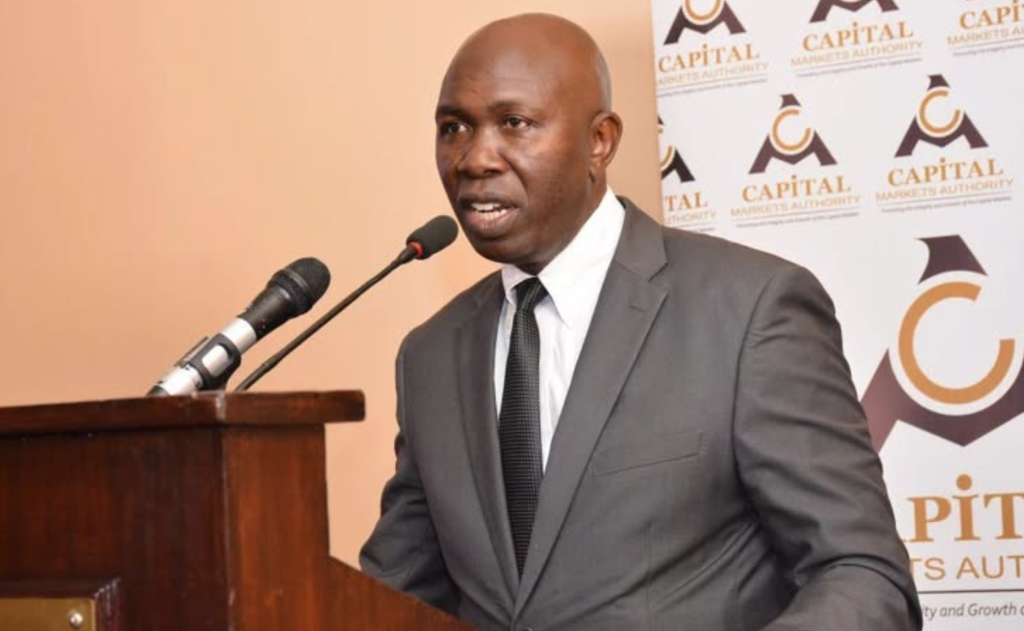
Better returns are not the enemy. Hidden risk, weak disclosure, lazy regulation, and investor exploitation are.
The Capital Markets Authority is right to worry when investment products are marketed to ordinary Kenyans with loud promises of high returns but without equally loud warnings about risk. No responsible market can allow fund managers, influencers, agents or sales teams to shout returns and whisper losses. If a product carries liquidity risk, valuation risk, concentration risk, leverage risk, currency risk, private-market risk or drawdown risk, the investor must know before committing a single shilling. But the harder question is this: why does the regulatory conversation in Kenya often sound like a warning against ambition itself? Why does the language around special funds so easily become a suspicion of better returns, instead of a serious national conversation about how to build a capital market that actually rewards intelligent investing?
CMA has reportedly cautioned special fund managers against unethical marketing, poor material disclosures, unqualified sales representatives and the promotion of high returns without adequate information to clients. That concern is legitimate. The special funds segment has grown too large to be treated casually. According to reporting on the regulator’s latest engagement with the sector, special funds had reached KSh203.5 billion by the end of March 2026, accounting for 23.9 percent of collective investment schemes. CMA’s own Q1 2026 Collective Investment Schemes report also shows the broader CIS market at KSh851.7 billion, up 13 percent from KSh756.3 billion in December 2025, with 62 approved schemes, 285 funds and 43 active schemes. This is not a side market anymore. It is becoming a serious savings and wealth-building channel for households, professionals, entrepreneurs and institutions.

That is exactly why the debate must be framed properly. The problem is not that some fund managers are delivering stronger returns than traditional products. Kenya should not criminalise performance. A market where every product is forced to behave like a low-yield deposit account is not a capital market; it is a comfort blanket for mediocrity. The problem is when performance is advertised as certainty, when volatility is hidden, when fees are buried in fine print, when net returns are confused with gross returns, when past performance is sold as a promise of future income, and when retail investors are treated as deposits to be harvested rather than capital partners to be respected.
A serious regulator must be anti-fraud, anti-misrepresentation and anti-opacity. It must never be anti-return. There is a world of difference between an abnormal return and an intelligently earned return. An abnormal return with no explanation, no strategy, no audited valuation, no benchmark, no drawdown history, no independent custodian visibility and no liquidity discipline should invite scrutiny. But a better return produced by research, active allocation, disciplined risk management, access to multiple asset classes, global diversification and serious fund governance should be celebrated. Investors do not need a regulator that fears excellence. They need one that separates excellence from deception.
This is where CMA must move beyond warnings and build the right environment. Warnings may protect investors for a day, but architecture protects them for a generation. If Kenya wants retail investors to trust special funds, alternative funds, multi-asset strategies and other innovative products, the answer is not to scare the market back into the old corner. The answer is to create a disclosure regime that is simple enough for retail investors to understand and rigorous enough for sophisticated managers to respect. Every special fund marketed to the public should publish a standard investor factsheet showing the investment objective, strategy, asset allocation bands, benchmark, gross return, net return, all fees, performance fees, liquidity terms, redemption gates, valuation method, largest exposures, risk level, maximum historical drawdown and the identity of the fund manager, trustee and custodian.
That is not overregulation. That is market infrastructure. It is the financial equivalent of road signs, traffic lights and speed limits. The point is not to ban driving fast; it is to make sure the road is safe, the driver is qualified, the vehicle is roadworthy, and passengers know the journey they are taking. In the same way, a market that wants innovation must standardise disclosure, enforce honest marketing and punish deception quickly. It must license the right people, not merely register paperwork. It must make trustees and custodians active guardians of investor money, not ceremonial names printed in documents that nobody reads.
Kenya’s current investment market has a deeper trust problem. Too many investors have watched products carry the comfort of regulation while still leaving them exposed to opaque fees, weak communication, delayed redemptions, unexplained losses, conflicts of interest and confusing documents. That is why the public anger is understandable. When investors say many regulated products look questionable, they are not always speaking as technicians; they are speaking from experience, suspicion and fatigue. They are asking a valid question: what is the value of regulation if the investor only discovers the real risk after the money is already trapped, impaired or gone?
The answer cannot be defensive regulation. CMA should not respond to the rise of special funds by making high returns sound dirty. It should respond by making the market clean enough for high-quality returns to stand on their own merit. That requires a performance reporting code that forces every manager to report returns on a comparable basis: net of fees, time-weighted where appropriate, benchmarked against a relevant index or blended benchmark, and accompanied by volatility and drawdown data. It also requires strict rules against guaranteed-return language unless the guarantee is legally backed, funded and fully disclosed. If a fund is taking equity-like risk, it should not be marketed like a fixed deposit. If a product has redemption constraints, investors should not hear about liquidity only when they want their money back.
CMA should also formalise the role of investment promoters in the digital age. The regulator is right to worry when influencers, sales agents and content creators market financial products they may not understand. But again, the solution is not to silence the digital market; it is to professionalise it. Anyone paid to promote a regulated investment product should disclose that payment, use approved factsheets, avoid personal return guarantees, and pass a basic market-conduct certification. Kenya cannot pretend that retail investors are not discovering financial products on X, TikTok, podcasts, WhatsApp groups and YouTube. Regulation must meet investors where they are, not where old rulebooks wish they still were.
The law already provides a foundation. The Capital Markets (Collective Investment Schemes) Regulations, 2023 apply to schemes that pool funds from the public or by private arrangement, and they prohibit the establishment, operation or advertising of a collective investment scheme unless the scheme is approved, the relevant person is licensed, and the advertisement complies with the rules. That is a strong legal base. But a legal base is not the same as a living market. The real test is whether the regulator can enforce the rules fast enough, transparently enough and fairly enough to protect investors without choking innovation.
Kenya needs a capital market that rewards intellectual investment. That means rewarding research, data, patience, risk pricing, strategy, sector knowledge, global allocation and professional discipline. It means giving retail investors access to well-governed products beyond the traditional menu of money market funds and government-paper-heavy portfolios. It means building regulated routes into private debt, infrastructure finance, commodities, offshore assets, exchange-traded products, structured credit, venture exposure and professionally managed multi-asset strategies. It means accepting that Kenyans do not save merely to preserve money; they invest to grow it.
A poor country cannot regulate itself into wealth by fearing returns. A young professional saving KSh5,000 a month, a small business owner trying to protect working capital, a parent building an education fund, a chama pooling savings, or a pensioner trying to beat inflation does not need lectures that better returns are suspicious by default. They need honest products, competent managers, transparent risk, fair fees, enforceable rights and a regulator that expands opportunity while policing abuse.
This is the balance CMA must strike. It must be tough on fraud, clones, fake portals, unlicensed operators, misleading advertisements, lazy trustees, conflicted managers and salespeople who sell products they cannot explain. But it must be equally aggressive in opening the market to credible innovation. Approvals should be faster where managers meet high governance standards. Disclosures should be digital, comparable and readable. Investor complaints should be resolved with urgency. Enforcement actions should be public enough to educate the market. Market data should be accessible enough to let analysts, journalists and investors interrogate performance independently.
The worst outcome would be a market where regulation protects investors from opportunity while failing to protect them from actual abuse. That would be the tragedy. Kenya does not need a capital markets culture built on fear. It needs a capital markets culture built on trust, transparency, competence and ambition. CMA should warn where warning is necessary, but the larger national duty is to create an environment where legitimate managers can produce strong returns, investors can understand the risk they are taking, and retail capital can finally participate in the wealth created by disciplined intellectual work.
Better returns are not immoral. Better returns are not automatically a scam. Better returns are the reason capital markets exist. The regulator’s job is not to flatten ambition into average performance. The regulator’s job is to make sure ambition is honest, risk is disclosed, fees are fair, custody is secure, valuations are credible, managers are accountable, and investors are treated as citizens building wealth, not targets waiting to be harvested. If CMA gets that right, special funds will not be a threat to the market. They will become proof that Kenya can build a financial system where ordinary investors are not merely warned about risk, but given the tools, platforms and protections to win.
| The mission should be simple: punish deception, disclose risk, expand access, and let intelligent capital earn what it deserves. |
Read Also: Kenya’s Sovereign Wealth Fund Is Now Law: The National Savings Account That Must Outlive Politics

About Steve Biko Wafula
Steve Biko is the CEO OF Soko Directory and the founder of Hidalgo Group of Companies. Steve is currently developing his career in law, finance, entrepreneurship and digital consultancy; and has been implementing consultancy assignments for client organizations comprising of trainings besides capacity building in entrepreneurial matters.He can be reached on: +254 20 510 1124 or Email: info@sokodirectory.com

- January 2026 (220)
- February 2026 (248)
- March 2026 (287)
- April 2026 (207)
- May 2026 (192)
- June 2026 (238)
- July 2026 (279)
- August 2026 (205)
- January 2025 (119)
- February 2025 (191)
- March 2025 (212)
- April 2025 (193)
- May 2025 (161)
- June 2025 (157)
- July 2025 (227)
- August 2025 (211)
- September 2025 (267)
- October 2025 (297)
- November 2025 (230)
- December 2025 (220)
- January 2024 (238)
- February 2024 (227)
- March 2024 (190)
- April 2024 (133)
- May 2024 (157)
- June 2024 (145)
- July 2024 (136)
- August 2024 (154)
- September 2024 (212)
- October 2024 (255)
- November 2024 (196)
- December 2024 (143)
- January 2023 (182)
- February 2023 (203)
- March 2023 (322)
- April 2023 (297)
- May 2023 (267)
- June 2023 (214)
- July 2023 (212)
- August 2023 (257)
- September 2023 (237)
- October 2023 (264)
- November 2023 (286)
- December 2023 (177)
- January 2022 (293)
- February 2022 (329)
- March 2022 (358)
- April 2022 (292)
- May 2022 (271)
- June 2022 (232)
- July 2022 (278)
- August 2022 (253)
- September 2022 (246)
- October 2022 (196)
- November 2022 (232)
- December 2022 (167)
- January 2021 (182)
- February 2021 (227)
- March 2021 (325)
- April 2021 (259)
- May 2021 (285)
- June 2021 (272)
- July 2021 (277)
- August 2021 (232)
- September 2021 (271)
- October 2021 (303)
- November 2021 (364)
- December 2021 (249)
- January 2020 (272)
- February 2020 (310)
- March 2020 (390)
- April 2020 (321)
- May 2020 (335)
- June 2020 (327)
- July 2020 (333)
- August 2020 (276)
- September 2020 (214)
- October 2020 (233)
- November 2020 (242)
- December 2020 (187)
- January 2019 (251)
- February 2019 (215)
- March 2019 (283)
- April 2019 (254)
- May 2019 (269)
- June 2019 (249)
- July 2019 (335)
- August 2019 (292)
- September 2019 (306)
- October 2019 (313)
- November 2019 (362)
- December 2019 (318)
- January 2018 (291)
- February 2018 (213)
- March 2018 (275)
- April 2018 (223)
- May 2018 (235)
- June 2018 (176)
- July 2018 (256)
- August 2018 (247)
- September 2018 (255)
- October 2018 (282)
- November 2018 (282)
- December 2018 (184)
- January 2017 (183)
- February 2017 (194)
- March 2017 (207)
- April 2017 (104)
- May 2017 (169)
- June 2017 (205)
- July 2017 (189)
- August 2017 (195)
- September 2017 (186)
- October 2017 (235)
- November 2017 (253)
- December 2017 (266)
- January 2016 (164)
- February 2016 (165)
- March 2016 (189)
- April 2016 (143)
- May 2016 (245)
- June 2016 (182)
- July 2016 (271)
- August 2016 (247)
- September 2016 (233)
- October 2016 (191)
- November 2016 (243)
- December 2016 (153)
- January 2015 (1)
- February 2015 (4)
- March 2015 (164)
- April 2015 (107)
- May 2015 (116)
- June 2015 (119)
- July 2015 (145)
- August 2015 (157)
- September 2015 (186)
- October 2015 (169)
- November 2015 (173)
- December 2015 (205)
- March 2014 (2)
- March 2013 (10)
- June 2013 (1)
- March 2012 (7)
- April 2012 (15)
- May 2012 (1)
- July 2012 (1)
- August 2012 (4)
- October 2012 (2)
- November 2012 (2)
- December 2012 (1)