
Beyond the Storm: Kenya Airways’ H1 2026 Might Be A Story of Resilience, Repair, and Reach
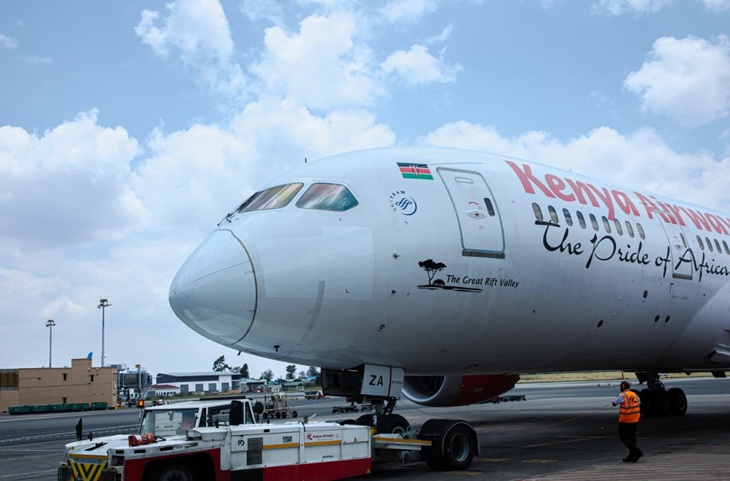
Every airline’s story is, at its core, a story about weather, the literal kind, and the economic kind. In the first half of 2026, Kenya Airways (KQ) flew through both.
What emerges from the numbers isn’t a tale of an airline knocked off course, but one of an airline that read the turbulence correctly, adjusted its flight path, and kept climbing.
A Strong Start to the Year

KQ entered 2026 with momentum. The first quarter showed what the airline’s leadership had been saying for some time: the fundamentals of the business are sound.
Despite operating in one of the toughest aviation environments in years, squeezed margins, volatile fuel markets, and a still-recovering global supply chain, KQ’s early-year performance confirmed that the airline’s recovery strategy was working, not wavering.
That strong start mattered. It set the baseline against which everything that followed would be measured — and it meant that when the real test came, KQ wasn’t starting from a position of weakness.
Then Came a Genuine Shock
That test arrived in the form of the Middle East conflict, which sent fuel prices climbing sharply through the first half of the year. KQ’s fuel bill rose 72% in H1 2026, and fuel now eats up as much as half of the airline’s total operating costs. This is not a KQ-specific story of mismanagement; it’s an industry-wide shock that every carrier flying through or near affected airspace and markets has had to absorb.
What separates airlines in moments like this isn’t whether they’re hit; it’s how fast and how deliberately they respond. KQ moved quickly: reviewing every major contract, optimising its route network, and tightening cost discipline across the business. The message here isn’t “we got lucky.” It’s “we saw this coming, and we’re managing it”, an airline actively steering through an external shock rather than simply absorbing the impact and hoping conditions improve.
Fleet Restoration You Can Actually See
If the fuel shock was the headwind, fleet restoration is the tailwind, and, importantly, it’s visible. Aircraft that were grounded during 2025’s global supply-chain and engine-availability crunch, a problem that grounded jets across the industry, not just at KQ, are progressively returning to service. Extra B777 capacity has already been added to the Heathrow route, one of KQ’s flagship long-haul markets. This isn’t a promise on a slide; it’s metal back in the sky and seats back on sale.
An Engineering Powerhouse Hiding in Plain Sight
One of KQ’s most underrated assets sits quietly at Nairobi’s Jomo Kenyatta International Airport: its Maintenance, Repair and Overhaul (MRO) operation. It services not only KQ’s own fleet but third-party airlines from across the continent, proof that KQ’s technical and engineering capability is a genuine, standalone competitive strength, not just a support function that rides on the back of the passenger business. In a period when passenger-market headwinds dominate headlines, MRO is a reminder that KQ’s value extends well beyond ticket sales.
Cargo: Diversification With the Numbers to Prove It
Cargo has moved from a supporting subplot to a central part of KQ’s growth story. The airline is targeting a significantly larger share of group revenue from cargo, aiming to grow its share of Kenya’s air-freight market from 11% to 40%. Freighter lift capacity has already grown from roughly 70 tonnes to about 180 tonnes, with a target of 250+ tonnes on the horizon — backed by new B747 and B767 freighter capacity. This is diversification measured in tonnes, routes, and market share, not just ambition.
The Human Proof Point
None of this- the cost discipline, the returning aircraft, the MRO growth, the cargo expansion- means anything without the people making it happen. Throughout a demanding period of disruption, KQ has maintained its customer satisfaction and safety standards. That consistency is easy to overlook in a results narrative dominated by percentages and tonnage figures, but it’s arguably the most important metric of all: proof that the operational story holds together because the human story does too.
H1 2026 is a moment to take stock, but the more compelling chapter is the one still being written. Continued fleet restoration and upgrades, freighter and cargo network expansion, and further MRO growth are the fundamentals KQ is building on to become a more resilient airline. The turbulence of the first half tested the business. What follows will show what it’s built.
Read Also: Kenya Airways Achieves 100% Organic Waste Diversion Through Circular Economy Innovation

About Soko Directory Team
Soko Directory is a Financial and Markets digital portal that tracks brands, listed firms on the NSE, SMEs and trend setters in the markets eco-system.Find us on Facebook: facebook.com/SokoDirectory and on Twitter: twitter.com/SokoDirectory

- January 2026 (220)
- February 2026 (248)
- March 2026 (287)
- April 2026 (208)
- May 2026 (191)
- June 2026 (238)
- July 2026 (279)
- August 2026 (162)
- January 2025 (119)
- February 2025 (191)
- March 2025 (212)
- April 2025 (193)
- May 2025 (161)
- June 2025 (157)
- July 2025 (227)
- August 2025 (211)
- September 2025 (267)
- October 2025 (297)
- November 2025 (230)
- December 2025 (220)
- January 2024 (238)
- February 2024 (227)
- March 2024 (190)
- April 2024 (133)
- May 2024 (157)
- June 2024 (145)
- July 2024 (136)
- August 2024 (154)
- September 2024 (212)
- October 2024 (255)
- November 2024 (196)
- December 2024 (143)
- January 2023 (182)
- February 2023 (203)
- March 2023 (322)
- April 2023 (297)
- May 2023 (267)
- June 2023 (214)
- July 2023 (212)
- August 2023 (257)
- September 2023 (237)
- October 2023 (264)
- November 2023 (286)
- December 2023 (177)
- January 2022 (293)
- February 2022 (329)
- March 2022 (358)
- April 2022 (292)
- May 2022 (271)
- June 2022 (232)
- July 2022 (278)
- August 2022 (253)
- September 2022 (246)
- October 2022 (196)
- November 2022 (232)
- December 2022 (167)
- January 2021 (182)
- February 2021 (227)
- March 2021 (325)
- April 2021 (259)
- May 2021 (285)
- June 2021 (272)
- July 2021 (277)
- August 2021 (232)
- September 2021 (271)
- October 2021 (303)
- November 2021 (364)
- December 2021 (249)
- January 2020 (272)
- February 2020 (310)
- March 2020 (390)
- April 2020 (321)
- May 2020 (335)
- June 2020 (327)
- July 2020 (333)
- August 2020 (276)
- September 2020 (214)
- October 2020 (233)
- November 2020 (242)
- December 2020 (187)
- January 2019 (251)
- February 2019 (215)
- March 2019 (283)
- April 2019 (254)
- May 2019 (269)
- June 2019 (249)
- July 2019 (335)
- August 2019 (292)
- September 2019 (306)
- October 2019 (313)
- November 2019 (362)
- December 2019 (318)
- January 2018 (291)
- February 2018 (213)
- March 2018 (275)
- April 2018 (223)
- May 2018 (235)
- June 2018 (176)
- July 2018 (256)
- August 2018 (247)
- September 2018 (255)
- October 2018 (282)
- November 2018 (282)
- December 2018 (184)
- January 2017 (183)
- February 2017 (194)
- March 2017 (207)
- April 2017 (104)
- May 2017 (169)
- June 2017 (205)
- July 2017 (189)
- August 2017 (195)
- September 2017 (186)
- October 2017 (235)
- November 2017 (253)
- December 2017 (266)
- January 2016 (164)
- February 2016 (165)
- March 2016 (189)
- April 2016 (143)
- May 2016 (245)
- June 2016 (182)
- July 2016 (271)
- August 2016 (247)
- September 2016 (233)
- October 2016 (191)
- November 2016 (243)
- December 2016 (153)
- January 2015 (1)
- February 2015 (4)
- March 2015 (164)
- April 2015 (107)
- May 2015 (116)
- June 2015 (119)
- July 2015 (145)
- August 2015 (157)
- September 2015 (186)
- October 2015 (169)
- November 2015 (173)
- December 2015 (205)
- March 2014 (2)
- March 2013 (10)
- June 2013 (1)
- March 2012 (7)
- April 2012 (15)
- May 2012 (1)
- July 2012 (1)
- August 2012 (4)
- October 2012 (2)
- November 2012 (2)
- December 2012 (1)