
Venture Capital Support for Shamba Pride – An Impactful Start Up, Is Revolutionizing Smallholder Farming
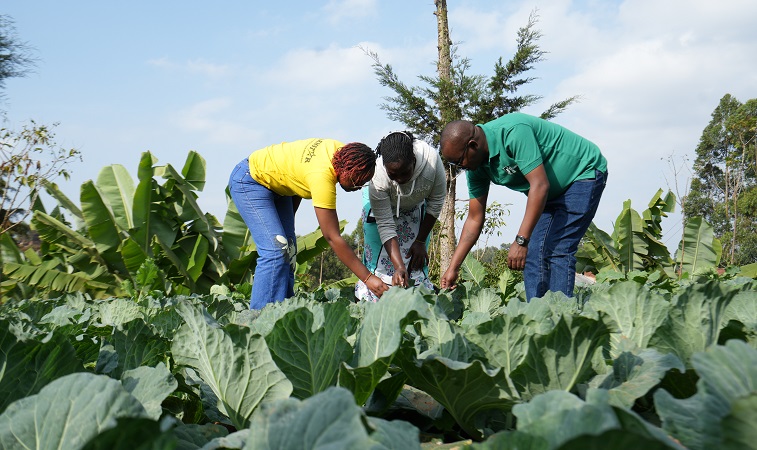
Smallholder farming remains the lifeblood of Kenya’s, and indeed much of Sub-Saharan Africa’s, food security, rural employment, and economic stability.
Despite the immense importance of smallholder farming in Kenya and beyond, two long-standing challenges have hampered productivity and incomes:
- Informal and inefficient supply chains for agricultural inputs (fertilizers, seeds, agrochemicals, etc.), often lead to poor quality, counterfeit goods, inconsistent supply, and inflated costs.
- Lack of access to markets, especially in remote or marginal areas.
Shamba Pride addresses precisely those bottlenecks enabling farmers to get more reliable access to inputs, often at lower cost, better information, and extension support. The model utilizes technology both in supply chain innovation and capacity building for farmers.

“Some of the things that farmers have had limited access to include credible, affordable, quality agriculture inputs, access to markets, as well as access to training services. We connect local and rural smallholder farmers to partner agrovets that we call DigiShops, providing technology-powered agricultural services,” said Samuel Munguti, the CEO and Founder of Shamba Pride.
Read Also: Giving SMEs In Kenya A Thread To Grow Through The European Investment Bank
However, taking his business off the ground was not easy. He required a substantial amount of capital to set up, and most banks wanted the kind of collateral that he did not have at the time. Speaking to investors, most did not think agriculture was a cool or trendy enough sector to invest in.
It’s through some investor networking events that the Shamba Pride CEO was introduced to Seedstars Ventures, a private equity fund operating in Kenya. Support from initiatives such as Boost Africa (which is a European Investment Bank-backed initiative) was provided through Seedstars Ventures and has been instrumental in enabling Shamba Pride to scale, improve operations, increase impact, and sustain its growth. The financial injection from Boost Africa, as well as the technical and strategic advice provided, has helped Shamba Pride scale up operations, increase its revenues, reach more farmers, and create employment across the country.
“As Shamba Pride, we needed funds and financial partners like the European Investment Bank (EIB) through Seedstars Ventures, who we felt resonated with local early-stage business capital needs are very important (sic),” said Munguti. “From the funding, we have benefited as a business a lot, and our first cheque was USD 500,000, and to me, that unlocked a lot of opportunities for Shamba Pride. Within three years from 2021, we grew our revenue from 5 million shillings to about 300 million shillings.”
Indeed, attracting private capital to Africa from investors is still a daunting task, mostly because most investors do not fully understand the continent and do not really know how to calculate or price the risk of investing in Africa. It has been said that the perceived risk of investing in Africa is more than the actual risk.
This motivated the EIB and AfDB, with support from the European Commission, to come up with the Boost Africa Initiative. The initiative looks to de-risk private sector investment into Africa, so as to encourage more investors to mobilize capital for the continent’s enterprises. The end goal is to develop the continent’s venture capital landscape to be self-sustaining by attracting many investors, and it is a reliable alternative to financing for Africa’s private sector.
Drawing from Shamba Pride’s experience, here is why initiatives like Boost Africa are so powerful, and why they represent a model others should emulate:
- Blended finance of debt + equity helps balance risk and return: Equity allows for risk-taking, product/market development; debt imposes discipline and can often be cheaper in cost of capital, especially for operations once somewhat steady. Organizations like the European Investment Bank / European Union are well-positioned to provide such blended instruments.
- Longer investment cycles: Agriculture is seasonal, supply chains have lag; changing behaviour among agro-dealers, farmers, establishing trust, etc., takes time. Funding that is patient allows for sustained interventions rather than short-term pilot projects.
- De-risking mechanisms: Through structured junior tranches or subordinated tranches, public institutions like the EIB commit to absorbing initial losses should there be any, shielding or reducing the risk for private investors, and encouraging greater participation in Africa’s VC ecosystem to make it self-sustaining in the long term.
- Leveraging private sector models for public outcomes: Shamba Pride is fundamentally a business; its model is market-driven. Yet because of external support, it can align private incentives (profitability, scale) with public goods (food security, climate resilience, livelihoods).
Inclusion of women, youth, and remote areas: Key demographic challenges in agriculture include gender gaps, youth unemployment, and lack of access in remote areas. Platforms like Shamba Pride, when funded properly, can address these by lowering barriers, offering digital tools, credit, employment, etc.
With the funding, Shamba Pride has grown and is currently serving 80,000 farmers and over 4,000 agrodealer stores, with farmers reporting up to 2.5X increase in farm productivity and climate resilience, while agrodealers report up to 8X revenue growth..
“Before knowing Shamba Pride, I had a lot of challenges in running my