From Bulky Boxes To Smart Hubs: How Samsung Redefined The Modern Television Experience
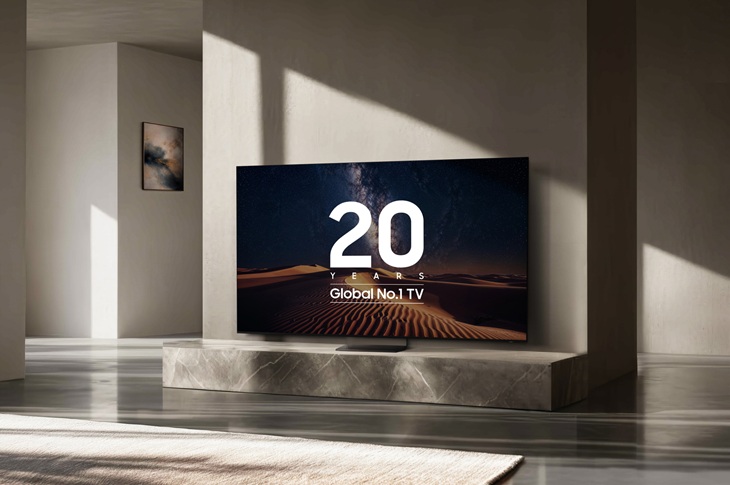
Twenty years ago, the television sitting in most living rooms looked very different from the sleek screens we know today. They were thicker, heavier, and built mainly for one purpose: watching whatever was scheduled to air. Over time, however, the TV evolved into something far more central to everyday life, a place where movies, games, art, education, and even smart home controls come together.
Around 2006, Samsung introduced the Bordeaux LCD TV, a model that helped shift how people thought about television design. With its glossy finish and curved lines inspired by the shape of a wine glass, it looked less like a piece of electronics and more like a decorative object in the living room.
In 2008, Samsung followed up with the Crystal Rose LCD TV, which featured bezels that subtly shifted colour with viewing angle and light, showing that design innovation was becoming as important as technical performance. Not long after, the arrival of LED-backlit displays in 2009 changed the physical form of televisions again. Screens became dramatically thinner, brighter, and more energy efficient. For the first time, TVs felt light enough to mount neatly on a wall, transforming the television from a bulky centerpiece into a sleek panel that blended into modern interiors. A year later, in 2010, Samsung introduced the world’s first 3D LED TV, adding immersive depth to home entertainment and demonstrating a commitment to exploring new viewing experiences.

The next big shift came when TVs started connecting to the internet. In 2010, Samsung unveiled the first Smart TV app store, followed by the Smart Hub interface in 2011, which allowed viewers to stream content, run apps, and access online services directly from the TV. Suddenly, the television became a gateway to a wider digital world.
As televisions became thinner and more capable, Samsung also began exploring how they could fit more naturally into home design. In 2015, The Serif arrived with a distinctive frame that looked more like furniture than a traditional TV. Two years later, The Frame pushed the idea further by transforming into a digital art display when not in use, allowing the screen to double as a gallery wall rather than a blank black rectangle.
By 2013, Samsung had introduced its first OLED TVs, followed in 2014 by the world’s first curved and bendable UHD TVs, pushing immersive design possibilities further before the lifestyle TV designs like The Serif and The Frame became mainstream. Samsung also introduced SUHD TVs, leveraging advanced no-cadmium quantum dot technology to deliver richer colour and brightness; a precursor to the QLED era.
At the same time, display technology was evolving quickly. In 2017, Samsung introduced QLED TVs powered by quantum dot technology, which produced brighter images with more accurate colours. By 2018, the QLED lineup had achieved 100% colour volume, enabling every colour to remain vivid and accurate at any brightness level, which set a new benchmark for home entertainment.
Today’s Samsung TVs look almost nothing like their early counterparts. Modern models use technologies such as Neo QLED and MICRO LED to deliver deeper contrast, brighter highlights, and more precise colour. Features like Ambient Mode and One Invisible Connection help TVs blend seamlessly into living spaces, while artificial intelligence optimizes picture and sound in real time, automatically adjusting settings to match what’s on screen.
What started as a simple display has gradually evolved into something far more versatile; part entertainment hub, part design feature, and increasingly, the center of the connected home.
Read Also: 12 Years of Samsung Acoustic Mastery Harmonizing AI With the Human Experience

About Soko Directory Team
Soko Directory is a Financial and Markets digital portal that tracks brands, listed firms on the NSE, SMEs and trend setters in the markets eco-system.Find us on Facebook: facebook.com/SokoDirectory and on Twitter: twitter.com/SokoDirectory