
A Ten-Year Land Deal That Demands Answers

There are moments when a land dispute raises questions larger than the disagreement itself. The public-interest issue is not whether an online audience can declare a winner. It is whether the people involved can produce lawful authority, an authentic agreement, a transparent payment trail, informed consent and a process that respects every person with a legitimate interest in the property.
A family in the wider Mwea area of Kirinyaga County has supplied Soko Directory with an account of an alleged ten-year land arrangement said to involve KES 200,000. The family says some relatives were approached through intermediaries and that concerns exist about succession, authority to transact, the condition in which discussions occurred and the position of a widow who claims an interest in the land.
At this stage, those statements remain allegations supplied by one side. Soko Directory has not independently authenticated the alleged lease, the parcel number, the current official search, the title record, the succession file, the payment records, the identities and authority of the alleged signatories, or the response of the person said to benefit from the arrangement. The report therefore does not announce guilt. It identifies the questions that documents and lawful institutions must answer.

A family’s allegation: small money today, ten years of land tomorrow
According to the family’s account, the disputed arrangement was not preceded by a meeting involving every person said to have a legitimate interest in the property. The family alleges that discussions moved through intermediaries and relatives who may have focused on immediate cash rather than the long-term economic consequences of surrendering use or control of land for 120 months.
The allegation is serious because a ten-year lease is not a casual favour. Depending on its wording, it may affect possession, cultivation, income, improvements, access and the practical ability of a family to use the property for an entire decade. Yet seriousness does not convert an allegation into fact. The agreement itself must be produced, read in full and tested against the title and succession record.
The family also says succession may not have been completed and that a caution may exist over the parcel. Both assertions are objectively verifiable. An official land search, a copy of the register, the succession cause file and any grant of representation must replace rumour. Until those records are obtained, no responsible publication should state that the arrangement is invalid, criminal or fraudulent.
The Controversial Contract
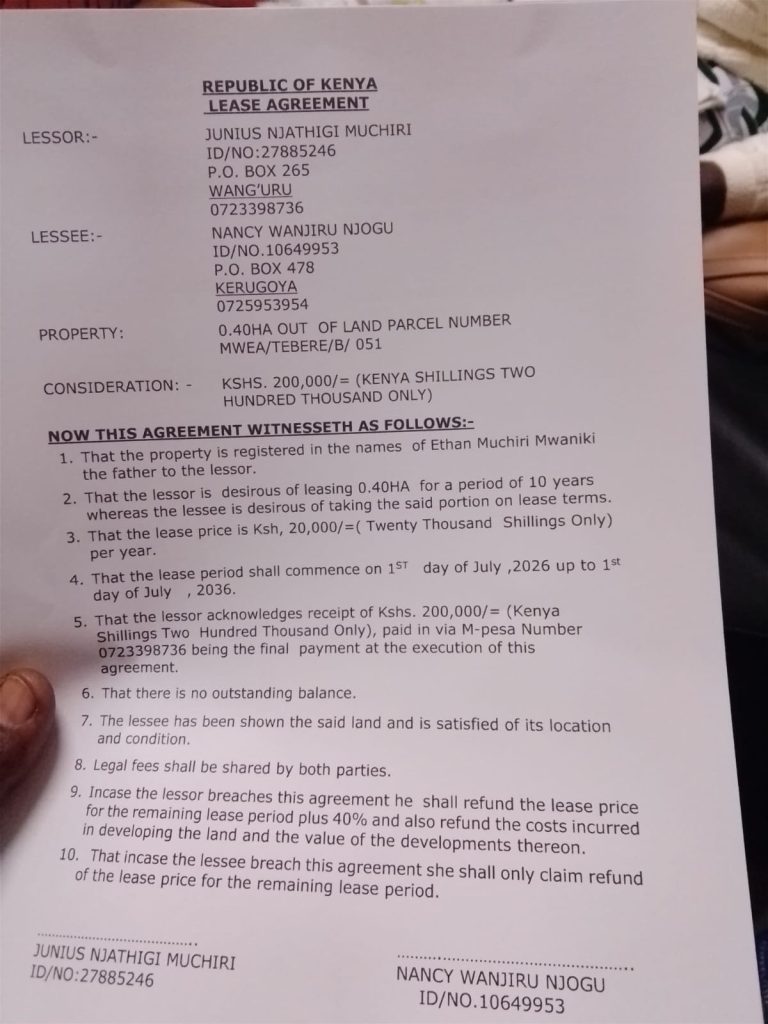
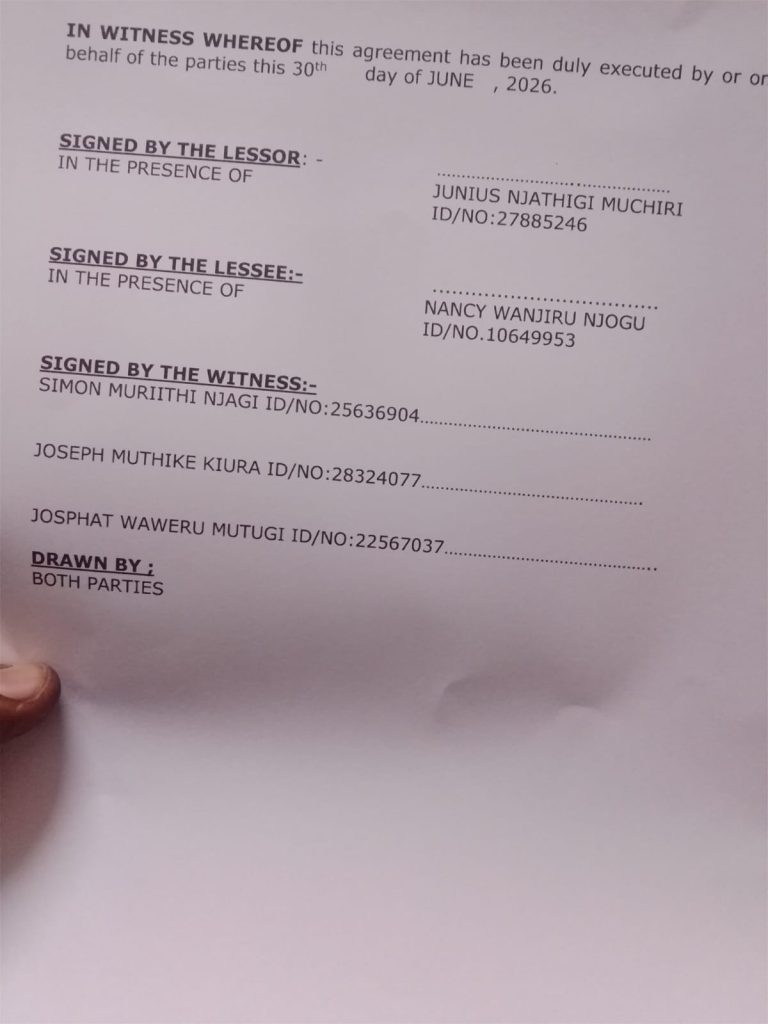
| THE REPORTING LINE The safe and accurate formulation is: “The family alleges X; Soko Directory has not yet verified X; the following records would confirm or disprove X.” Repeated use of words such as “alleged” does not cure a story whose overall message still presents guilt as settled. |
THE POWER IMBALANCE
The proper public-interest question is not whether a relative is poor, dependent, unemployed or struggling with alcohol. It is whether any person with greater information, money, influence or bargaining strength knowingly used a material disadvantage to secure a long-term benefit on terms that were not freely understood.
That question cannot be answered by anger. It requires evidence about who initiated contact, who drafted the document, whether independent advice was available, whether the terms were explained, whether the parties had time to reflect, whether the consideration reflected a valuation, and whether the people receiving money had legal authority to bind the land.
A low price is not, by itself, proof of illegality. A family disagreement is not, by itself, proof of exploitation. Equally, a signature is not always the end of the inquiry where authority, capacity, misrepresentation, undue pressure or unconscionable terms are credibly raised. These are matters for evidence and, where necessary, a court.