
Understanding Food Labels Has Been Made Simple
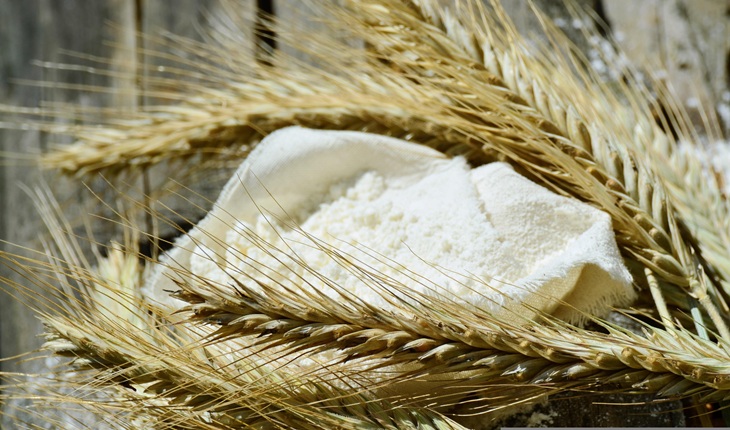
Walk into any supermarket or open-air market in Kenya today, and you will find flour products competing for shelf space from every direction. Unga wa ngano. Maize flour. Fortified blends. Single-origin brands. Own-label options. The packets look similar. The prices are close. And for most shoppers, the decision comes down to habit or cost, rarely to what is actually printed on the label.
That needs to change. And the good news is that reading a food label is far less complicated than most people think. Food labels use RDA (Recommended Dietary Allowance) or its derivatives to help consumers understand how much of a specific nutrient a food provides. It indicates the average daily intake level required to meet the nutritional needs of nearly all healthy people in a particular age and gender group.
The Cereal Millers Association’s Chagua Safe, Chagua Smart campaign has been doing important work in breaking down this knowledge gap, helping ordinary Kenyan households understand that the label on their flour packet is not just a branding exercise, but a window into what that product will actually do for their family’s health. Flour fortification, in particular, is an area where label literacy can make a genuinely meaningful difference, and it is one that too many consumers still overlook.

What Is on a Label, and Why It Matters
Every packaged flour product sold in Kenya that meets regulatory standards must carry specific information: the name of the product, the net weight, the name and address of the manufacturer, the date of manufacture and expiry, storage instructions, and, critically, the nutritional information panel. For fortified products, this panel is where the real story begins.
Fortification is the process by which essential vitamins and minerals are added to a food product that would not naturally contain them in sufficient quantities. In Kenya, wheat flour and maize flour fortification is not optional for licensed millers, it is mandated under the Kenya Bureau of Standards (KEBS) regulations and aligned with East African Community standards. The nutrients typically added include iron, zinc, folic acid, Vitamin B1 (thiamine), Vitamin B2 (riboflavin), niacin, and Vitamin B6.
These are not additions made for marketing purposes. They address real nutritional deficiencies that have public health consequences. Iron deficiency anemia, for example, affects a significant proportion of women of reproductive age and young children in Kenya. Folic acid deficiency during early pregnancy is directly linked to neural tube defects in newborns. Zinc plays a fundamental role in immune function and child growth. When flour is fortified correctly and consistently, the daily staple that families already consume becomes a quiet, cost-effective vehicle for better health.
But here is the problem: a label can claim fortification without delivering it meaningfully. This is why learning to read beyond the front-of-pack branding matters.
Three Things to Look for on Any Flour Label
The Fortification Declaration
Look for the specific nutrients listed in the nutritional information table, alongside their quantities per 100 grams or per serving. A genuine fortified flour will not simply say “enriched” or “with added vitamins” in vague terms on the front of the packet. It will list the actual micronutrients and their amounts in a standardized nutritional table on the back or side panel.
If a product makes a fortification claim on the front but the nutritional panel either does not exist or does not back that claim up with specific nutrient quantities, that is a red flag.
The KEBS Mark
Kenya’s Bureau of Standards issues a standardized mark that indicates a product has been tested and certified. For flour, this mark signals not just basic quality standards but compliance with fortification requirements. Shopping for flour that carries this mark is one of the simplest ways to ensure you are getting a product that has been subjected to independent verification, not just the manufacturer’s word.
Counterfeiting and mislabeling do occur. The KEBS mark is not foolproof, but it raises the bar significantly and gives consumers a credible reference point.
The Expiry Date and Storage Instructions
Fortification is only effective when the product is consumed within a reasonable period and stored correctly. Vitamins degrade over time, and the rate of degradation increases with exposure to heat, moisture, and light. A fortified flour stored in a damp corner of a shop for eighteen months is unlikely to deliver the nutrients printed on its label at the time of manufacture.
Buy flour with a reasonable shelf life remaining, store it in a cool, dry place, and use it within the recommended period. These are not complicated instructions, but they translate directly into nutritional outcomes.
Why Fortification Is a Shared Responsibility
It would be easy to place the entire burden of food label literacy on consumers and leave it there. Millers and food processors carry the primary responsibility for producing fortified flour that actually meets the declared standard, not just at the time of packaging, but consistently, at scale, across production batches.
The Cereal Millers Association, through this campaign, is signalling that responsible millers welcome scrutiny. A miller who invests in quality fortification has every reason to want consumers to read labels carefully, because an informed consumer will choose their product over one that cuts corners. Transparency is not a threat to good producers but a competitive advantage.
At the same time, retail and distribution chains have a role to play in ensuring products are stored and sold under conditions that preserve their nutritional integrity. A fortified flour that has been stored poorly in a hot, humid godown before reaching the shelf has already lost a portion of what the label promises.
And regulators must continue to enforce compliance, not just at the point of licensing but through ongoing market surveillance. Random sampling and public disclosure of results would significantly strengthen the accountability loop.
Making the Practical Simple
For the average Kenyan household, all of this can be distilled into a few practical habits that take no longer than thirty seconds at the point of purchase.
Turn the packet around. Look at the back. Find the nutritional table. Check that specific vitamins and minerals are listed with actual quantities, not just a vague claim. Look for the KEBS mark. Check the expiry date. If the packet does not give you that information clearly and legibly, choose one that does.
These habits, multiplied across millions of households, are the mechanism through which fortification policy translates into actual nutritional outcomes. The policy can mandate what goes into the flour. The miller can add it. But the impact only lands when the right product reaches the right family and is consumed in the right conditions.
Label literacy is the link that completes that chain.
Kenya’s food fortification programme is part of a broader regional and global movement to address hidden hunger, the phenomenon where people consume sufficient calories but remain deficient in critical micronutrients. Hidden hunger does not announce itself the way acute malnutrition does. Its consequences are slower and harder to see: a child who grows up slightly shorter than they could have been, a woman whose anemia drains her energy and productivity, a newborn whose early neurological development is compromised before anyone realizes something went wrong.
Fortified staples are among the most cost-effective public health tools available, precisely because they work through the food people already eat, without requiring behavior change on the scale that other nutritional interventions demand. But the effectiveness of this tool depends entirely on the quality and integrity of what is actually in that packet of flour.
Understanding a food label has been made simple. The next step is to make using that understanding a habit.
Read Also: TechnoServe Targets Oils, Rice, With New Fortification Program

About Soko Directory Team
Soko Directory is a Financial and Markets digital portal that tracks brands, listed firms on the NSE, SMEs and trend setters in the markets eco-system.Find us on Facebook: facebook.com/SokoDirectory and on Twitter: twitter.com/SokoDirectory

- January 2026 (220)
- February 2026 (248)
- March 2026 (287)
- April 2026 (207)
- May 2026 (192)
- June 2026 (238)
- July 2026 (279)
- August 2026 (214)
- January 2025 (119)
- February 2025 (191)
- March 2025 (212)
- April 2025 (193)
- May 2025 (161)
- June 2025 (157)
- July 2025 (227)
- August 2025 (211)
- September 2025 (267)
- October 2025 (297)
- November 2025 (230)
- December 2025 (220)
- January 2024 (238)
- February 2024 (227)
- March 2024 (190)
- April 2024 (133)
- May 2024 (157)
- June 2024 (145)
- July 2024 (136)
- August 2024 (154)
- September 2024 (212)
- October 2024 (255)
- November 2024 (196)
- December 2024 (143)
- January 2023 (182)
- February 2023 (203)
- March 2023 (322)
- April 2023 (297)
- May 2023 (267)
- June 2023 (214)
- July 2023 (212)
- August 2023 (257)
- September 2023 (237)
- October 2023 (264)
- November 2023 (286)
- December 2023 (177)
- January 2022 (293)
- February 2022 (329)
- March 2022 (358)
- April 2022 (292)
- May 2022 (271)
- June 2022 (232)
- July 2022 (278)
- August 2022 (253)
- September 2022 (246)
- October 2022 (196)
- November 2022 (232)
- December 2022 (167)
- January 2021 (182)
- February 2021 (227)
- March 2021 (325)
- April 2021 (259)
- May 2021 (285)
- June 2021 (272)
- July 2021 (277)
- August 2021 (232)
- September 2021 (271)
- October 2021 (303)
- November 2021 (364)
- December 2021 (249)
- January 2020 (272)
- February 2020 (310)
- March 2020 (390)
- April 2020 (321)
- May 2020 (335)
- June 2020 (327)
- July 2020 (333)
- August 2020 (276)
- September 2020 (214)
- October 2020 (233)
- November 2020 (242)
- December 2020 (187)
- January 2019 (251)
- February 2019 (215)
- March 2019 (283)
- April 2019 (254)
- May 2019 (269)
- June 2019 (249)
- July 2019 (335)
- August 2019 (292)
- September 2019 (306)
- October 2019 (313)
- November 2019 (362)
- December 2019 (318)
- January 2018 (291)
- February 2018 (213)
- March 2018 (275)
- April 2018 (223)
- May 2018 (235)
- June 2018 (176)
- July 2018 (256)
- August 2018 (247)
- September 2018 (255)
- October 2018 (282)
- November 2018 (282)
- December 2018 (184)
- January 2017 (183)
- February 2017 (194)
- March 2017 (207)
- April 2017 (104)
- May 2017 (169)
- June 2017 (205)
- July 2017 (189)
- August 2017 (195)
- September 2017 (186)
- October 2017 (235)
- November 2017 (253)
- December 2017 (266)
- January 2016 (164)
- February 2016 (165)
- March 2016 (189)
- April 2016 (143)
- May 2016 (245)
- June 2016 (182)
- July 2016 (271)
- August 2016 (247)
- September 2016 (233)
- October 2016 (191)
- November 2016 (243)
- December 2016 (153)
- January 2015 (1)
- February 2015 (4)
- March 2015 (164)
- April 2015 (107)
- May 2015 (116)
- June 2015 (119)
- July 2015 (145)
- August 2015 (157)
- September 2015 (186)
- October 2015 (169)
- November 2015 (173)
- December 2015 (205)
- March 2014 (2)
- March 2013 (10)
- June 2013 (1)
- March 2012 (7)
- April 2012 (15)
- May 2012 (1)
- July 2012 (1)
- August 2012 (4)
- October 2012 (2)
- November 2012 (2)
- December 2012 (1)