
The Unstoppable Evolution Of the Galaxy Z Fold Series
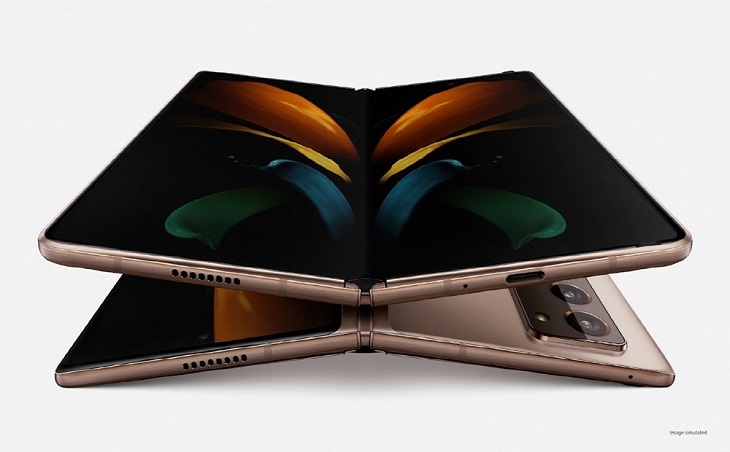
Foldable technology, once a figment of science fiction, has rapidly become a significant milestone in the evolution of the mobile industry. Samsung, a pioneer in the industry, has been at the forefront of this transformation. But what is a foldable? A foldable is exactly that — a folding phone. Unlike bar-type smartphones with a single body, foldables consist of a central hinge and two folding sides. The hinge serves as the central axis for opening and closing the phone. Over time, Samsung has introduced unique, cutting-edge technology into the hinge mechanism of its Galaxy Z Fold series to create a revolutionary hinge design with each release. In addition, Samsung has continued to reduce the thickness of the Galaxy Z Fold series so the phone can be carried anytime, anywhere.
As user lifestyles continue to diversify, so too do their needs. Samsung has consistently introduced advanced technologies each year to meet these changes. First unveiled in 2019, the Galaxy Fold featured a groundbreaking form factor, the first to deliver a natural, big-screen experience when unfolded and a compact, portable experience when folded. The act of “folding and unfolding” emerged as a new category of mobile interaction, and Samsung applied never-before-seen hinge technology to ensure this functionality felt natural and intuitive.
The inward-folding hinge not only felt familiar and easy to use, but it also provided robust display protection. The phone could be smoothly opened like a book, yet stay flat and thin when folded. The palm-sized dimensions were key to its convenience. With the first Galaxy Fold, Samsung achieved a maximum folded thickness of just 17.1 millimeters and ushered in the era of smart foldables.

In 2020, the successor to the pioneering Galaxy Fold was released. The Galaxy Z Fold2 took foldable to the next level with an all-new sophisticated and refined design. The most notable of its several innovative features was the Hideaway Hinge, which seamlessly connected the body of the smartphone while supporting stable folding and unfolding. Users could mount the Galaxy Z Fold2 at various angles with the Hideaway Hinge to easily take selfies and make video calls in Flex Mode. Added a 6.2-inch external display for enhanced usability. The Z Fold2 demonstrated Samsung’s ability to refine and perfect its foldable technology, offering a more polished and user-friendly experience.
The Hideaway Hinge’s more than sixty parts made the innovative dual CAM mechanism a reality. The flat surface between two ridge-shaped parts, CAM helped keep the device open or closed and enabled Flex Mode. By increasing the number of CAM structures and springs, the hinge could reliably support wider angles. The Hideaway Hinge was mounted in an optimal location on the Galaxy Z Fold2 for an even slimmer design and a maximum folded thickness of just 16.8 millimeters.
Since the hinge was constantly folded when the device was opened or closed, there was an inevitable gap between the front of the device and the hinge housing. To effectively minimize this gap, Samsung needed to develop a component that would be long-lasting and elastic without adding extra bulk. Inspired by the brush of a vacuum cleaner, Samsung made use of delicately cut optical fibers to address this issue: Sweeper Technology. Sweeper Technology protected the phone’s display from external dust and debris that could enter through the gap, providing a more fluid foldable device experience.
It’s a given that today’s smartphones are waterproof. However, the hinge that opened and closed the screen on the foldable would always be exposed to the elements. If liquids such as beverages or even rainwater leaked inside, the device would be at risk of immediate malfunction.
The Galaxy Z Fold3 was the first foldable to be water resistant, one of the biggest challenges that previous foldable devices faced. Samsung’s waterproofing technology was applied to two areas — the outer part of the display and the hinge. The outer part of the display was surrounded by a rubber band that prevented dust and liquid from entering, whereas the metal parts of the hinge were made of corrosion-resistant materials and coated with a long-lasting lubricant. The terminal connecting the two mainboards bordering the hinge was sealed with a silicone-based cured-in-place gasket (CIPG) that prevented liquid from entering the device. Additionally, flexible printed circuit board (FPCB) cables were used to protect sensitive components.
A robust material that withstands external shocks and reduces the risk of deformities or scratches, Armor Aluminum was used to help the Galaxy Z Fold3 achieve an even thinner and lighter form factor. Armor Aluminum was applied to the two edges that make up the exterior and to the housing that surrounds the hinge. Various components were densely packed inside the Galaxy Z Fold3’s Hideaway Hinge to enable Flex Mode and ensure smooth opening and closing. To support these functions, the hinge housing needed to be made from sturdy materials.
The Sweeper Technology that closed the gap between the hinge and the body of the foldable evolved too. As the device became slimmer, the sweeper’s bristles were shortened to improve aesthetics while still keeping the hinge safe from dust and external particles. These innovations allowed the Galaxy Z Fold3 to be as thin as 16.0 millimeters when folded.
Unveiled in 2022, the Galaxy Z Fold4 saw a significant reduction in weight and thickness. At 263 grams, the device weighed nearly 20 grams less than the Galaxy Z Fold2 at 282 grams. The maximum folded thickness was 15.8 millimeters, making this foldable the thinnest in the series at the time. Once again, Samsung loaded its signature foldable with innovation — resulting in an easy-to-grip, thin, and lightweight body.
Redesigned to be 21% lighter than its predecessor, the new hinge of the Galaxy Z Fold4 accommodated the wider width and shorter length of the Cover Screen. While the previous foldable in the series used interlocking gears to ensure even screen folding and unfolding, the Galaxy Z Fold4 changed the hinge motion from rotary to linear. This adjustment drastically reduced weight, thickness, and the number of parts, which streamlined manufacturing and improved the device’s resilience. With the Galaxy Z Fold4, Samsung built its slimmest, lightest hinge at the time while upholding the same level of durability as the previous form factor.
In 2023, the Galaxy Z Fold5 introduced the world to the next generation of foldable smartphones. Moving away from the traditional Hideaway Hinge, Samsung unveiled a new type of mechanism called the Flex Hinge — demonstrating a leap forward in foldable innovation. With improved flexibility and a wide range of features, the Flex Hinge made it possible for the display to curl into the hinge like a water droplet using four drive shafts and a dual rail structure that allowed parts to glide along it. Thanks to this hinge technology, the two screens could be evenly folded without any creases or gaps.
This new folding mechanism resulted in the lightest and thinnest Galaxy Z Fold series device yet. More than two millimeters thinner than its predecessor, the Galaxy Z Fold5’s maximum thickness is 13.4 millimeters when folded. The foldable also weighs 253 grams — 10 grams lighter than its predecessor — making it more compact, portable, and stable when folded. The phone’s sleek, solid shape could be appreciated from any angle.
Each year, Samsung refines the Galaxy Z Fold series by leveraging precise engineering and meticulous manufacturing processes. Every detail is studied carefully, from internal mechanisms to exterior design. Reimagining the hinges and device thickness core attributes of the foldable has enhanced the utility of the Galaxy Z Fold series immensely. Samsung will continue to build on its legacy of unprecedented foldables, ensuring that more people can utilize them for an even more convenient life.
Read Also: Samsung Galaxy S24 Ultra Set To Enhance And Open Up The Olympic Broadcast

About Soko Directory Team
Soko Directory is a Financial and Markets digital portal that tracks brands, listed firms on the NSE, SMEs and trend setters in the markets eco-system.Find us on Facebook: facebook.com/SokoDirectory and on Twitter: twitter.com/SokoDirectory

- January 2026 (220)
- February 2026 (248)
- March 2026 (287)
- April 2026 (208)
- May 2026 (191)
- June 2026 (116)
- January 2025 (119)
- February 2025 (191)
- March 2025 (212)
- April 2025 (193)
- May 2025 (161)
- June 2025 (157)
- July 2025 (227)
- August 2025 (211)
- September 2025 (270)
- October 2025 (297)
- November 2025 (230)
- December 2025 (220)
- January 2024 (238)
- February 2024 (227)
- March 2024 (190)
- April 2024 (133)
- May 2024 (157)
- June 2024 (145)
- July 2024 (136)
- August 2024 (154)
- September 2024 (212)
- October 2024 (255)
- November 2024 (196)
- December 2024 (143)
- January 2023 (182)
- February 2023 (203)
- March 2023 (322)
- April 2023 (297)
- May 2023 (267)
- June 2023 (214)
- July 2023 (212)
- August 2023 (257)
- September 2023 (237)
- October 2023 (264)
- November 2023 (286)
- December 2023 (177)
- January 2022 (293)
- February 2022 (329)
- March 2022 (358)
- April 2022 (292)
- May 2022 (271)
- June 2022 (232)
- July 2022 (278)
- August 2022 (253)
- September 2022 (246)
- October 2022 (196)
- November 2022 (232)
- December 2022 (167)
- January 2021 (182)
- February 2021 (227)
- March 2021 (325)
- April 2021 (259)
- May 2021 (285)
- June 2021 (272)
- July 2021 (277)
- August 2021 (232)
- September 2021 (271)
- October 2021 (304)
- November 2021 (364)
- December 2021 (249)
- January 2020 (272)
- February 2020 (310)
- March 2020 (390)
- April 2020 (321)
- May 2020 (335)
- June 2020 (327)
- July 2020 (333)
- August 2020 (276)
- September 2020 (214)
- October 2020 (233)
- November 2020 (242)
- December 2020 (187)
- January 2019 (251)
- February 2019 (215)
- March 2019 (283)
- April 2019 (254)
- May 2019 (269)
- June 2019 (249)
- July 2019 (335)
- August 2019 (292)
- September 2019 (306)
- October 2019 (313)
- November 2019 (362)
- December 2019 (318)
- January 2018 (291)
- February 2018 (213)
- March 2018 (275)
- April 2018 (223)
- May 2018 (235)
- June 2018 (176)
- July 2018 (256)
- August 2018 (247)
- September 2018 (255)
- October 2018 (282)
- November 2018 (282)
- December 2018 (184)
- January 2017 (183)
- February 2017 (194)
- March 2017 (207)
- April 2017 (104)
- May 2017 (169)
- June 2017 (205)
- July 2017 (189)
- August 2017 (195)
- September 2017 (186)
- October 2017 (235)
- November 2017 (253)
- December 2017 (266)
- January 2016 (164)
- February 2016 (165)
- March 2016 (189)
- April 2016 (143)
- May 2016 (245)
- June 2016 (182)
- July 2016 (271)
- August 2016 (247)
- September 2016 (233)
- October 2016 (191)
- November 2016 (243)
- December 2016 (153)
- January 2015 (1)
- February 2015 (4)
- March 2015 (164)
- April 2015 (107)
- May 2015 (116)
- June 2015 (119)
- July 2015 (145)
- August 2015 (157)
- September 2015 (186)
- October 2015 (169)
- November 2015 (173)
- December 2015 (205)
- March 2014 (2)
- March 2013 (10)
- June 2013 (1)
- March 2012 (7)
- April 2012 (15)
- May 2012 (1)
- July 2012 (1)
- August 2012 (4)
- October 2012 (2)
- November 2012 (2)
- December 2012 (1)