
Why 7 of Kenya’s Top 10 SACCOs Bank With NCBA
Inside the technology, liquidity, security, and human relationships making NCBA a compelling bank of choice for Kenya’s cooperative economy.
| RESEARCH FOCUS Institutional banking infrastructure behind everyday SACCO services | CORE FINDING Scale matters, but specialised execution is what earns institutional trust |

At 7:03 on a Monday morning, a teacher checks whether a salary deduction has reflected in her SACCO account. A small-scale farmer waits for payment from a cooperative society. A young family needs a school-fees loan approved before the term begins. A transport operator wants to know whether a standing order cleared overnight. None of these people is thinking about banking architecture, settlement files, liquidity buffers, cyber controls or reconciliation engines. They simply expect the SACCO to work.
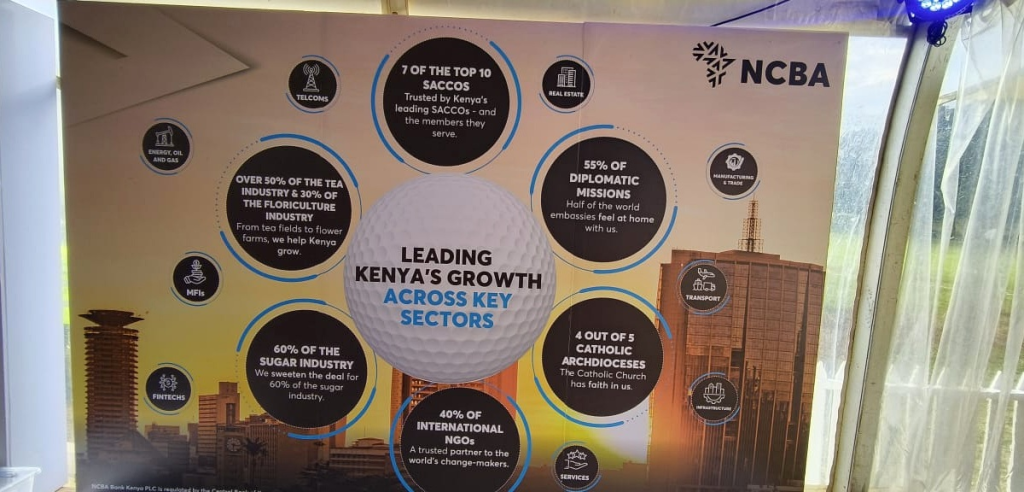
That expectation is where the significance of the message in the supplied photograph begins. The NCBA display states that seven of Kenya’s top ten SACCOs bank with NCBA. On the surface, it is a market-share statement. Underneath it sits a much bigger story: some of the country’s most complex member-owned financial institutions have chosen NCBA to support the money movements, risk controls and funding decisions that ultimately touch millions of Kenyans.
A SACCO may feel personal and local to its members, but a leading SACCO is a large financial institution. It receives thousands of deposits, processes payroll deductions, disburses loans, manages investment portfolios, settles supplier payments, connects to mobile and digital channels, reconciles transactions and protects member data. Its banking partner must therefore do more than open an account. It must provide dependable infrastructure.
| “The member sees a loan, a dividend or a deposit. The SACCO sees thousands of transactions. The bank behind the SACCO must see the whole system — and keep it moving.” Editorial analysis |
| What the “7 of the top 10” claim does — and does not — tell us It signals that NCBA has won substantial trust among large SACCO institutions. It does not, by itself, reveal the identities of the seven SACCOs or the ranking methodology. The more useful question is therefore not simply “who are the seven?” but “what capabilities would make leading SACCOs repeatedly choose the same bank?” |
Kenya’s SACCO economy is now a trillion-shilling system
SACCOs are sometimes discussed as though they are an informal side channel to mainstream banking. The numbers show the opposite. SASRA data indicate that the assets of regulated SACCOs grew from KES 734.2 billion in 2020 to about KES 1.076 trillion in 2024. Over the same period, member deposits rose from KES 514.5 billion to KES 749.4 billion, while gross loans expanded from KES 555.1 billion to KES 845.1 billion. Membership increased from about 5.82 million to 7.39 million.
That is roughly 10.0% annualised growth in assets, 9.9% in deposits, 11.1% in loans and 6.1% in membership over four years. In practical terms, a bank serving the largest SACCOs is helping to carry part of a financial system that is growing faster than many households realise.
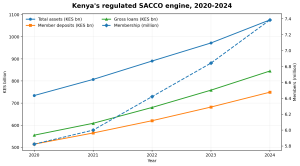
Figure 1: Growth of regulated SACCO assets, deposits, loans and membership, 2020-2024
Source: SASRA, Sacco Supervision Annual Reports 2023 and 2024. Values rounded.
This scale changes the standard by which a SACCO banking partner should be judged. A delay in a reconciliation file is not a minor inconvenience when tens of thousands of member records are involved. A weak collection channel can slow loan repayments. A cyber incident can damage years of trust. An inadequate liquidity arrangement can force a SACCO to postpone lending when members need it most. Institutional banking, in this environment, is operational infrastructure.
Why leading SACCOs would choose NCBA: seven practical reasons
| 1. NCBA treats SACCOs as a specialised institutional segment The first advantage is focus. NCBA publicly describes a SACCO banking proposition built around transactional banking, cash management, digital banking, investments, trade finance, foreign exchange and dedicated relationship management. That is materially different from handing a SACCO a standard business account and asking it to adapt. A large SACCO’s needs cut across departments. It may require a collection solution for monthly remittances, a credit line for liquidity, treasury su |