
Mango Prices Climb As Supplies Dry Up In Kenyan Markets
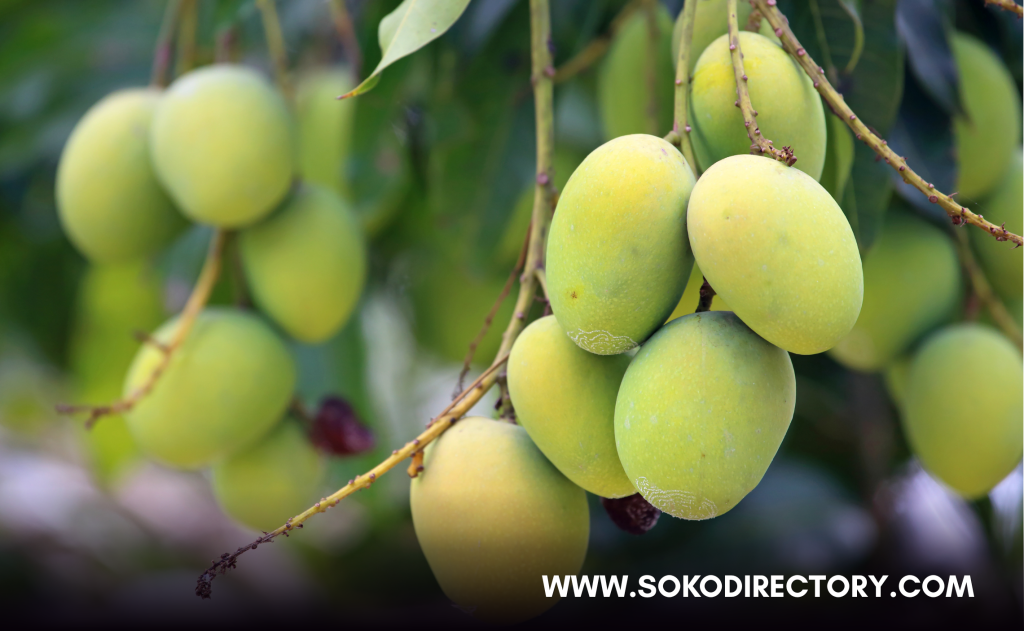
Mango lovers across Kenya are digging deeper into their pockets this season. Traders in several urban markets say supplies have thinned out noticeably, pushing prices upward just as demand for the fruit remains steady.
The pinch is being felt hardest in towns that rely on mangoes trucked in from the country’s main growing belts.
Vendors point to poor rainfall at key stages of the growing season as the culprit, when rains fail during flowering and fruit-set, trees simply don’t fill out the way farmers need them to. The result: smaller harvests and fewer mangoes making it to market stalls.

It’s a strange twist given Kenya’s standing as one of the region’s bigger mango producers. FAOSTAT figures put the country’s 2024 output at roughly 783,000 tonnes, with about 25,039 tonnes shipped abroad. Clearly, production on paper doesn’t always translate into steady shelves.
Walk through a handful of Kenyan markets right now, and you’ll find wildly different price tags on what is, technically, the same fruit.
In Nairobi, ordinary local mangoes are going for around KSh25 a kilo, while the more prized Ngowe variety fetches closer to KSh55. Head west to Eldoret’s West Market and local mangoes are a bit cheaper, at about KSh20 a kilo. Mombasa, meanwhile, has some of the lowest prices recorded, around KSh13 per kilo.
Kibuye Market in Kisumu has recorded prices as steep as KSh150 a kilo, a sharp contrast to Wundanyi in Taita-Taveta, where mangoes are moving at roughly KSh50, and Sabatia in Kakamega, sitting at around KSh100.
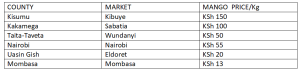
Prices shift depending on variety, quality, the season, and whether you’re buying wholesale or retail.
What explains such a gap between towns barely a few hours’ drive apart? A mix of things, really: how much supply is coming through, which variety is on offer, the quality of the fruit, and how far it’s had to travel to reach the seller. Transport costs alone can make a real dent in the final price tag.
If there’s one thing this moment illustrates, it’s just how unpredictable Kenya’s mango supply chain can be. One county’s harvest can be piling up in gluts while, at the very same time, another is running dangerously short.
Murang’a County offered a textbook example of this earlier in the year. Good weather there triggered heavy flowering and fruiting, leading to a glut so large that farmers struggled to sell everything before it spoiled. Fast forward a few months, and now other regions are facing the opposite problem entirely.
For everyday consumers, tighter supply in mango-dependent towns generally means one thing: higher prices at the stall. Farmers and traders in the affected areas, on the other hand, may actually come out ahead, since scarcity tends to push up what they can charge.
Beneath the day-to-day price swings lies a more structural issue: Kenya still lacks the storage, processing and market-linkage infrastructure needed to smooth out these boom-and-bust cycles.
Better cold storage and processing options could help absorb gluts like the one Murang’a experienced, rather than letting excess fruit go to waste while other markets go hungry for supply.
Mangoes remain a vital income source for thousands of smallholder farmers around the country. Strengthening the links between growing regions and the markets that depend on them wouldn’t just steady prices for shoppers; it could also give farmers a more reliable return on a crop that, right now, seems to swing wildly between feast and famine.
Read Also: A 50-Kg Bag Of Irish Potatoes Retailing Averagely At Ksh 3000

- January 2026 (220)
- February 2026 (248)
- March 2026 (287)
- April 2026 (207)
- May 2026 (192)
- June 2026 (238)
- July 2026 (279)
- August 2026 (224)
- September 2026 (21)
- January 2025 (119)
- February 2025 (191)
- March 2025 (212)
- April 2025 (193)
- May 2025 (161)
- June 2025 (157)
- July 2025 (227)
- August 2025 (211)
- September 2025 (267)
- October 2025 (297)
- November 2025 (230)
- December 2025 (220)
- January 2024 (238)
- February 2024 (227)
- March 2024 (190)
- April 2024 (133)
- May 2024 (157)
- June 2024 (145)
- July 2024 (136)
- August 2024 (154)
- September 2024 (212)
- October 2024 (255)
- November 2024 (196)
- December 2024 (143)
- January 2023 (182)
- February 2023 (203)
- March 2023 (322)
- April 2023 (297)
- May 2023 (267)
- June 2023 (214)
- July 2023 (212)
- August 2023 (257)
- September 2023 (237)
- October 2023 (264)
- November 2023 (286)
- December 2023 (177)
- January 2022 (293)
- February 2022 (329)
- March 2022 (358)
- April 2022 (292)
- May 2022 (271)
- June 2022 (232)
- July 2022 (278)
- August 2022 (253)
- September 2022 (246)
- October 2022 (196)
- November 2022 (232)
- December 2022 (167)
- January 2021 (182)
- February 2021 (227)
- March 2021 (325)
- April 2021 (259)
- May 2021 (285)
- June 2021 (272)
- July 2021 (277)
- August 2021 (232)
- September 2021 (271)
- October 2021 (303)
- November 2021 (364)
- December 2021 (249)
- January 2020 (272)
- February 2020 (310)
- March 2020 (390)
- April 2020 (321)
- May 2020 (335)
- June 2020 (327)
- July 2020 (333)
- August 2020 (276)
- September 2020 (214)
- October 2020 (233)
- November 2020 (242)
- December 2020 (187)
- January 2019 (251)
- February 2019 (215)
- March 2019 (283)
- April 2019 (254)
- May 2019 (269)
- June 2019 (249)
- July 2019 (335)
- August 2019 (292)
- September 2019 (306)
- October 2019 (313)
- November 2019 (362)
- December 2019 (318)
- January 2018 (291)
- February 2018 (213)
- March 2018 (275)
- April 2018 (223)
- May 2018 (235)
- June 2018 (176)
- July 2018 (256)
- August 2018 (247)
- September 2018 (255)
- October 2018 (282)
- November 2018 (282)
- December 2018 (184)
- January 2017 (183)
- February 2017 (194)
- March 2017 (207)
- April 2017 (104)
- May 2017 (169)
- June 2017 (205)
- July 2017 (189)
- August 2017 (195)
- September 2017 (186)
- October 2017 (235)
- November 2017 (253)
- December 2017 (266)
- January 2016 (164)
- February 2016 (165)
- March 2016 (189)
- April 2016 (143)
- May 2016 (245)
- June 2016 (182)
- July 2016 (271)
- August 2016 (247)
- September 2016 (233)
- October 2016 (191)
- November 2016 (243)
- December 2016 (153)
- January 2015 (1)
- February 2015 (4)
- March 2015 (164)
- April 2015 (107)
- May 2015 (116)
- June 2015 (119)
- July 2015 (145)
- August 2015 (157)
- September 2015 (186)
- October 2015 (169)
- November 2015 (173)
- December 2015 (205)
- March 2014 (2)
- March 2013 (10)
- June 2013 (1)
- March 2012 (7)
- April 2012 (15)
- May 2012 (1)
- July 2012 (1)
- August 2012 (4)
- October 2012 (2)
- November 2012 (2)
- December 2012 (1)